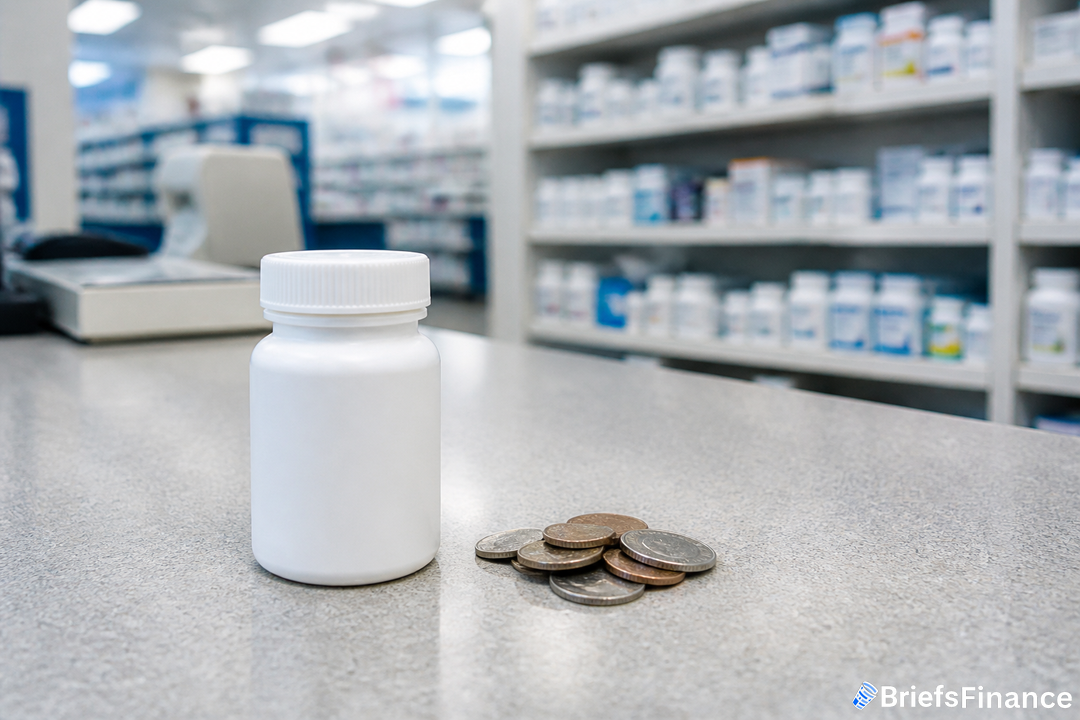
CEO Warns Tariffs Would Hit Patients' Wallets
If tariffs land on generic drugs, Americans would end up paying for it, Sandoz CEO Richard Saynor told CNBC at the company's Capital Markets Day. "Patients pay the tariff," he said Tuesday, adding that no manufacturer will keep supplying a medicine at a material loss, which leaves two options: raise prices or stop shipping the product.
In July, Donald Trump said imported generics could be hit with 100% tariffs starting in 2028, potentially rising to 200% the following year, pitched as a way to spur more U.S. drug manufacturing. At present, the administration's Section 232 pharmaceutical tariffs do not apply to generics. CNBC said it had asked the White House for comment.
Generics and biosimilars make up about nine out of ten prescriptions in the U.S., yet represent a smaller slice of total drug spending because they are cheaper. Saynor also pointed out that a large share of the base drug ingredients are produced beyond U.S. borders. As one of the world's largest off‑patent manufacturers, Sandoz derives about one quarter of its sales from North America, which includes Canada.
Growth Targets, Market Moves, and a Biosimilars Push
Sandoz is positioning itself to benefit from what it describes as a surge in patent expirations and the end of exclusivity for branded medicines, creating room for more generics and biosimilars, especially in immunology and oncology. Starting in 2035, the firm intends to pursue roughly 80% of the value in biologics coming off patent, compared with about 50% today. Saynor expects fewer competitors in biosimilars because the field still demands capital, scale, and deep technical know-how. "The players that can do this are few and far between, and given the sheer scale and number of [loss of exclusivities] ahead, competitive intensity at asset level is expected to reduce," he said.
When costs feel uncertain, a thoughtful strategy can steady your financial path. Join Briefs Finance CEO Jaspreet Singh on September 29th for a FREE live investor workshop, How to Profit From A Dollar That's Losing its Value, where he shows how we're spotting investment opportunities as the dollar falls. Save your spot.
Investors gave the new ambitions a quick test. On Tuesday, the Swiss‑listed stock climbed up to 5% before easing to about 1% lower in afternoon trading. A market snapshot showed Sandoz Group AG at 66.78 Swiss francs, down 1.46 francs, or 2.14%, with the last trade at 4:12 PM CEST.
By 2035, the company is targeting an increase in net sales of over twofold and seeking to push its core profit margin past 30%. Jefferies analysts said that revenue goal sits about 13% above current 2035 consensus.
GLP-1 Wildcard and What Comes Next
GLP‑1 therapies for weight loss and diabetes could provide additional upside that is excluded from the 2035 sales target. When asked about potential size, Saynor said the GLP‑1 line at Sandoz could generate "billions of dollars, but I have no idea how many billions of dollars," while emphasizing that the market is still in its early days. In major U.S. and European markets, exclusivity is not slated to expire until the early part of the next decade.
In 2023, Sandoz became a standalone company following Novartis's spin‑off of its generics and biosimilars units so it could concentrate on branded medicines. Saynor has been at the helm since 2019. For your wallet, the stakes are straightforward: tariffs on widely used generics would likely push costs higher for patients, while the looming patent cliff sets up years of new competition that could pressure prices as Sandoz leans into biosimilars.
Big headlines are a nudge to review risks and protect your savings. Our CEO Jaspreet Singh is hosting a FREE live investor workshop, How to Profit From A Dollar That's Losing its Value, on September 29th. Sign up free to join him live.