Market Context
Cristiano Amon made a clear assessment this week. According to Amon, the market will remain suppressed due to increasing memory prices and supply limitations. He said, "There is demand to buy phones - it's just the memory prices and supply." He added, "So you should expect the market to continue to be suppressed."
For a company like Qualcomm, which makes the processors that go inside a huge chunk of the world's smartphones, that kind of drag shows up fast in the numbers.
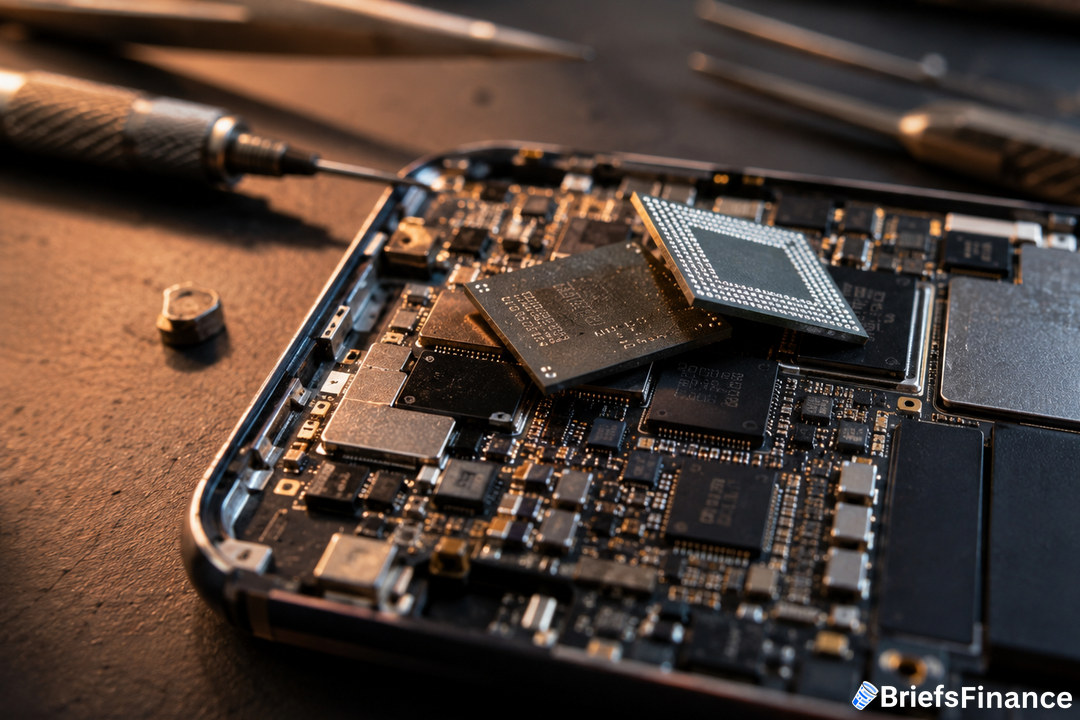
DRAM and NAND flash memory chip prices have risen as top manufacturers such as Samsung and SK Hynix reduced production to address an earlier oversupply. These higher component costs have squeezed smartphone makers, who either pass the expense to consumers or accept thinner margins, both of which weigh on sales. Since Qualcomm supplies modems and application processors for many Android devices, the ripple effect is especially pronounced in its revenue outlook.
Get the market news that matters in a five-minute read with Market Briefs, our free daily newsletter
But the resulting price increases have now become a burden for handset manufacturers, particularly in the budget and mid-range segments where margins are already thin.
These OEMs face a difficult choice: raise retail prices and risk losing price-sensitive buyers, or absorb the extra cost and compress their own profits. Either outcome reduces the incentive for consumers to upgrade, which keeps overall smartphone shipments stagnant. Qualcomm's reliance on Android device makers for a significant portion of its revenue means that any weakness in that ecosystem directly hits its chip sales.
The memory industry's cyclical nature means these pricing pressures are likely to persist. Producers have signaled they will maintain disciplined output to keep prices elevated, which will continue to raise costs for handset makers for the foreseeable future.
Qualcomm is not the only giant whose earnings matter here. Apple was scheduled to report results later the same day. The iPhone maker, which depends on its flagship device for about half of its sales, has gradually replaced Qualcomm components with its own internally designed chips.
Broader Industry Impact
This cycle underscores how production cuts intended to restore profitability can inadvertently crimp demand downstream, especially when components like memory represent a significant share of a phone's bill of materials. For years, smartphone makers benefited from cheap memory, which allowed them to offer more storage at competitive prices. Now that the cost pendulum has swung the other way, the entire value chain - from chip suppliers to device vendors - must navigate a more constrained environment.
The smartphone industry has also faced additional headwinds such as market saturation in developed regions, lengthening replacement cycles, and broader economic pressures that curb discretionary spending. Memory price increases add a further layer of difficulty, particularly for low-cost Android devices where components represent a larger share of total production costs. These combined factors make it harder for manufacturers to stimulate demand and maintain volume.
Join Market Briefs, our free daily newsletter, for a quick daily rundown of the markets