Why the Pentagon Is Putting Money Into Batteries
The U.S. military has a battery problem, and it is not the kind you can fix with a charger.
American buyers, from automakers to defense contractors, have struggled to find battery materials that are not made in China. That is a big deal because China dominates the supply chain for graphite, the standard material used in the negative end of a lithium-ion battery, known as the anode.
So on Friday, the Pentagon stepped in with a $1.4 billion loan to Sila, a U.S.-based company that makes a silicon-carbon alternative. The idea is simple: if the military and car companies want batteries without Chinese materials, somebody needs to build the factories to make them.
Sila's material replaces graphite with silicon, which can hold 20% to 40% more electric charge. That higher energy density means batteries could last longer, or they could shrink and get lighter. For drones, electric vehicles, and defense gear, that is a meaningful upgrade.
A Washington Factory Gets Much Bigger
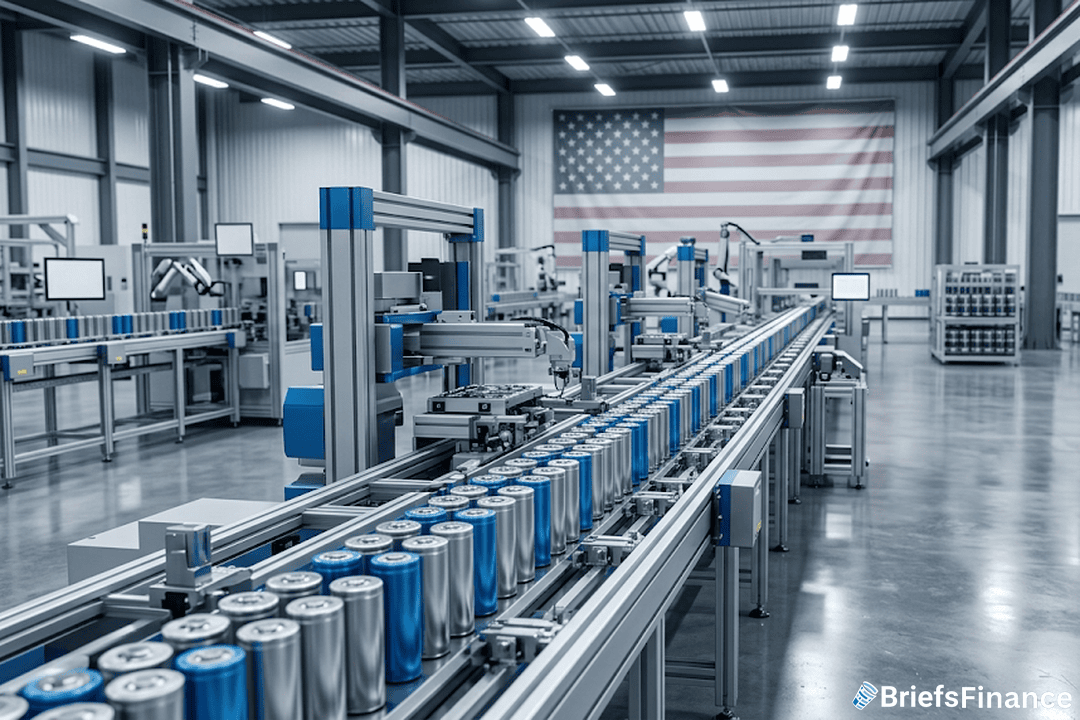
Sila is not starting from scratch. Its Moses Lake, Washington, factory began operating in September and can already produce about 2 gigawatt-hours of material per year. For context, a gigawatt-hour is roughly enough electricity to power a small city for a day, so we are talking about a serious operation.
Get the free Always Be Buying eBook and learn the simple system for building wealth on any income
The company plans to expand that factory fivefold, which would give it enough material for more than 100,000 electric vehicles. That is still a fraction of what the global auto industry needs, but it is a real step toward a domestic supply chain.
Investors have already backed the expansion. In July, Sila raised $300 million in a funding round led by Atreides Management and Sutter Hill Ventures. PitchBook data shows the company has pulled in more than $1.5 billion in private funding so far, and it already has supply agreements with Mercedes and Panasonic.
The Pentagon loan could open another door. Defense contractors have been landing large deals as fighting continues in Iran and Ukraine, and having a Pentagon-backed battery supplier in the mix makes Sila a natural partner.
The Pentagon Spreads the Money Around
Sila was not the only company to get a check. The Defense Department funded three other businesses in the same announcement, each working on a different piece of the supply-chain puzzle.
Sunrise Energy Metals, an Australian miner, received a $400 million loan for scandium mining. Scandium is a rare-earth element used in lightweight alloys, which matters for aircraft and other military gear. Niron Magnetics, based in Minnesota, got a $150 million loan to make magnets without rare earths, which could go into phones, missiles, and electric motors. The government also took an $85 million equity stake in Strategic Bauxite, a miner of aluminum-bearing ore.
These investments reflect a broader shift in military thinking. For decades, the Pentagon relied on commercial markets for raw materials, assuming global trade would keep supply lines open. But recent disruptions - from trade wars to pandemic shutdowns - have exposed how fragile that assumption is. Now, the Defense Department is acting like a venture capitalist for critical minerals, seeding companies that can guarantee a domestic source for the metals and chemicals that go into everything from fighter jets to field radios.
Taken together, these deals show the Pentagon is thinking beyond just weapons and ammunition. It is building out the industrial base for critical materials, the same way it might stockpile fuel or spare parts.
The bottom line: For investors, this is a signal that government money is flowing into domestic battery materials in a serious way. That does not guarantee any single company will succeed, but it does mean the U.S. is willing to spend real cash to reduce its dependence on Chinese supply chains.
The bigger picture is about resilience. Whether it is an electric car, a drone, or a missile guidance system, everything runs on batteries. And the country that controls the materials controls the future. This loan is a bet that the U.S. wants to be in that game.
Download the free Always Be Buying eBook and start putting your money to work today