Free NewsletterPro Login
S&P 500 6,287 +0.42%
DOW 44,521 -0.18%
NASDAQ 21,103 +0.71%
S&P 500 +12.4%
Briefs Finance Fund +24.8%
JOIN THE FUND →

NOAA Just Retired The Database That Tracked Billion-Dollar Disasters

Published Jun 21, 2026
[tts_player]
Share:
Summary:
  • NOAA retired its billion-dollar disaster database in May 2025, with no updates beyond 2024.
  • The U.S. logged 27 separate billion-dollar weather disasters in 2024, the second most on record.
  • A nonprofit, Climate Central, has taken over tracking the count.

For 45 years, the U.S. kept an official tally of its costliest disasters.

In May 2025, that scoreboard went dark.

NOAA retired the database. It will not be updated past 2024.

The Scoreboard Got Shut Off

The database had one job. It counted every weather event that cost at least $1 billion, going back to 1980.

NOAA said the old reports stay accurate and online. They cover 1980 through 2024, per the federal notice.

There just will not be new ones. The timing stands out.

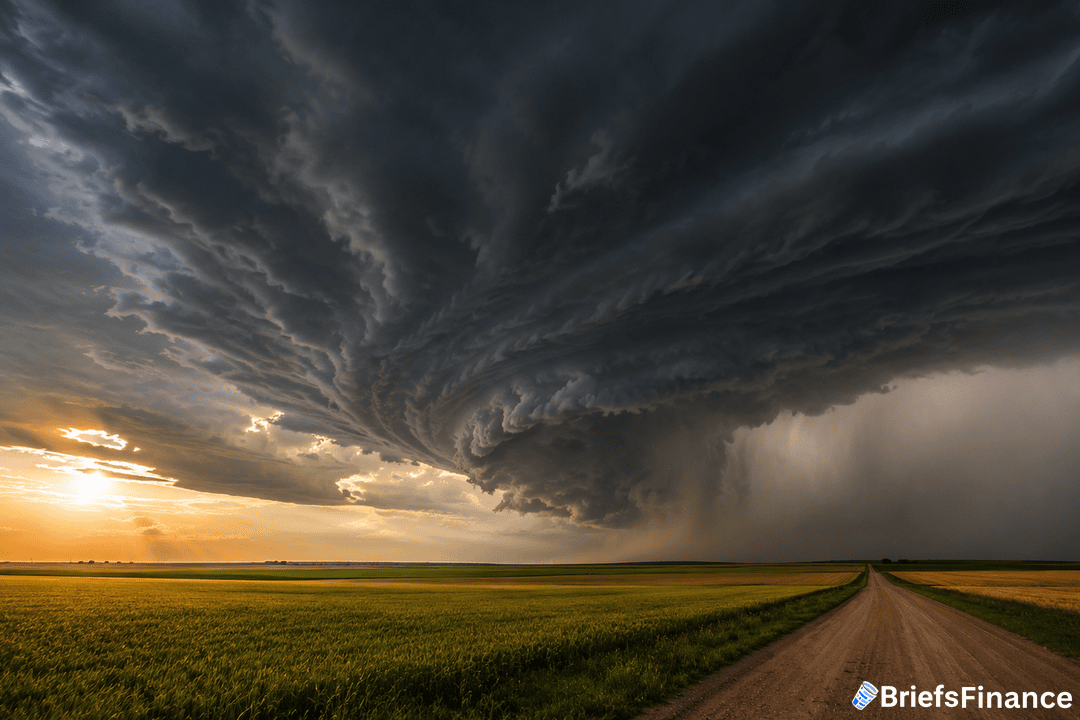
In 2024, the country logged 27 separate billion-dollar disasters. That was the second most ever, behind only the 28 counted in 2023.

Those storms were not small. They drove much of the recent jump in home insurance bills.

We watch the data that quietly moves your money in Market Briefs, and joining gets you a free investing masterclass too.

Why Investors Should Care

Insurance prices are built on disaster data. When the data gets thinner, the risk gets harder to measure.

And uncertainty is rarely cheap. That cost flows straight to homeowners.

It also flows to anyone who builds or owns property. The same goes for the wider housing market.

A nonprofit called Climate Central has stepped in to keep counting. The torch got passed, but the federal stamp did not come with it.

Markets hate a blind spot. Less public data tends to push prices higher, not lower.

The Trend Did Not Stop

For insurers pricing a riskier map, the line was already pointing up. Losing the official record does not bend it back down.

The events keep coming. The bills keep following.

The only thing that changed is who keeps score. The risk itself did not move.

The Cost Behind The Count

The 2024 total was staggering. Those 27 events cost about $182.7 billion.

That made 2024 the fourth-costliest year on record. Severe storms made up 17 of the 27 events.

The full record runs deep. Since 1980, the U.S. has logged 403 billion-dollar events.

Together they top $2.9 trillion in damage. That is the history insurers price against.

The count began back in the 1980s. It soon became a go-to gauge of climate risk.

Bond raters leaned on it. So did city planners and insurers.

NOAA pointed to shifting federal priorities. That was the reason it gave for ending the count.

Now that signal is fading from public view. Insurers still keep their own models.

But homeowners lose a free, neutral yardstick. That makes it harder to question a rate hike.

The gap matters for your wallet. A neutral count kept insurers honest on price.

Without it, rate hikes face less pushback. Investors in property lose a clean signal too.

What To Watch

The number to follow now lives outside the government. Climate Central's count is the new scoreboard.

The disasters did not stop. Only the federal tally did.

If you like knowing which numbers matter before the headlines, read Market Briefs each morning. It is free, and a 45-minute investing class comes with it.

Disclosure

Trending Briefs

Get Market Briefs every morning for free!

No fluff. No noise. No politics. Just finance news in 5 minutes.
Subscribe Free

Recent News

1 2 3 27

Get Market Briefs delivered to your inbox every morning for free!

No fluff. No noise. No politics. Just finance news you can read in 5 minutes.

Blogs

June 18, 2026
What Is a Stop Loss Order? A Simple Guide
  • A stop loss order automatically sells a stock once it falls to a price you set.
  • It's a tool to cap losses or lock in gains without watching the market all day.
  • It works best for active strategies, and can backfire if used carelessly on long-term holdings.
Read More
June 18, 2026
Best S&P 500 Index Fund: How to Choose One
  • The best S&P 500 index fund for most investors is simply the cheapest, most established one that tracks the index well.
  • Funds like VOO, IVV, and SPY all hold the same 500 companies, so the biggest difference is the fee.
  • Pick one, automate your buys, and let time do the heavy lifting.
Read More
June 17, 2026
What Are Penny Stocks? Risks and Rewards Explained
  • Penny stocks are very low-priced shares of very small companies, often trading for just a few dollars or less.
  • They promise huge gains but carry huge risks: low liquidity, high failure rates, and wild price swings.
  • Most investors are better served by quality companies and funds than by chasing cheap shares.
Read More
June 17, 2026
Best Stocks for Beginners With Little Money
  • The best stocks for beginners with little money usually aren't individual stocks at all - they're low-cost index funds.
  • You can start with $100 or less and use small, regular investments to build wealth over time.
  • Focus on diversification and consistency, not on picking the next big winner.
Read More
June 16, 2026
Tech Stocks: A Simple Guide for New Investors
  • Tech stocks are companies in the information technology and related sectors, from software to chips to the internet giants.
  • They've driven much of the market's growth, but they can be volatile and richly valued.
  • The smart approach is to understand what you own and not let one sector run your whole portfolio.
Read More
June 16, 2026
What Is a Joint Stock Company? A Simple Guide
  • A joint stock company is a business owned by many people, each holding shares of stock that represent a slice of ownership.
  • It's the basic idea behind every public company you can buy on the stock market today.
  • Owning a share makes you a part-owner, entitled to a piece of the profits and growth.
Read More
June 16, 2026
Capital Gains Tax in California: A Simple Guide
  • Capital gains tax is what you owe when you sell an investment for more than you paid for it.
  • How long you held it matters: long-term gains are taxed more gently than short-term gains at the federal level.
  • Smart investors lower the bill with tools like tax-loss harvesting and holding for the long run.
Read More
June 15, 2026
Top Covered Call ETFs: How to Compare Them
  • Top covered call ETFs are income funds that own stocks and sell call options against them to generate steady cash.
  • The best one for you is the fund whose income, holdings, and fees fit your goals, not simply the one with the flashiest yield.
  • They all share one trade-off: more income today, less upside in a big rally.
Read More
June 15, 2026
What Are Stock Options? A Plain-English Guide
  • Stock options are contracts that give you the right, but not the obligation, to buy or sell a stock at a set price by a set date.
  • There are two kinds: calls (the right to buy) and puts (the right to sell).
  • Options can multiply gains or wipe out your money fast, so they suit investors who already know the basics.
Read More
June 15, 2026
EBITDA Margin: What It Is and How to Calculate It
  • EBITDA margin measures how much core profit a company keeps from each dollar of sales, before interest, taxes, and accounting deductions.
  • The formula is EBITDA divided by revenue, shown as a percent.
  • A higher, steadier EBITDA margin usually signals a more efficient, more durable business.
Read More
1 2 3 23
Share via
Copy link










