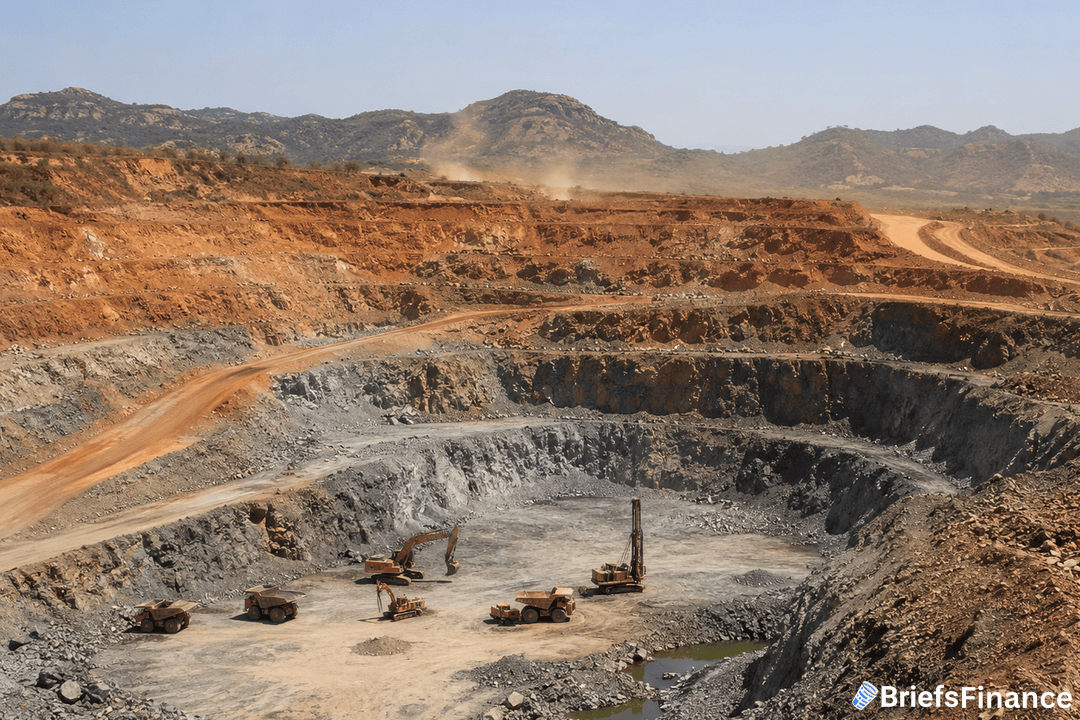
What the New Bill Would Do
In India, the taxes on a ton of ore can look completely different depending on which state it came from. New Delhi wants one set of national rules instead.
Prime Minister Narendra Modi's administration put forward a new bill in Parliament that would enable the central government to impose restrictions and maximums on the mineral taxes and levies that states can collect. Under the proposed amendment, combined state charges could not be excessive compared with a mine's economic value and profitability.
In plain terms, a state could no longer pile on taxes so thick that a profitable mine turns into a losing one. The central government already holds broad control over mines and mineral development, but states had been allowed to collect extra levies based on how much was extracted.
The bill would pull that authority back toward the center. The stated goal is to make mining policy stable and predictable, so companies know what they will pay before they start digging.
The current patchwork makes that hard. When each state sets its own fees, miners face a guessing game, and the government says that is holding back investment.
Why States Are Expected to Fight
The timing is delicate. The proposal follows a Supreme Court decision from August 2024 that sided with the states on mining taxes.
Get the free Always Be Buying eBook and learn the simple system for building wealth on any income
The new bill would not overturn that ruling. It would put strict limits on how far states can go with the taxing power the court recognized.
Those states are already sore about money. Last year, New Delhi reduced consumption taxes without prior warning, shrinking state revenues and worsening friction between the center and regional governments.
Rohit Chandra, an assistant professor at the Indian Institute of Technology Delhi, expects a fight no matter which party runs a state. "States from across the political spectrum will have a problem with this," he says.
What It Means for Investors
The government's case against the current setup is simple. When state taxes are uneven and high, miners face uncertain costs, operations become unviable, and investment dries up.
There is also a warning in the proposal. If domestic minerals become too expensive, imports could rise even though local resources are enough to meet demand.
That warning matters for more than politics. If India ends up buying minerals from abroad, local mining jobs suffer and money leaves the country.
Mining runs on long timelines. A mine can take years to bring online, and a company that commits that much capital needs to know the tax bill will not change halfway through.
Rajib Maitra, a partner at Deloitte India, reads the bill as a step toward coordination. "Overall, the proposal appears aimed at strengthening fiscal coordination between the center and states, creating a more consistent taxation framework across jurisdictions," he says.
For investors, the stakes show up in the cost of everything built with raw materials. India's infrastructure push depends on steel, cement, and power, all of which need minerals.
That means anyone with money in Indian stocks, infrastructure funds, or companies that use steel and cement is watching this fight closely. The outcome will help decide how much it costs to build the next wave of roads, power plants, and housing.
If the bill wins, mining costs should get steadier. If it loses, the uncertainty stays, and so does the risk of importing what India already has.
Download the free Always Be Buying eBook and start putting your money to work today