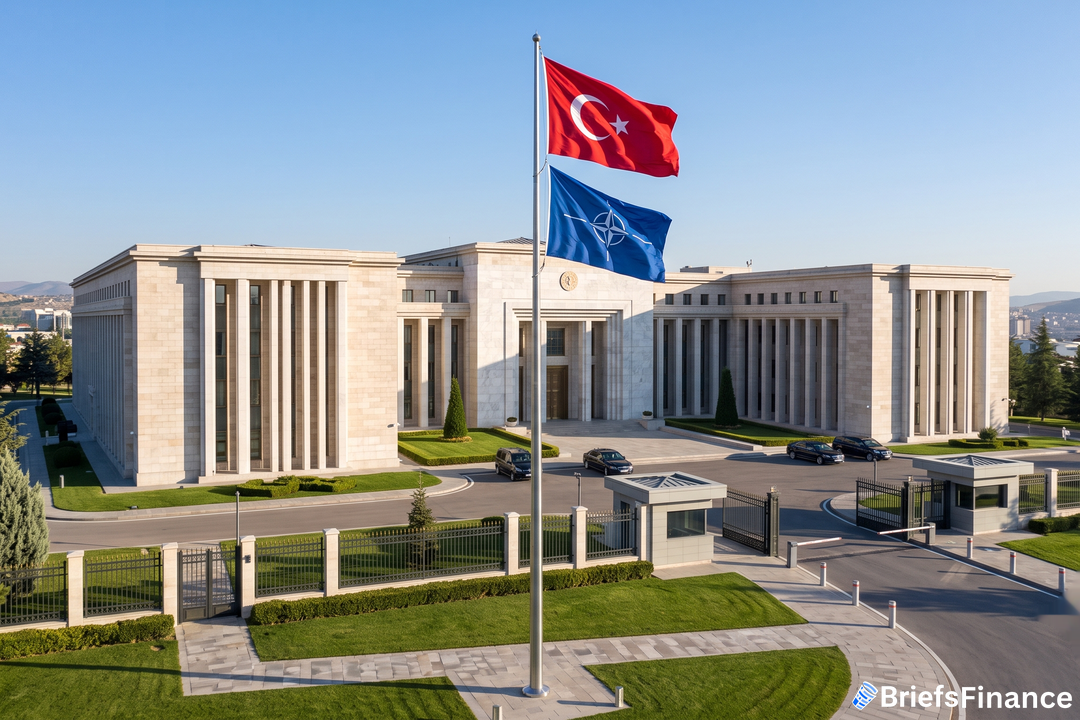
NATO members have not yet agreed on a joint statement for their upcoming summit. Disputes over pipeline funding and Ukraine aid are the main reasons.
Donald Trump, the US president, frequently argues that NATO members fall short on defense spending. He is also scaling down the US military presence in Europe. This backdrop makes the pipeline and Ukraine aid disputes even more difficult to resolve.
Pipeline Disputes Boil Over
Poland, with backing from a number of eastern European partners, wants NATO to fund an eastward expansion of the Cold War-era fuel pipeline system that links Western European bases. At the same time, Turkey is requesting financing for its own pipeline expansion projects as part of the alliance's $28 billion infrastructure overhaul to enhance fuel security. Both countries are competing for attention and funding.
Get your free investing masterclass bonus when you join Market Briefs, our free daily newsletter
Ukraine Aid Timeline Sparks Objection
A draft of the statement outlines that allies would provide Ukraine with €70 billion ($80 billion) across 2026 and 2027. This amount includes NATO's earlier annual commitment of €40 billion plus an additional €30 billion annually from a European Union loan. Italy has attempted to weaken the statement's commitment to continue military aid to Ukraine until the end of next year, claiming that the date constraint would assume a negotiated resolution of the conflict might occur earlier.
Rome has pushed to remove the 2027 reference. However, sources familiar with the Italian government's views indicated that Italy would probably not veto the consensus even if Poland manages to reopen discussions. "Support for Ukraine is not in question," a source familiar with the Italian government's views emphasized.
The United States' position on Ukraine has become more moderate recently. Trump has expressed cautious praise for President Zelenskyy and endorsed a Group of Seven pledge to back Ukraine and increase pressure on Russia.
The Ankara summit comes amid heightened tensions between NATO and Russia following the ongoing war in Ukraine. Turkey, a key NATO member with a strategic location, has played a mediating role in the conflict.
The Ankara summit marks a critical moment for NATO as it balances internal disagreements with the need to present a unified response to Russian aggression. Turkey's unique position as a NATO member with diplomatic ties to both Moscow and Kyiv adds complexity to the discussions. The alliance's $28 billion infrastructure overhaul, intended to improve fuel security, has become a flashpoint between member states competing for investment in their own strategic projects.
What to Watch
NATO members are preparing for a contentious gathering in Ankara with Trump. The summit's joint declaration will likely reference the need to preserve free navigation through the Strait of Hormuz and to prevent Iran from acquiring nuclear arms. Russia will probably be labeled a long-term danger to Euro-Atlantic security, consistent with the previous year's statement.
Subscribe to Market Briefs, our free daily newsletter, and claim your bonus investing masterclass