For more than two months, NATO said no to Donald Trump's plan to reopen the Strait of Hormuz. Now the group is building its own plan to do it.
The catch? The war has to stop first, and the alliance has to keep its 40-nation coalition together long enough to act.
About a fifth of the world's oil moves through that strait. It has been mostly shut since late February, when U.S. and Israeli strikes on Iran prompted Tehran to close it.
The Plan Coming Together
The UK and France would lead the mission. France's Macron and UK Prime Minister Starmer are pushing for it from the top.
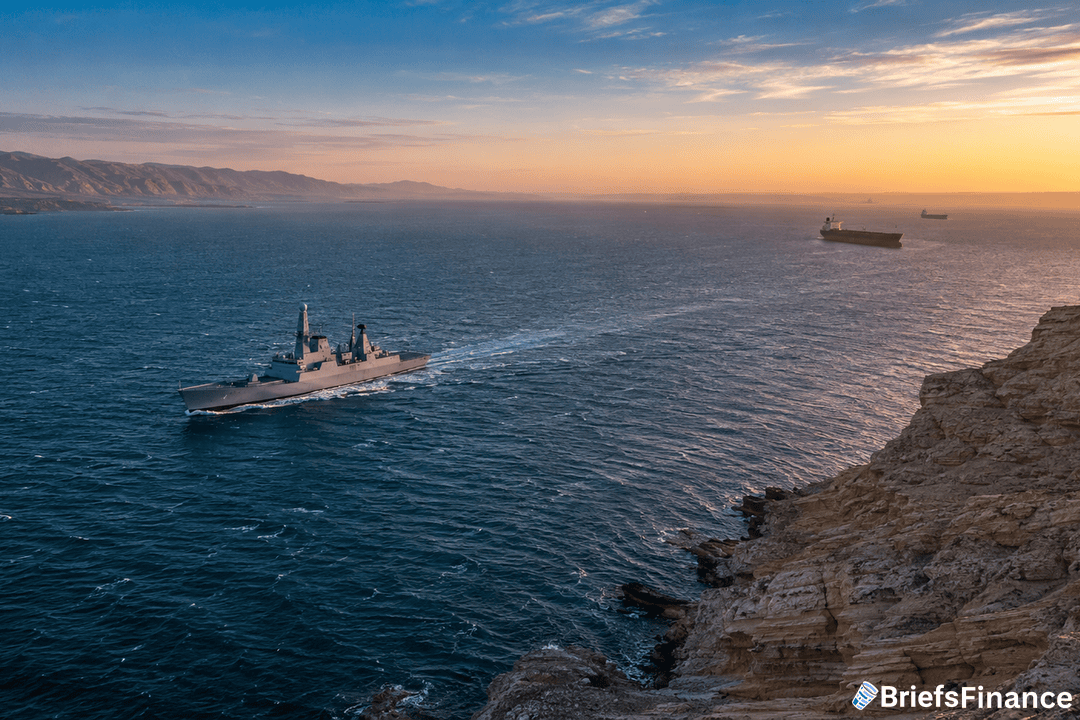
Britain has already moved HMS Dragon, a Type 45 destroyer, to the Middle East. The ship was pulled from defense duty near Cyprus to be ready.
Germany is moving ships too, with the Fulda minehunter and the Mosel supply ship now in the Med Sea. Around 40 nations are on the planning list, though no one has given the order to sail.
NATO will only deploy once two things happen. First, Iran and the U.S. have to lock in a real ceasefire. Second, a legal mandate has to be in place.
This is the same group that said no to Trump's "Project Freedom" plan earlier this spring. Germany, Italy, Spain, the UK, Japan, South Korea, Australia, and the EU all turned it down at the time.
What changed is the math at home. Oil prices, freight rates, and shop prices are creeping back up across Europe.
Want to keep up with how moves like this shape oil markets? Market Briefs covers it every weekday morning, plus you get a free investing masterclass when you sign up.
Why It Matters For Investors
The Strait of Hormuz is the most important oil chokepoint on earth. About a fifth of global oil and a big chunk of LNG (natural gas shipped as a liquid) move through it each day.
When the strait is blocked, oil prices jump fast. Crude topped $100 a barrel during the war, sending energy stocks higher while pinching other sectors at the gas pump.
A reopened strait under a NATO-led mission could push oil back down. But the path runs through a real ceasefire.
Both sides say the truce is in place. Yet U.S. forces hit two Iranian tankers earlier this month while Tehran said Washington is scheming.
For energy investors, the gap between "planning" and "sailing" is the whole trade. Oil majors, defense names, and tanker stocks have moved on every Gulf headline.
What To Watch
The plan depends on the truce holding long enough to lock in a legal mandate. If talks fall apart, the ships stay home and oil stays high.
If they hold, the group can move fast. The last word on this one isn't from a diplomat - it's from the price of crude.
For more on the moves shaping oil, defense, and the broader market, join 350,000+ investors reading Market Briefs, and grab the free 45-minute investing course that comes with it.