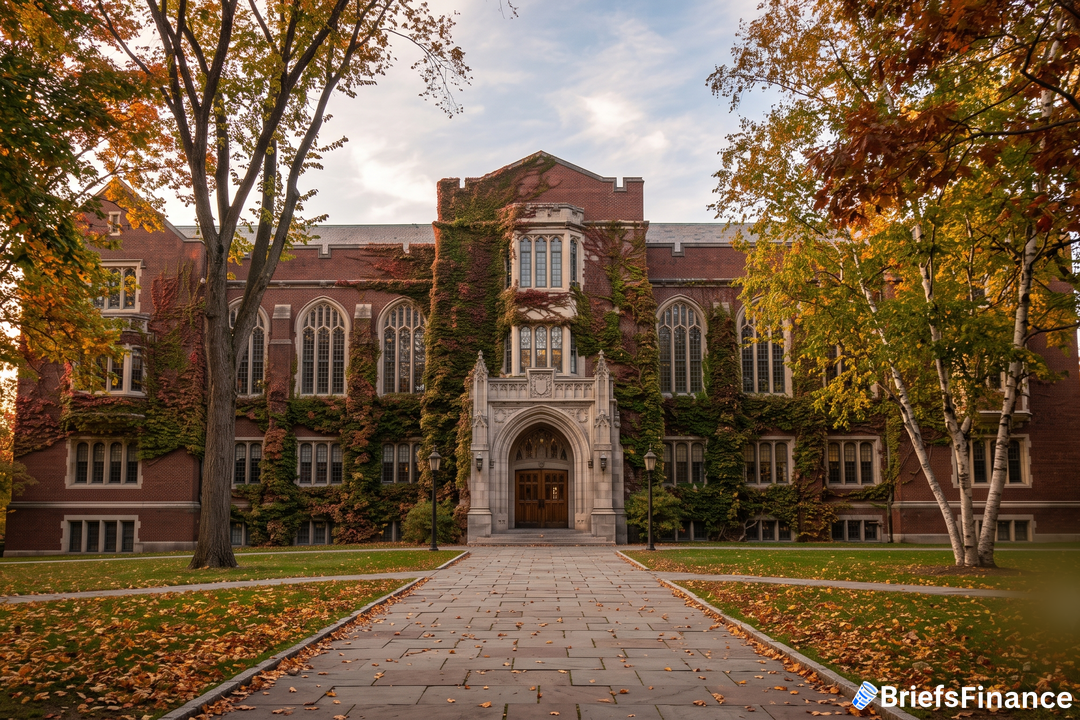
The university holds an Aa1 rating, the second-highest grade, but its $8 billion endowment is the smallest among Ivy League schools.
"The revision of the outlook to negative incorporates weakening in already thin operating performance that could persist for several years given rising expense pressures and financial aid commitments while implementing strategies to grow revenue through graduate programs," Moody's stated in its Thursday report.
A Brown representative declined to comment immediately.
Get your free investing masterclass bonus when you join Market Briefs, our free daily newsletter
The negative outlook signals that Moody's believes a downgrade within the next 12 to 18 months is possible if the university does not make progress on improving its financial results. Brown's Aa1 rating remains high, but a downgrade would raise its borrowing costs and could affect donor confidence. The university's thin operating margin - already below medians for similarly rated institutions - is under additional pressure from rising financial aid expenses and investments in new graduate programs intended to boost revenue.
This reliance on tuition and other revenue sources makes cost control critical for maintaining credit quality. Moody's report highlighted that Brown's financial strategy hinges on successful expansion of graduate enrollment without eroding academic standards or increasing debt levels further.
The university's $1.7 billion debt load is manageable given its endowment, but interest rate increases and growing capital needs could strain future budgets if operating performance does not improve.
The Aa1 rating is the second-highest on Moody's scale, just below Aaa. A downgrade would move Brown to Aa2, which could increase its borrowing costs for future debt issuances and potentially affect donor confidence. Brown's smaller endowment - though strong in returns - provides a smaller share of the operating budget compared to wealthier peers, making the university more dependent on tuition revenue and net student income. Moody's analysis underscores the challenge of balancing financial aid commitments with investments in new programs intended to diversify revenue streams.
Private universities across the U.S. have faced mounting cost pressures in recent years, including rising faculty salaries, deferred maintenance, and increased financial aid demands as the student population becomes more diverse. Brown, with its relatively thin operating margin, is especially vulnerable to these trends. The university's strategy of expanding graduate enrollment aims to generate new revenue, but it also requires upfront investment and carries execution risk.
Moody's will monitor whether Brown can achieve its financial targets without taking on additional debt or compromising its academic reputation. If operating performance does not improve within the next 12 to 18 months, a downgrade from the current Aa1 rating could follow, raising the cost of future borrowing.
Subscribe to Market Briefs, our free daily newsletter, and claim your bonus investing masterclass