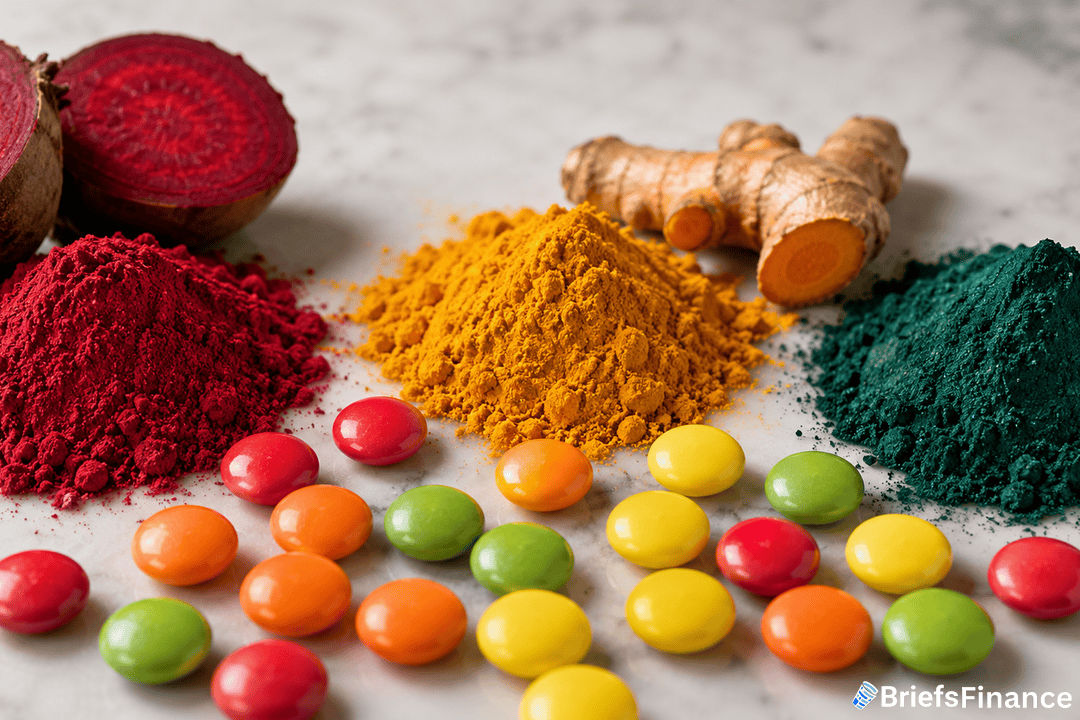
Mars is about to make M&M's without artificial dye. Most colors were an easy switch, with red from beets and yellow from turmeric. Then it hit blue, and the simple swap turned into a money pit.
Blue Is The Hard Color To Replace
Mars found natural stand-ins for most colors with little trouble. Blue was the holdout.
It colors blue and brown with spirulina, a blue-green algae powder. The food-grade kind costs more than $100 a pound. The turmeric behind yellow runs about $9 to $11.
Beets and turmeric are cheap to buy in bulk. The algae is not. It has to be grown, harvested, and squeezed down before it can color a thing.
The algae caused a second problem. It's thick and sticky, more like a smoothie than a dye. So it clogged the spray nozzles on M&M's machines and left a film in the gear, per the Journal.
That's a safety issue, not just a cost one. Mars has spent millions testing ways around it, racing the clock on a summer launch.
We turn stories like this - what a costly recipe change does to a company's profits - into a five-minute read in Market Briefs, and you get a free investing masterclass when you join.
Why Mars Is Switching Now
For years, Mars saw no reason to bother. It floated a dye-free plan in 2016, then dropped it after deciding shoppers didn't care.
What changed was Washington. Health Secretary Robert F. Kennedy Jr. has pushed food makers to drop man-made dyes, and Mars landed on a list of 27 companies that agreed to pull them from some products.
Regulators have already moved to phase out synthetic dyes from the food supply. They have banned four dyes so far, and are pressing companies to drop six more, including Blue 1 and Blue 2.
One of the four already gone is Red Dye No. 3, which the FDA pulled after studies tied it to cancer in rats. Kennedy has linked the dyes to behavior problems in kids, citing animal studies.
West Virginia went furthest, banning the sale of major dyes across the state in 2025.
What To Watch
Mars wants the candy out before its 85th birthday in August. It even weighed a red, orange and yellow mix before deciding the "sunset vibes were too strong," per the Journal.
The man who runs its North American snacks business called the fix "a daunting situation." As he put it, "you're messing with an 85-year-old icon."
The first dye-free promise came back in 2016, so this switch has been almost a decade in the making. The bigger question now is whether other food makers hit the same wall on blue.
Blue, it turns out, is the expensive one.
If you want this kind of read on consumer brands every morning, join 350,000+ investors reading Market Briefs and get a 45-minute investing course thrown in as a bonus.