Free NewsletterPro Login
S&P 500 6,287 +0.42%
DOW 44,521 -0.18%
NASDAQ 21,103 +0.71%
S&P 500 +12.4%
Briefs Finance Fund +24.8%
JOIN THE FUND →

Meta Ends RE100 Membership While Funding Gas-Fired Power Plants for AI

Published Jul 24, 2026
[tts_player]
Share:
Summary:
  • Meta ended its decade-long participation in the RE100 clean energy coalition.
  • The company has financed at least 11 natural gas plants, ten for a Louisiana data center.
  • Meta will continue using environmental certificates to claim 100% clean energy usage.

The Breakup

Meta has walked away from one of the biggest corporate clean energy clubs in the world. After ten years as a member, the company confirmed it is leaving the RE100 initiative - a group that asks big businesses to commit to 100% renewable electricity. Meta's spokesperson said the split was "mutual."

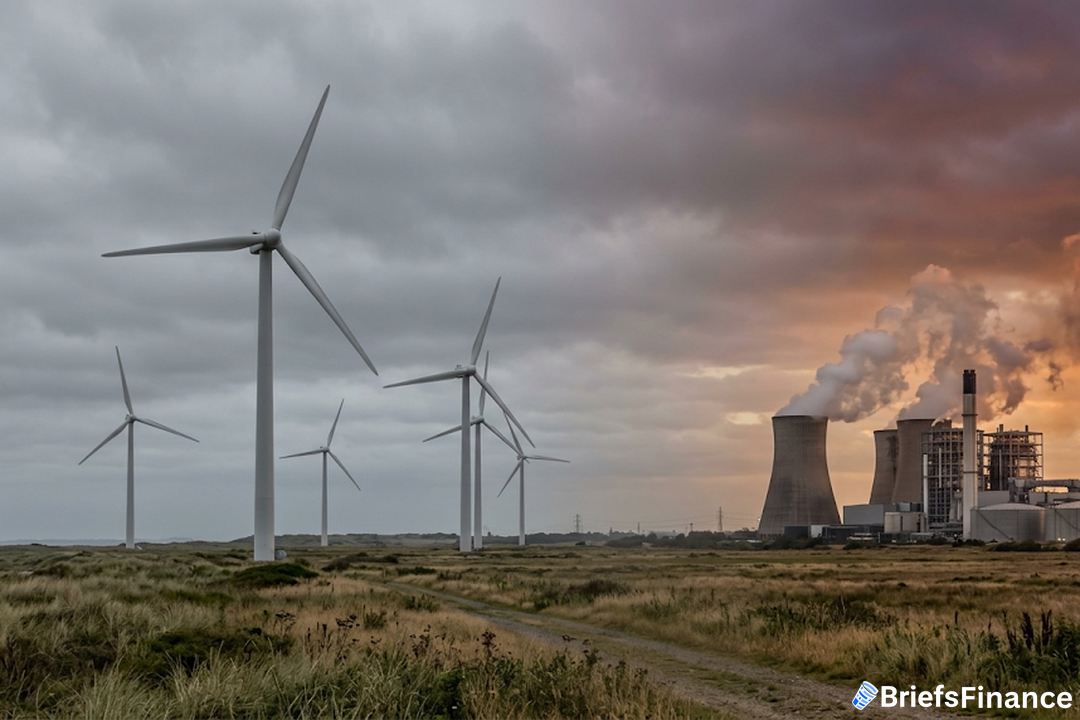
Meta's departure concludes a period during which the company increasingly relied on fossil fuels to run its artificial intelligence data centers. In the last 12 months, Meta has financed building no fewer than eleven gas-fired power facilities.

Last June, the company revealed plans for a 200 MW gas plant located behind its meter in Ohio, intended to supply a data center. Two months after that, Meta declared its intention to construct three sizable gas-fired power stations in Louisiana to provide power for its Hyperion data facility. Come April, Meta disclosed it would finance an additional seven gas power plants for that identical project. Together, these ten facilities will produce 7.5 GW of electricity, sufficient to supply all of South Dakota and more.

Get the market news that matters in a five-minute read with Market Briefs, our free daily newsletter

The Pollution Price Tag

Running data centers on natural gas 24/7 creates real environmental costs. For a single 1-gigawatt gas-powered data center, the numbers are striking. It releases 438 metric tons of nitrogen oxides per year.

Additionally, the plant emits 149 metric tons of fine particulates each year, particles small enough to lodge deep inside human lungs. Annually, the facility emits 298 metric tons of carbon monoxide and 61 metric tons of sulfur oxides.

Those are the kinds of figures that made RE100 take a closer look. The Climate Group, which administers RE100, recently revised its corporate guidance to require stricter reporting on advances toward renewable electricity targets. That change may have pushed Meta toward the exit.

Meta says it still plans to match its total data center electricity use "with 100% clean and renewable energy." But it plans to do that by purchasing environmental attribute certificates. This allows Meta to put money into a solar farm in one area while constructing a gas plant elsewhere; it then uses those certificates to assert the power is renewable, provided the solar farm generates sufficient electricity over a year to counterbalance the data center's consumption.

Other big tech companies are taking a different path. Microsoft, for example, is moving toward matching its electricity use on an hourly basis rather than annually. That approach pushes them to pair renewables with batteries instead of leaning on fossil fuels.

The AI Energy Dilemma

The massive power demands of artificial intelligence data centers are forcing tech companies to reconsider their energy strategies. Unlike traditional cloud workloads, AI servers run continuously at high utilization, requiring a steady baseload of electricity that renewables alone struggle to provide without storage. Natural gas plants offer a reliable, dispatchable power source that can meet these demands around the clock. This practical reality has led Meta and others to invest in gas-fired generation even as they maintain public commitments to clean energy.

Join Market Briefs, our free daily newsletter, for a quick daily rundown of the markets
Disclosure

Recent News

1 2 3 41

Get Market Briefs delivered to your inbox every morning for free!

No fluff. No noise. No politics. Just finance news you can read in 5 minutes.

Blogs

June 29, 2026
Portfolio Diversification: Why Putting All Your Eggs in One Basket Destroys Wealth
  • Real diversification means spreading investments across all 11 economic sectors plus bonds, alternatives, and cash so no single bet can sink the portfolio.
  • Different sectors perform at different times, so a diversified portfolio captures upswings while smoothing the brutal drawdowns that wipe out concentrated bets.
  • Total market index funds offer the simplest path to diversification, and annual rebalancing is what keeps the structure working over time.
Read More
June 29, 2026
Non Taxable Income: What It Is and Why It Matters
  • Non taxable income is money you receive that you don't owe income tax on.
  • The tax code treats workers, investors, and business owners very differently, and investors often come out ahead.
  • Learning how income is taxed is a quiet superpower for keeping more of what you earn.
Read More
June 29, 2026
Semiconductor Stocks: A Simple Guide for Investors
  • Semiconductor stocks are companies that design and make computer chips, the brains inside nearly every modern device.
  • The AI boom has turned chips into one of the market's most important and most watched groups.
  • They offer big growth potential, but come with high valuations and a notoriously cyclical history.
Read More
June 25, 2026
How Stocks Work: A Simple Guide for Beginners
  • A stock is a slice of ownership in a company - buy one, and you own a piece of the business.
  • You make money two ways: the share price rising over time, and dividends paid to shareholders.
  • The simplest path for most beginners is buying into the whole market through a low-cost index fund.
Read More
June 25, 2026
Stop Loss vs Stop Limit: What's the Difference?
  • A stop loss order sells your stock once it hits a trigger price, prioritizing getting you out.
  • A stop limit order only sells within a price range you set, prioritizing price over a guaranteed exit.
  • The trade-off: a stop loss almost always executes; a stop limit might not if the price moves too fast.
Read More
June 25, 2026
Energy Stocks: A Simple Guide for Investors
  • Energy stocks are companies that produce and supply the power the world runs on, from oil and gas to newer sources.
  • They make up one of the 11 sectors of the market and tend to move with energy prices and big-picture shifts.
  • Like any sector, the key is diversification and understanding the forces driving demand.
Read More
June 18, 2026
What Is a Stop Loss Order? A Simple Guide
  • A stop loss order automatically sells a stock once it falls to a price you set.
  • It's a tool to cap losses or lock in gains without watching the market all day.
  • It works best for active strategies, and can backfire if used carelessly on long-term holdings.
Read More
June 18, 2026
Best S&P 500 Index Fund: How to Choose One
  • The best S&P 500 index fund for most investors is simply the cheapest, most established one that tracks the index well.
  • Funds like VOO, IVV, and SPY all hold the same 500 companies, so the biggest difference is the fee.
  • Pick one, automate your buys, and let time do the heavy lifting.
Read More
June 17, 2026
What Are Penny Stocks? Risks and Rewards Explained
  • Penny stocks are very low-priced shares of very small companies, often trading for just a few dollars or less.
  • They promise huge gains but carry huge risks: low liquidity, high failure rates, and wild price swings.
  • Most investors are better served by quality companies and funds than by chasing cheap shares.
Read More
June 17, 2026
Best Stocks for Beginners With Little Money
  • The best stocks for beginners with little money usually aren't individual stocks at all - they're low-cost index funds.
  • You can start with $100 or less and use small, regular investments to build wealth over time.
  • Focus on diversification and consistency, not on picking the next big winner.
Read More
1 2 3 24
Share via
Copy link











