Free NewsletterPro Login
S&P 500 6,287 +0.42%
DOW 44,521 -0.18%
NASDAQ 21,103 +0.71%
S&P 500 +12.4%
Briefs Finance Fund +24.8%
JOIN THE FUND →

Maine Is About to Become the First State to Ban New Data Centers

Published Apr 9, 2026
[tts_player]
Share:
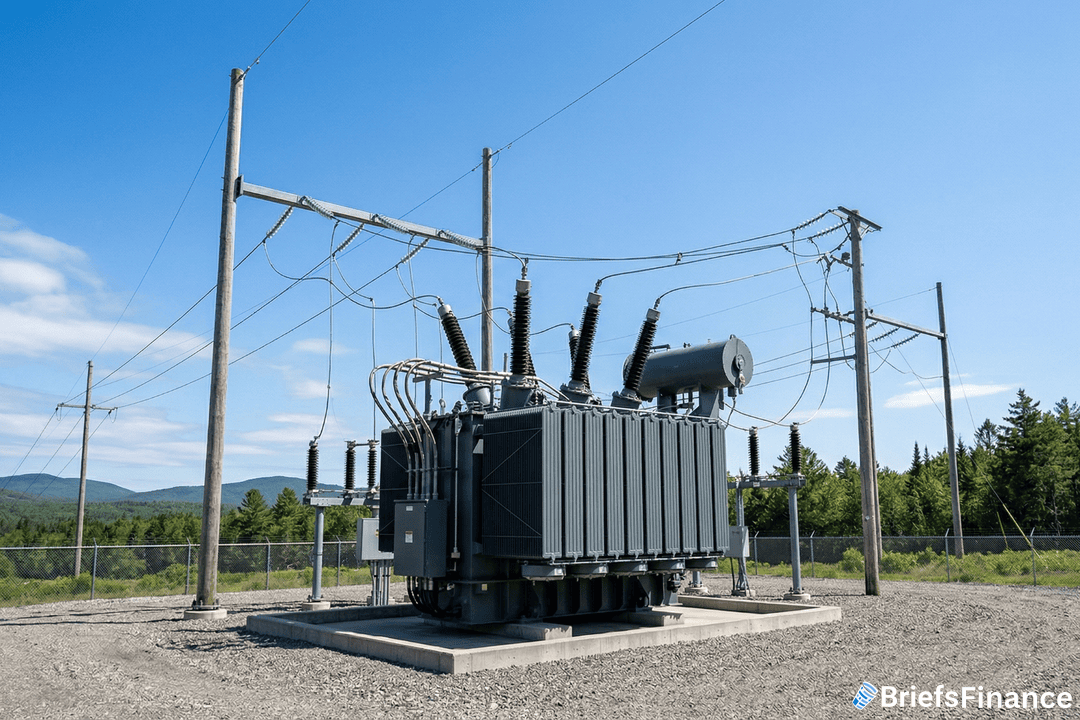
Large electrical transformer at a power substation, surrounded by gravel and fencing, with power lines and trees in the background under a clear sky.
Summary:
  • Maine's House passed a bill banning data center construction until November 2027 with bipartisan support, voting 82-62 this week.
  • The state fears the AI boom will spike electricity costs that are already among the highest in the nation.
  • At least a dozen other states, including Virginia and Georgia, have introduced similar moratorium bills.

Maine just pumped the brakes on the data center gold rush. While tech companies race to build massive computing centers across America to power AI, Maine became the first state to say: not here, not yet.

The House voted 82-62 this week to ban data center construction until November 2027.

The Electricity Problem

Data centers are power hogs - they run thousands of servers 24/7 and need enormous amounts of electricity to keep those servers cool. Maine already has some of the highest energy rates in the country. Adding data centers could push bills even higher for regular residents.

Seth Berry of Our Power, an energy nonprofit, put it bluntly: "If data centers are allowed to increase those costs even more, it could really be devastating especially for our lower- and working-class populations."

The Business Pushback

Tech groups and the Maine State Chamber of Commerce are pushing hard against the ban. Patrick Woodcock, the Chamber's CEO, argues Maine already has a robust permitting process: "A moratorium is the wrong approach."

Glenn Adams of Maine construction firm Sargent Corp. warns: "If Maine says 'no,' we're saying no to all these companies, to potential developers and investors, and they can quite quickly go somewhere else."

The Political Twist

Governor Janet Mills asked for exemptions allowing data centers in certain areas. The House crushed that amendment 115-29. Now Mills faces a veto decision complicated by her Senate campaign - she's trailing in primary polls and can't afford to anger voters who support the ban.

Worth Noting

Maine isn't alone - bills to pause data center construction have been introduced in at least a dozen states, including data center hotspots Virginia and Georgia. What Maine does next could set the template for how America handles the collision between AI ambitions and electricity costs.

Disclosure

Recent News

1 2 3 28

Get Market Briefs delivered to your inbox every morning for free!

No fluff. No noise. No politics. Just finance news you can read in 5 minutes.

Blogs

June 25, 2026
How Stocks Work: A Simple Guide for Beginners
  • A stock is a slice of ownership in a company - buy one, and you own a piece of the business.
  • You make money two ways: the share price rising over time, and dividends paid to shareholders.
  • The simplest path for most beginners is buying into the whole market through a low-cost index fund.
Read More
June 25, 2026
Stop Loss vs Stop Limit: What's the Difference?
  • A stop loss order sells your stock once it hits a trigger price, prioritizing getting you out.
  • A stop limit order only sells within a price range you set, prioritizing price over a guaranteed exit.
  • The trade-off: a stop loss almost always executes; a stop limit might not if the price moves too fast.
Read More
June 25, 2026
Energy Stocks: A Simple Guide for Investors
  • Energy stocks are companies that produce and supply the power the world runs on, from oil and gas to newer sources.
  • They make up one of the 11 sectors of the market and tend to move with energy prices and big-picture shifts.
  • Like any sector, the key is diversification and understanding the forces driving demand.
Read More
June 18, 2026
What Is a Stop Loss Order? A Simple Guide
  • A stop loss order automatically sells a stock once it falls to a price you set.
  • It's a tool to cap losses or lock in gains without watching the market all day.
  • It works best for active strategies, and can backfire if used carelessly on long-term holdings.
Read More
June 18, 2026
Best S&P 500 Index Fund: How to Choose One
  • The best S&P 500 index fund for most investors is simply the cheapest, most established one that tracks the index well.
  • Funds like VOO, IVV, and SPY all hold the same 500 companies, so the biggest difference is the fee.
  • Pick one, automate your buys, and let time do the heavy lifting.
Read More
June 17, 2026
What Are Penny Stocks? Risks and Rewards Explained
  • Penny stocks are very low-priced shares of very small companies, often trading for just a few dollars or less.
  • They promise huge gains but carry huge risks: low liquidity, high failure rates, and wild price swings.
  • Most investors are better served by quality companies and funds than by chasing cheap shares.
Read More
June 17, 2026
Best Stocks for Beginners With Little Money
  • The best stocks for beginners with little money usually aren't individual stocks at all - they're low-cost index funds.
  • You can start with $100 or less and use small, regular investments to build wealth over time.
  • Focus on diversification and consistency, not on picking the next big winner.
Read More
June 16, 2026
Tech Stocks: A Simple Guide for New Investors
  • Tech stocks are companies in the information technology and related sectors, from software to chips to the internet giants.
  • They've driven much of the market's growth, but they can be volatile and richly valued.
  • The smart approach is to understand what you own and not let one sector run your whole portfolio.
Read More
June 16, 2026
What Is a Joint Stock Company? A Simple Guide
  • A joint stock company is a business owned by many people, each holding shares of stock that represent a slice of ownership.
  • It's the basic idea behind every public company you can buy on the stock market today.
  • Owning a share makes you a part-owner, entitled to a piece of the profits and growth.
Read More
June 16, 2026
Capital Gains Tax in California: A Simple Guide
  • Capital gains tax is what you owe when you sell an investment for more than you paid for it.
  • How long you held it matters: long-term gains are taxed more gently than short-term gains at the federal level.
  • Smart investors lower the bill with tools like tax-loss harvesting and holding for the long run.
Read More
1 2 3 23
Share via
Copy link










