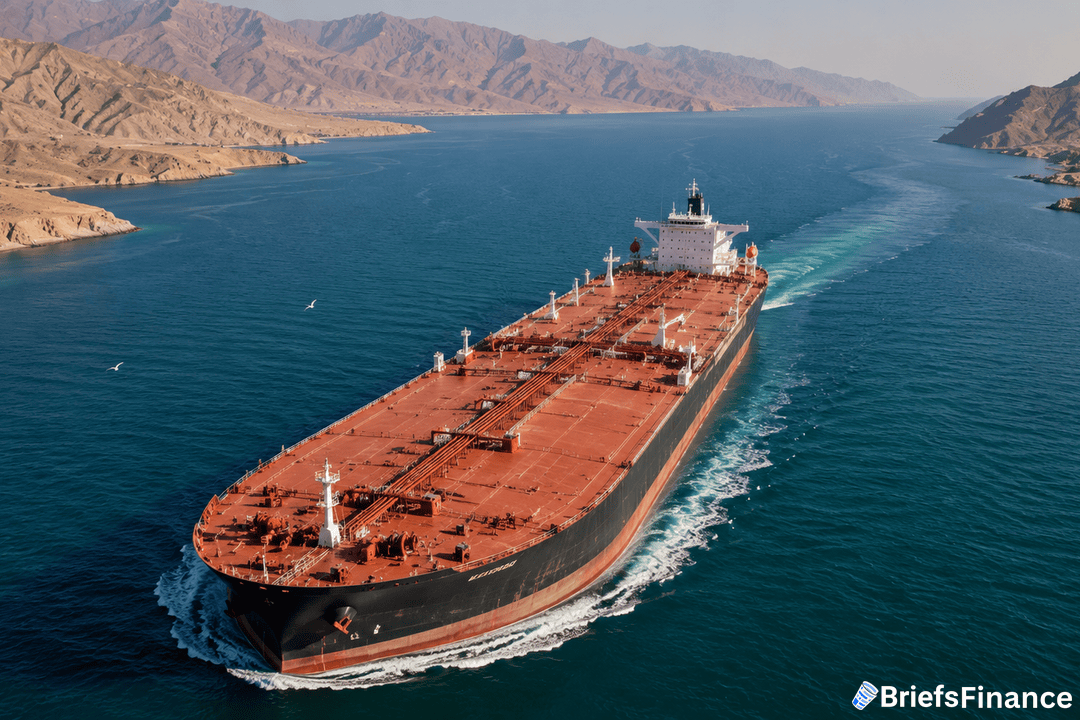
Iran closed the Strait of Hormuz on Saturday. The same team that ordered the move boarded a plane for Switzerland the same day to meet U.S. negotiators on Sunday.
Iran Re-Closed Hormuz Just Before Talks
Iran's Revolutionary Guard re-imposed limits on the Strait of Hormuz on Saturday. It cited Israeli strikes in Lebanon and what it called U.S. violations of the ceasefire.
Ship crews were warned not to approach the waterway. The U.S. military said its forces remain in the area and that 55 ships passed through the strait safely on Saturday.
So Iran says the strait is closed. The U.S. says it is open in practice.
What investors price into oil and shipping depends on which side holds.
About a fifth of global oil moves through Hormuz, so even a partial blockage rewires the global energy market.
Mohammad Mokhber, an adviser to Iran's supreme leader, warned that energy flow in the Middle East will halt as long as the U.S.-Iran agreement "remains only on paper." That kind of public threat tends to push crude prices higher even before any ship actually stops.
Israeli strikes in Lebanon killed 83 people Friday and another 32 Saturday, per Lebanon's health ministry and civil defense. Those deaths are why Iran is treating the deal as already breached.
Israel agreed to a renewed ceasefire with Hezbollah on Friday. But the strikes kept going into Saturday, which is what set off the latest closure threat.
Every morning, Market Briefs explains how geopolitics actually moves your portfolio - delivered in five minutes, plus a free investing masterclass when you join.
Switzerland Talks Are Set For Sunday
Top U.S. negotiators Jared Kushner and Steve Witkoff are already in Burgenstock, Switzerland, working through the details. Vice President JD Vance said he expects to join "sometime in the next couple of days" but called it "a delicate coordination dance."
Iran's team is led by Parliament Speaker Mohammad Bagher Ghalibaf and Foreign Minister Abbas Araghchi. It includes Central Bank Governor Abdolnaser Hemmati and other senior staff, and it was heading to Switzerland on Saturday.
Pakistan and Qatar will mediate. They are the reason the talks first set for Friday are back on for Sunday, after Iran walked out as Israeli strikes in Lebanon went on.
The deal signed earlier in the week gives both sides 60 days to settle a long-term plan, and that clock is already running. The deal can be extended if both sides agree.
What To Watch
Oil markets will be the first to react Monday. If Hormuz traffic actually drops, expect crude prices to spike and shipping stocks to take a hit.
If Sunday's talks produce real movement on Lebanon and uranium limits, the energy unwind keeps going.
Both sides are holding the door open while threatening to slam it shut.
Join 350,000+ daily readers of Market Briefs and pick up a free 45-minute investing course when you sign up.