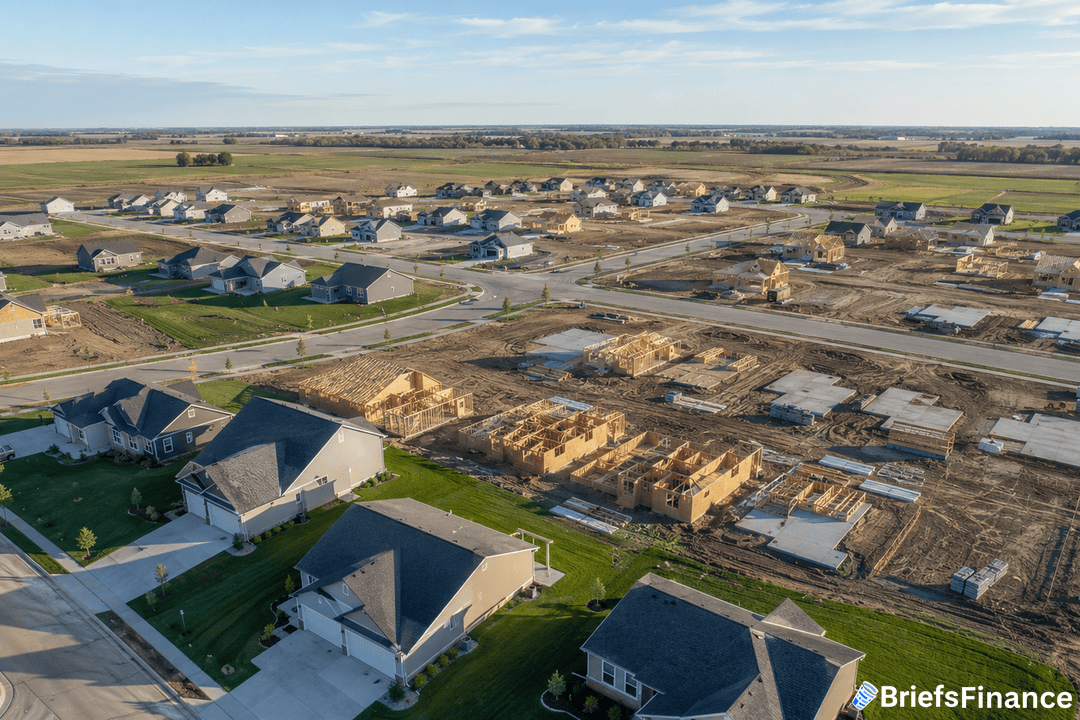
The best place to buy a home in 2026 isn't on a coast. It's Indiana. New York came in dead last, out of all 50 states plus Washington, D.C.
Why Midwest And South States Scored Highest
Realtor.com graded every state on two things. The first is whether people can afford homes. The second is whether builders are actually putting them up.
Each half counts for 50% of the score. Indiana topped the list with a 76.3 out of 100.
A typical home there costs about $295,810. That's roughly 28% of local income, under the 30% line that counts as within reach.
Iowa and South Carolina also earned A grades, with Texas just behind at A-minus. Iowa's typical listing runs $282,886, while Texas sits near $364,749.
North Carolina and Nebraska were close behind with B-plus grades. Twelve of the 13 top-rated states sit in the Midwest or South.
In fact, only about a dozen states have a typical home a typical earner can truly afford. Nearly all of them are in those same two regions.
Every morning, Market Briefs breaks down what moves like this mean for your money in five minutes, plus a free investing masterclass when you join.
Why The Coasts Scored Lowest
New York landed at the bottom, with a typical listing price of $668,173. The other failing grades went to Massachusetts, Rhode Island, Hawaii, California and Connecticut.
Price is only part of it. A high sticker alone doesn't sink a state, like a store that never restocks its shelves - what sinks it is not building.
These states build slowly, thanks to tight land, strict zoning, and high costs. Realtor.com's report lays out the divide in full.
"This year's refresh reveals a familiar regional divide," said economist Joel Berner, who noted some grades "moved dramatically in either direction."
Worth Noting
A few states swung hard. Delaware jumped from 19th to 7th, and Utah climbed from 29th to 17th. New Jersey, Maryland and Alabama each fell eight spots.
The cheapest states to buy in aren't the ones with the lowest prices. They're the ones still building.
If you want a clear read on housing and the economy each morning, join 350,000+ investors reading Market Briefs and get a free 45-minute investing course as a bonus.