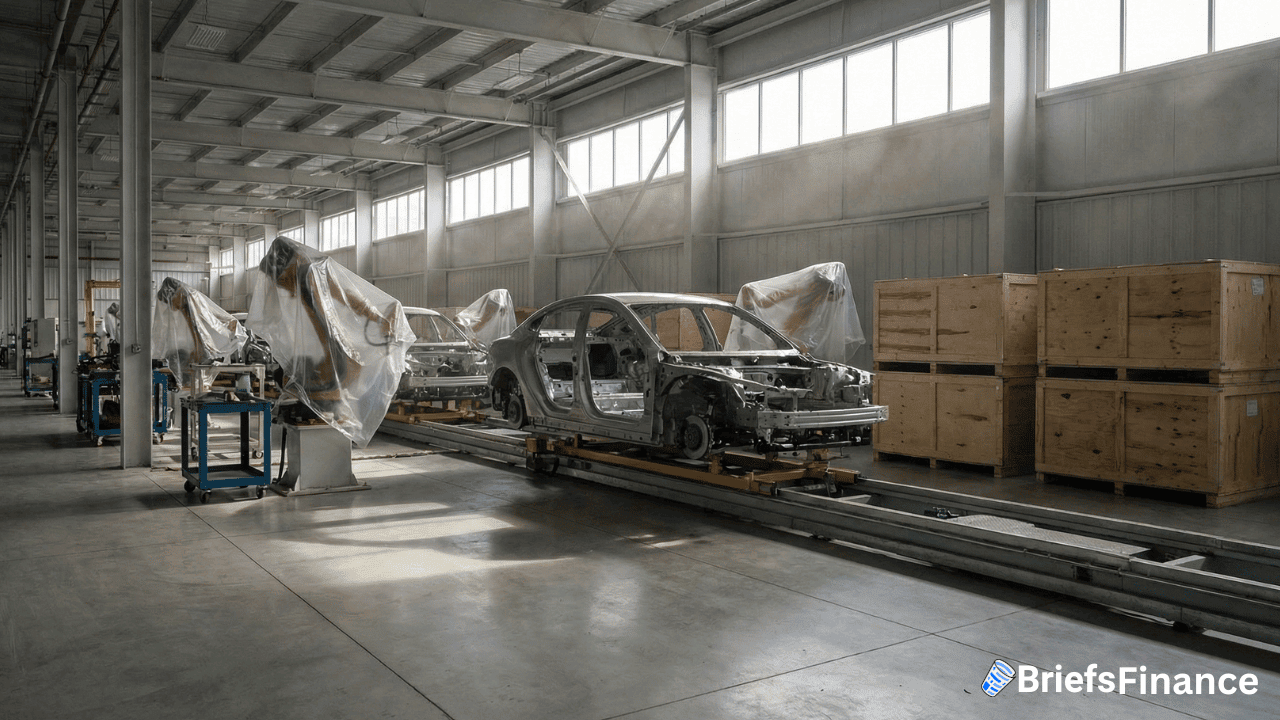
Massive Investments in Electric Vehicles
From 2000 to 2024, automakers and battery manufacturers invested over $200 billion in electric vehicle (EV) and battery manufacturing facilities in the United States.
According to Atlas Public Policy, about 40% of these investments were directed toward the Southeastern U.S. Notably, 84% of battery investments and 62% of EV manufacturing investments were made in Republican-led districts. These investments were projected to create more than 200,000 jobs, with 77% of these jobs located in those districts.
Hyundai's Significant Commitment
Hyundai Motor Group made a historic $12.6 billion investment in the Hyundai Metaplant in Georgia, which was the largest investment in the state's history.
The company aimed to hire approximately 8,500 workers by 2031. However, in late 2025, Hyundai experienced a drastic 50% drop in EV sales after federal incentives for EVs were removed on September 30, 2025. José Muñoz, CEO of Hyundai Motor Company, noted that while they still performed better than the industry, the loss had a significant impact.
Write-Downs and Financial Impacts
The pullback in EV investments has led to significant financial repercussions for automakers. Haig Partners managing director John Murphy estimated that U.S. automakers will face at least $100 billion in write-downs on their EV investments.
Ford announced it would take a $19.5 billion charge on its struggling EV business, while General Motors stated it would incur a $7.6 billion charge. Other international automakers, including Honda, Porsche, and Volvo, also warned of similar financial challenges.
Shifts in Market Strategy
In light of these changes, many companies are pivoting their strategies. Hyundai, for example, plans to produce a mix of 10 hybrid and EV models at its Metaplant, expecting sales to be about 30% EVs and 70% hybrids and gas vehicles.
Similarly, Bosch's investment of $250 million in a factory in Charleston, South Carolina, was initially based on projections of a 50% EV market share, which has now dropped to a 17% projection for 2030. Bosch has managed to reallocate its workforce from the EV motors division to other departments, producing safety devices and fuel injection systems instead.
What This Means for the Future
The future of EV investments in the South hangs in the balance as automakers adjust to a changing market.
The ambitious targets set by the Biden administration for EV sales have significantly shifted, from a goal of 50% of new car sales by 2030 to a more modest 17%. As companies navigate these challenges, the impact on jobs and manufacturing in the region will be closely watched.