Free NewsletterPro Login
S&P 500 6,287 +0.42%
DOW 44,521 -0.18%
NASDAQ 21,103 +0.71%
S&P 500 +12.4%
Briefs Finance Fund +24.8%
JOIN THE FUND →

How Investors Turn Water Rights Into A Private Asset

Published Jun 14, 2026
[tts_player]
Share:
Summary:
  • In the western U.S., a water right is property you can own, sell, and pass down, separate from any stock or bond.
  • The oldest "senior" rights get their full water even in a drought, while newer "junior" rights get cut first.
  • Investors usually buy the water by buying the farmland it is legally attached to.

Here's a strange fact about the American West. You can own a piece of a river.

Not the riverbank. The right to use the water itself.

That right is what a growing group of investors is really after.

First in time, first in right

Western water runs on a rule called prior appropriation. In plain English, whoever claimed the water first has the strongest claim.

Those older claims are "senior" rights. The newer ones are "junior" rights that sit further back in line.

When a drought hits, senior rights get filled first. Junior rights wait, and often get nothing.

Think of a senior right as a front-row seat that never loses its view. That's why California holds such a strong hand on the Colorado River.

A 1963 Supreme Court ruling locked in its share at 4.4 million acre-feet a year.

You buy the land to get the water

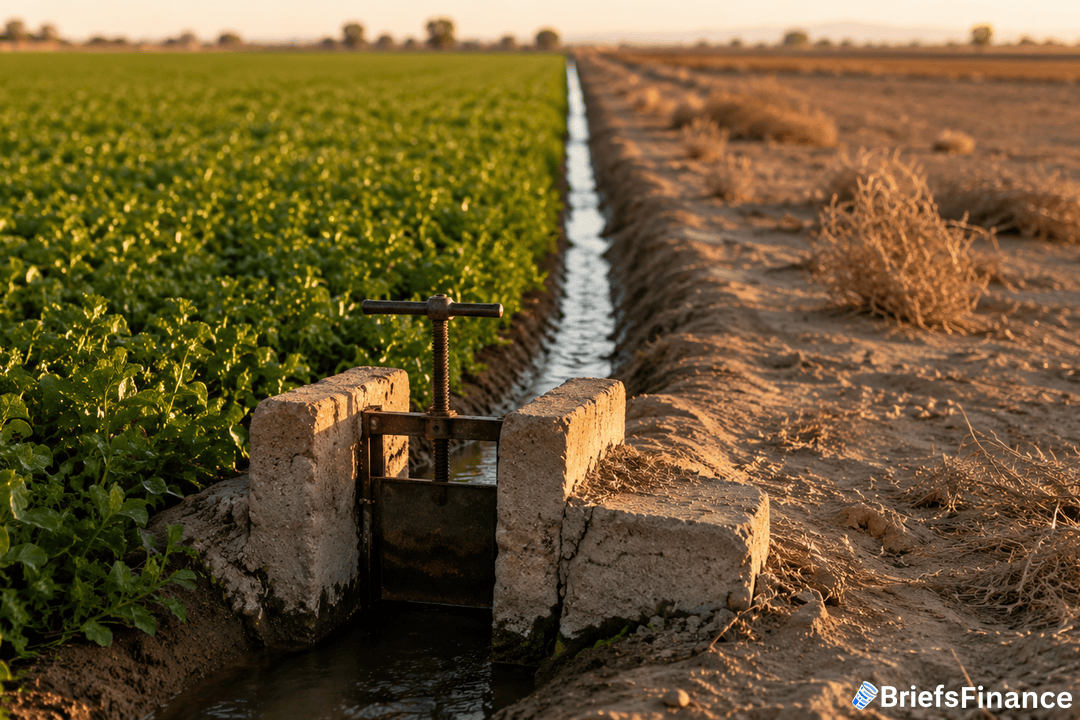
Western water rights are "appurtenant." That legal word means the right is attached to the land itself.

So the usual way to buy the water is to buy the farm on top of it. There's a catch built into the law: use it or lose it.

A right left unused for too long can be taken away. That's why investors who buy these farms keep them farming.

They often lease the land right back to the original family. The crop pays the bills and protects the right, while the water does the real work on value.

We explain how quirky markets like this actually work, in five minutes a day, over at Market Briefs, and new readers get a free investing masterclass too.

The priority ladder is strict

The rules can lead to odd results. A Saudi dairy company once pumped Arizona groundwater to grow alfalfa.

It shipped the crop home to feed cattle. Arizona later declined to renew the company's leases.

Alfalfa is a thirsty crop, using about five acre-feet of water per acre. The average home uses less than half an acre-foot a year.

On the Colorado River, California's top users follow a set order. Palo Verde farmers come first, then a Yuma project, then the Imperial and Coachella valleys.

Those valleys grow most of the country's winter salad greens. The water rights are what make that possible.

Why the math works

More than 80% of the water in the West goes to farms. That's also where the oldest, most valuable rights sit.

So a buyer who wants secure water doesn't bid on a reservoir. They bid on an old farm with old rights.

That makes water one of the few real assets that comes bundled with dirt, crops, and a legal guarantee.

Worth Noting

Owning and trading water still feels strange to most people. The West has worked this way since before statehood.

Buy the right farm, and you're really buying the water underneath it. For investors, that puts water rights beside other alternative investments that reward people who learn the rules first.

Want to understand the market without the jargon? Join 350,000+ readers getting Market Briefs each morning and get a free 45-minute investing course as a bonus.

Disclosure

Recent News

1 2 3 43

Get Market Briefs delivered to your inbox every morning for free!

No fluff. No noise. No politics. Just finance news you can read in 5 minutes.

Blogs

June 29, 2026
Portfolio Diversification: Why Putting All Your Eggs in One Basket Destroys Wealth
  • Real diversification means spreading investments across all 11 economic sectors plus bonds, alternatives, and cash so no single bet can sink the portfolio.
  • Different sectors perform at different times, so a diversified portfolio captures upswings while smoothing the brutal drawdowns that wipe out concentrated bets.
  • Total market index funds offer the simplest path to diversification, and annual rebalancing is what keeps the structure working over time.
Read More
June 29, 2026
Non Taxable Income: What It Is and Why It Matters
  • Non taxable income is money you receive that you don't owe income tax on.
  • The tax code treats workers, investors, and business owners very differently, and investors often come out ahead.
  • Learning how income is taxed is a quiet superpower for keeping more of what you earn.
Read More
June 29, 2026
Semiconductor Stocks: A Simple Guide for Investors
  • Semiconductor stocks are companies that design and make computer chips, the brains inside nearly every modern device.
  • The AI boom has turned chips into one of the market's most important and most watched groups.
  • They offer big growth potential, but come with high valuations and a notoriously cyclical history.
Read More
June 25, 2026
How Stocks Work: A Simple Guide for Beginners
  • A stock is a slice of ownership in a company - buy one, and you own a piece of the business.
  • You make money two ways: the share price rising over time, and dividends paid to shareholders.
  • The simplest path for most beginners is buying into the whole market through a low-cost index fund.
Read More
June 25, 2026
Stop Loss vs Stop Limit: What's the Difference?
  • A stop loss order sells your stock once it hits a trigger price, prioritizing getting you out.
  • A stop limit order only sells within a price range you set, prioritizing price over a guaranteed exit.
  • The trade-off: a stop loss almost always executes; a stop limit might not if the price moves too fast.
Read More
June 25, 2026
Energy Stocks: A Simple Guide for Investors
  • Energy stocks are companies that produce and supply the power the world runs on, from oil and gas to newer sources.
  • They make up one of the 11 sectors of the market and tend to move with energy prices and big-picture shifts.
  • Like any sector, the key is diversification and understanding the forces driving demand.
Read More
June 18, 2026
What Is a Stop Loss Order? A Simple Guide
  • A stop loss order automatically sells a stock once it falls to a price you set.
  • It's a tool to cap losses or lock in gains without watching the market all day.
  • It works best for active strategies, and can backfire if used carelessly on long-term holdings.
Read More
June 18, 2026
Best S&P 500 Index Fund: How to Choose One
  • The best S&P 500 index fund for most investors is simply the cheapest, most established one that tracks the index well.
  • Funds like VOO, IVV, and SPY all hold the same 500 companies, so the biggest difference is the fee.
  • Pick one, automate your buys, and let time do the heavy lifting.
Read More
June 17, 2026
What Are Penny Stocks? Risks and Rewards Explained
  • Penny stocks are very low-priced shares of very small companies, often trading for just a few dollars or less.
  • They promise huge gains but carry huge risks: low liquidity, high failure rates, and wild price swings.
  • Most investors are better served by quality companies and funds than by chasing cheap shares.
Read More
June 17, 2026
Best Stocks for Beginners With Little Money
  • The best stocks for beginners with little money usually aren't individual stocks at all - they're low-cost index funds.
  • You can start with $100 or less and use small, regular investments to build wealth over time.
  • Focus on diversification and consistency, not on picking the next big winner.
Read More
1 2 3 24
Share via
Copy link










