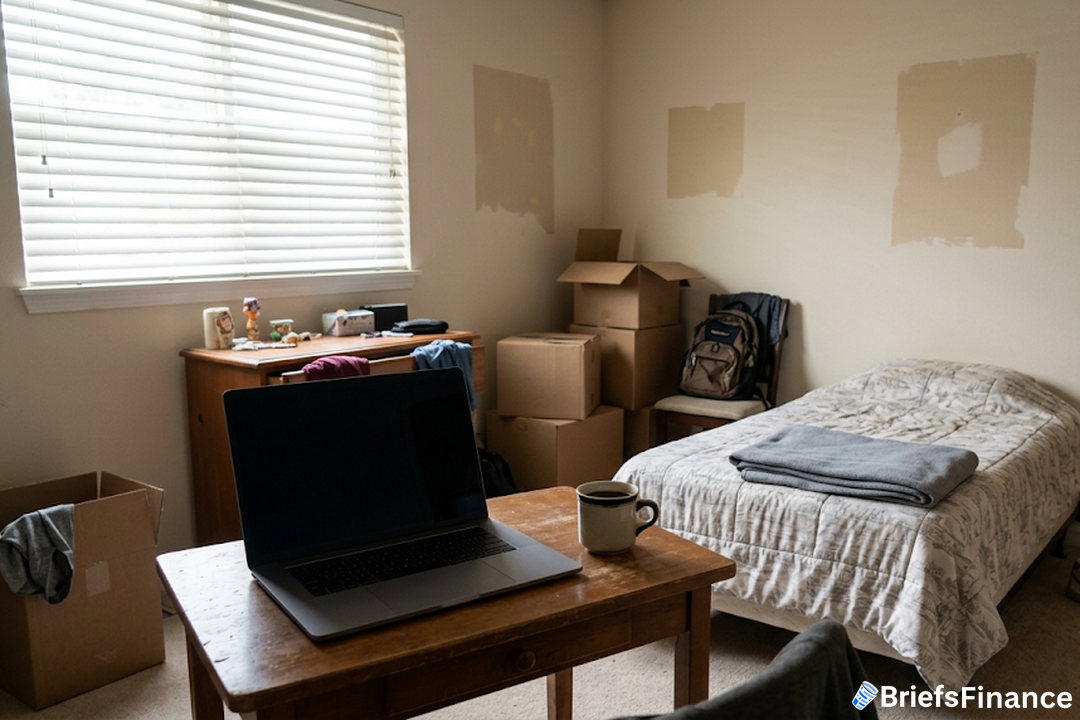
The Numbers Tell a Clear Story
The current percentage nearly matches the peak reached in 2020.
Pras Subramanian, a senior reporter at Yahoo Finance, said, "I wrote here like, congrats everyone, we're now Europe, right?" He was referring to a Federal Reserve survey that found half of adults under 29 living with their parents.
Why Young Adults Can't Afford to Move Out
One analyst on the program said, "It's not because these people don't have jobs, by the way, in in many cases. It's because they can't afford their own housing or they want to save money to eventually maybe be able to afford their own housing."
Get the market news that matters in a five-minute read with Market Briefs, our free daily newsletter
Another panelist added, "You also have mortgage rates that are up, electricity prices are up, insurance prices are high. I think they're just getting it, these young buyers are getting hit on all sides."
The analyst later noted, "there were some questions about those numbers," but acknowledged the housing market is challenged.
The other panelist then said, "I think if people have to move back in with their parents, that breaks the American dream, right?"
Pras Subramanian added, "You know, I also saw a stat that showed that for the first time ever, I think it's something like new home sales or new home pricing is below existing home sales. Uh, and it it kind of hints to the fact that like, maybe a lot of new homes suck, like they're just not really built well." The other panelist agreed there are concerns about construction quality.
The Deeper Shift
Julie Hyman, the host, shared her personal experience as a "sandwich generation" parent, noting that multi-generational housing can be beautiful by choice but is often driven by financial strain from housing, healthcare, and other costs. She reflected on her son leaving for college and the growing reality of multiple generations living together out of necessity.
The financial pressures extend beyond just home prices. Rising mortgage rates, increased electricity costs, and high insurance premiums all contribute to the burden on young adults. This combination of factors has made it increasingly difficult for many to achieve independent living, forcing them to either delay moving out or return to their parents' homes.
Meanwhile, the share of young adults living with parents now mirrors levels seen in parts of Europe, where multi-generational households have long been more common. The trend highlights a structural challenge in the U.S. housing market that shows no immediate signs of easing. Home prices have consistently outpaced wage growth over the past decade, and the supply of affordable entry-level homes remains critically low. As a result, many young adults are not only postponing homeownership but also delaying major life milestones such as marriage and starting families - ripple effects that carry significant economic and social implications.
Join Market Briefs, our free daily newsletter, for a quick daily rundown of the markets