The war risk premium that had pushed up fertilizer and crop prices earlier this year has now vanished. An interim ceasefire between the US and Iran restored trade through the Strait of Hormuz, and the United Nations food-price index dipped in response. Yet the world's grain supply is still expected to shrink from last year's all-time high.
The Ceasefire Effect
For months, investors worried that conflict in the Middle East would choke off shipments of grain and fertilizers. The Strait of Hormuz is a narrow waterway where a large share of global commodity trade passes. The US and Iran reached a temporary ceasefire that initiated a period of talks between the two countries, easing those supply-chain risks and dissolving the so‑called war risk premium that had been built into crop prices.
The result was a 0.3% drop in the FAO food-commodity price index from May to June 2026. The decline was led by grains and sugar, two categories that had been most sensitive to the threat of disruption. Even with the monthly fall, the index was still 1.7% higher than a year ago and remained almost 19% below the record set in March 2022 after Russia invaded Ukraine.
Back to the Basics
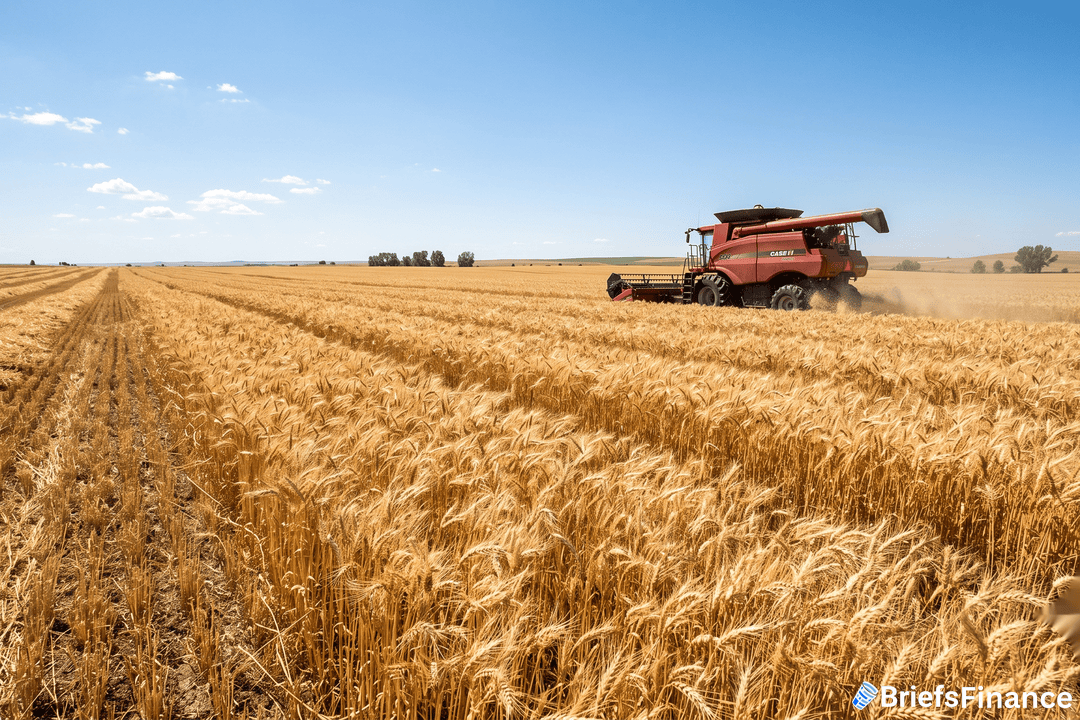
With the war premium gone, markets are now focused on what actually determines food prices: how many bushels of wheat, corn, and rice will fill silos this year. The FAO forecasts that 2026 global grain production will reach nearly 3 billion tons. That would make it the second-largest crop on record, trailing only the 2025 harvest.
Get your free investing masterclass bonus when you join Market Briefs, our free daily newsletter
But the crop is expected to be 1.9% smaller than last year's all-time high. "The emphasis has shifted back to more traditional fundamentals in the grains and oilseeds markets," said Joseph Glauber, an emeritus research fellow with the International Food Policy Research Institute, in an email. "Crop conditions look generally good overall." In other words, the farmer's field - not a war zone - is now the main factor investors should watch.
What to Watch
Attention is turning to weather across the Northern Hemisphere. A record-breaking heat wave has already hit Europe, and a developing El Niño pattern could cause flooding in some areas and dry conditions elsewhere. Any extreme weather that damages crops could further undermine global food security.
Grab your free investing masterclass bonus now and learn how to position for weather-driven volatility in agricultural markets.
Weather Risks Loom Large
The shift back to fundamentals means that even a small change in weather patterns can have outsized effects on global food prices. An emerging El Niño pattern poses a risk to global food security as it could harm harvests in major growing areas. With global grain production forecast to reach nearly 3 billion tons - 1.9% below the 2025 record - any significant crop shortfall would tighten food supplies.
The underlying tension in the region has not fully dissipated; analysts note that the interim ceasefire is fragile and that renewed hostilities could quickly reintroduce supply disruption premiums. For now, however, traders are pricing in a normal harvest season, leaving weather as the single biggest variable.
Subscribe to Market Briefs, our free daily newsletter, and claim your bonus investing masterclass