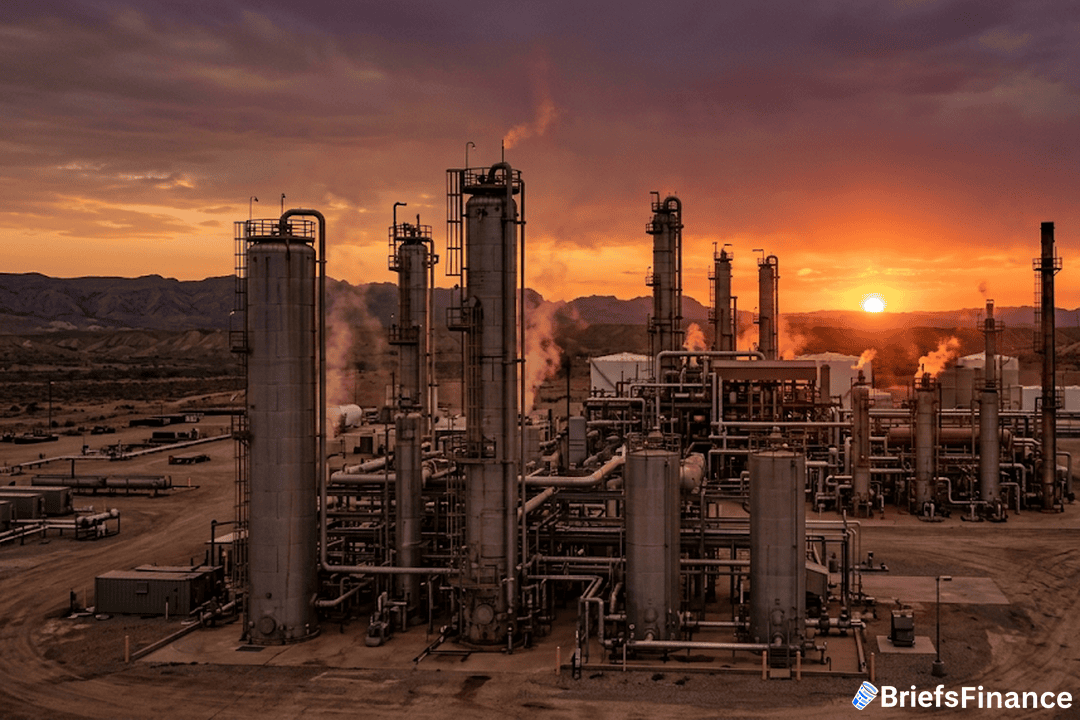
Temperatures are about to rise across the central and southern United States, and natural gas traders are already feeling the consequences.
Futures prices posted their biggest one-day gain in more than two months on Monday, after weather forecasts turned sharply hotter for the central and southern United States. That means more air conditioners running, more power plants burning gas, and a sudden scramble in the futures market.
Hot Forecasts and a Supply Squeeze
September natural gas futures climbed as much as 5.2% to $2.801 per million Btu on Monday, the market's biggest intraday move since May 28. The trigger was a forecast from Commodity Weather Group calling for much hotter conditions ahead, which would push up electricity demand and force power plants to burn more gas.
At the same time, supply is tightening. Gulf Coast LNG export flows climbed to a more-than-one-month high, as some terminals appear to be wrapping up seasonal maintenance. That means more gas is heading overseas and less is staying home for the domestic market. That combination created a genuine supply-demand squeeze, and futures prices reacted immediately.
The Short-Covering Effect
The bigger story is who got caught on the wrong side of this move.
Get the free Always Be Buying eBook and learn the simple system for building wealth on any income
Money managers had built up the largest net-short position in Henry Hub futures since 2020, according to CFTC data. Their short-only bets, meaning pure bets that prices would fall, were the highest since at least 2013, the start of Bloomberg's data on this metric.
When prices started climbing early Monday, those money managers had to buy back their short positions to limit losses. That buying pushed prices even higher, creating a feedback loop that traders call short-covering.
"This is not a new pattern," Eli Rubin of EBW Analytics Group said, pointing to a 288,000-contract short-covering event in spring 2024 that pushed futures up by nearly $1 per million Btu, even though the market was oversupplied at the time. Short-covering also helped drive a January rally, when a winter storm disrupted production and futures jumped 75% in three days.
In other words, when a lot of traders are betting one way, the reversal can be violent.
These moves highlight how financial positioning can move prices beyond physical supply and demand. Henry Hub is the U.S. benchmark for gas contracts, and money managers routinely build trades around seasonal weather and storage forecasts. The market still has abundant stockpiles, and new pipeline additions are expected later this year, but a crowded trade can still unwind violently. The spring 2024 episode showed that even an oversupplied market can produce a sharp rally when positioning is stretched.
What It Means for Your Portfolio
Here is the catch: prices are still below where they were recently. Domestic stockpiles are well above average, and new pipelines in West Texas are expected to add supply later this year. The forecast for August 10, 2026, shows continued heat, but the market is not exactly panicking.
For investors, the takeaway is about understanding what moves these markets in the short term. Weather forecasts shift, pipelines come online, and traders get caught off guard. A single hot week can spark a rally, but it does not change the underlying picture of abundant supply.
The real question is whether the heat holds and whether those storage numbers start shrinking faster than expected. If they do, this could be more than a one-day pop. If not, the rally could fade as quickly as it arrived.
Either way, it is a reminder that, as Rubin put it, "natural gas is a weather business, and the forecast can change everything."
Download the free Always Be Buying eBook and start putting your money to work today