How a Silo Full of Sand Keeps a Town Warm
Renewable energy has a stubborn flaw. The sun does not always shine. The wind does not always blow. That leaves a gap between when power is made and when people actually need it.
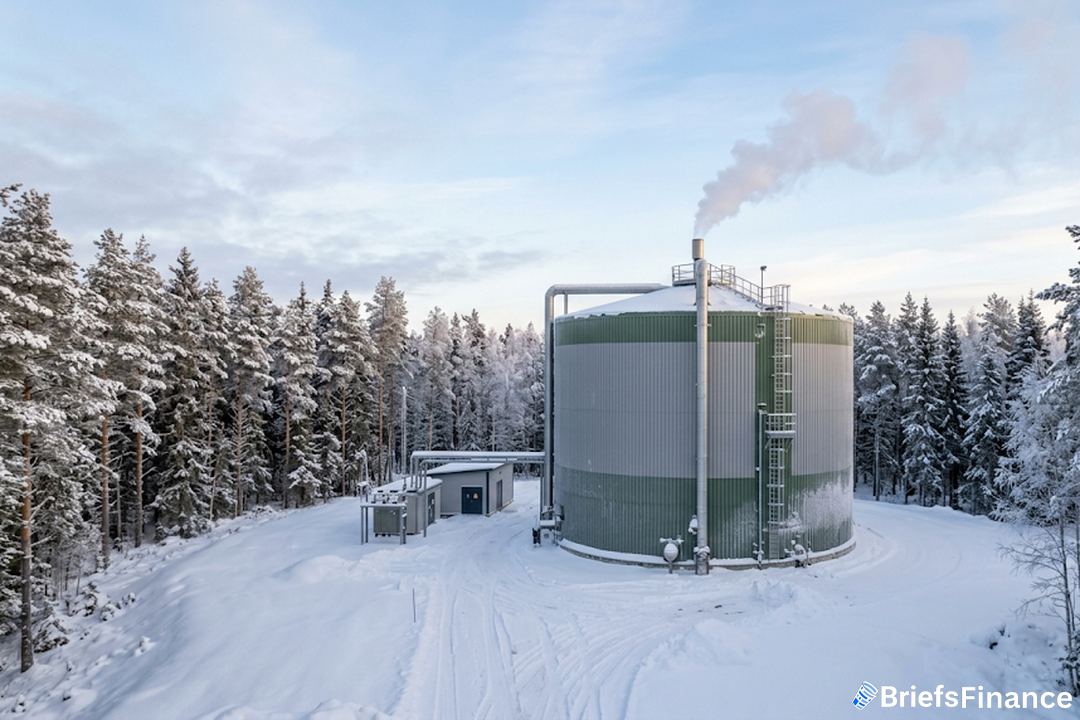
A small town in Finland just rolled out a fix that looks oddly clever. The town of Pornainen, home to about 5,000 people, now runs part of its heating network from a silo. The silo measures 13 meters in height and 15 meters in width. Inside it holds 2,000 metric tons of crushed soapstone, a material that holds heat very well.
Polar Night Energy built the system. Loviisan Lämpö, the local heating company, commissioned it. The idea is simple: use excess renewable electricity to heat the stone to very high temperatures, then let that heat radiate back into the town's hot water pipes over days or weeks.
During summer, one full charge can cover the town's heating needs for almost a month. In winter, it still lasts as much as one week. That is a long time compared to a typical battery.
This approach leverages the existing district heating infrastructure common in many northern European towns. The facility provides 100 megawatt-hours of thermal energy.
Get the market news that matters in a five-minute read with Market Briefs, our free daily newsletter
According to Jan Rosenow, a University of Oxford professor specializing in energy and climate policy, "you can store energy for long periods, not just two hours or four hours like lithium-ion batteries, but potentially for days and maybe even weeks."
Why It Could Change How We Think About Energy Storage
The real trick is timing. Electricity prices swing during the day. Electricity prices fall during times of abundant wind and solar generation. It is expensive when demand spikes.
The sand battery lets the town heat the sand when electricity is cheap, and use the steam later when buying power off the grid would be very expensive. Annette Höglund-Dönnes, Chief Commercial Officer at Polar Night Energy, compared it to charging a cell phone overnight when it is less expensive than during the day.
That business advantage adds up fast. In 2025, the system supplied roughly 30% of the municipality's district heating. Through the first few months of 2026, Loviisan Lämpö aims to produce between 55% and 60% from the sand battery.
A wood-chip power plant that was already in place continues to serve as a backup and for peak demand.
The catch: This sand battery only provides heat, not electricity. But Finland's Climate Minister, Sari Multala, said after visiting the plant that Polar Night Energy is also exploring ways to possibly generate electricity in the future, which she described as "groundbreaking."
What This Means for Your Energy Costs and Investments
For now, this is one town in Finland. But the technology is being watched closely around the world. Polar Night Energy has received inquiries from teams on every continent, especially from communities that rely on fossil fuels like coal and oil.
Polar Night Energy's CEO, Tommi Eronen, expressed optimism that a large share of future energy storage might consist of sand battery-like systems that do not require rare earth materials, contrasting with many chemical batteries like lithium-ion ones.
No stock tickers are involved here yet. But the underlying idea that you can buy electricity when it is cheap and use it later is something every investor can appreciate. Finland just found a way to do that with a pile of sand.
Join Market Briefs, our free daily newsletter, for a quick daily rundown of the markets