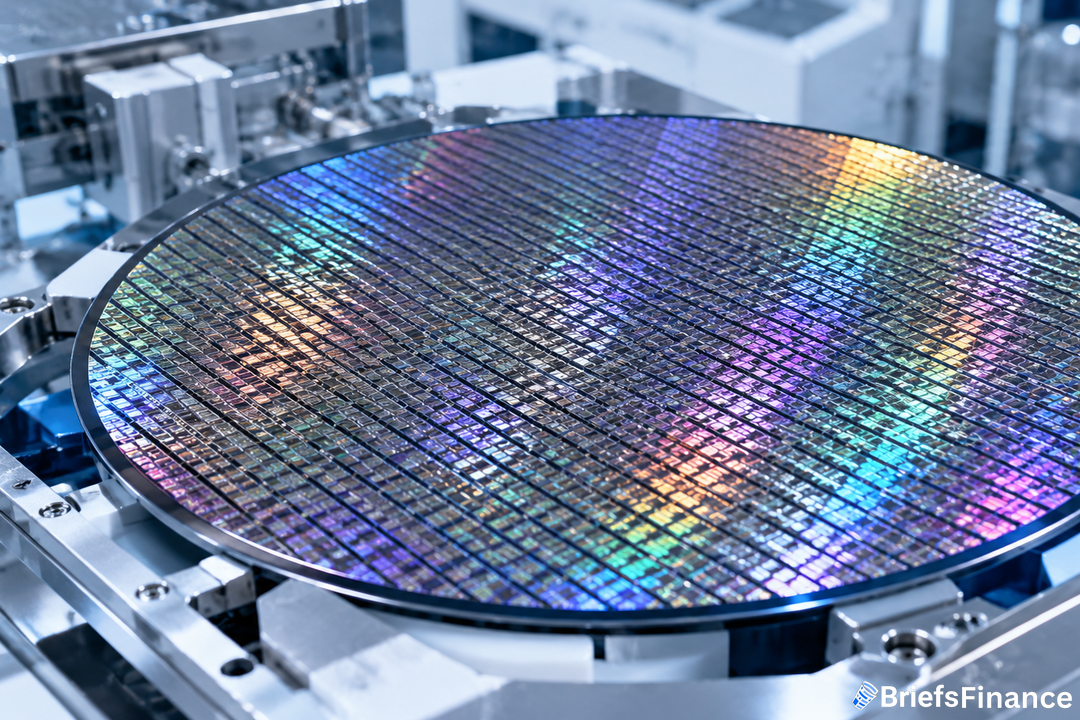
The total comes to 767.9 million shares, valued at $5.6 billion based on the post-IPO price. CXMT produces DRAM chips, essential memory hardware used in server databases and AI systems. It is now China's biggest producer and the fourth-largest in the world, behind only Samsung, SK Hynix, and Micron.
The stock distribution underscores how China's technology sector is changing in the wake of growing AI fortunes. Separately, Zhu committed to a 10-year lock-up on share sales, further demonstrating his alignment with the company's objectives. Such commitments are rare among Chinese firms listed on the mainland. Company leaders are now forced to juggle Beijing's governmental priorities alongside a fierce competition for skilled workers, as multinational tech companies find it hard to hold onto their best engineers.
According to Meng Shen, a director at the investment bank Chanson & Co., "This is very much a newly emerging phenomenon. '"Talent retention is definitely a key factor. In today's high-growth tech sectors, no single founder can drive success alone. It requires a massive influx of top talent".'"
Get the market news that matters in a five-minute read with Market Briefs, our free daily newsletter
The founder is not alone in this approach. Yan Junjie, the billionaire founder of AI firm MiniMax Group Inc., has promised to forgo any salary until his company reaches a theoretical AI target, and is giving away some of his own shares to longtime staff. Even global competitors Samsung and SK Hynix have provided bonuses - sometimes worth several hundred thousand dollars per person - to workers as they ramp up production to meet demand.
The employee bonus will not land overnight. The company has not said exactly which employees will get the shares. According to the IPO prospectus, the company employed 19,298 people at the close of 2025.
"Whether these promises will actually be fulfilled, and to what extent, depends entirely on how binding the commitments really are," Meng Shen said. "For founders at this stage, wealth eventually becomes nothing more than a number - and sometimes even a number that carries negative side effects."
Compared to the larger profits reaped by Zhu and the government, the stock bonus for workers is relatively small. Prior to the IPO, the Hefei city government - through local state-owned investment entities - owned over 30% of the company, and China's Big Fund II held more than 8%.
CXMT's listing on the Shanghai exchange was one of the largest tech IPOs in China this year, reflecting Beijing's push for semiconductor self-sufficiency amid US export controls. The company's rapid rise from a startup to a global DRAM player has been fueled by government backing and aggressive hiring, making talent retention a critical priority for its long-term competitiveness.
Join Market Briefs, our free daily newsletter, for a quick daily rundown of the markets