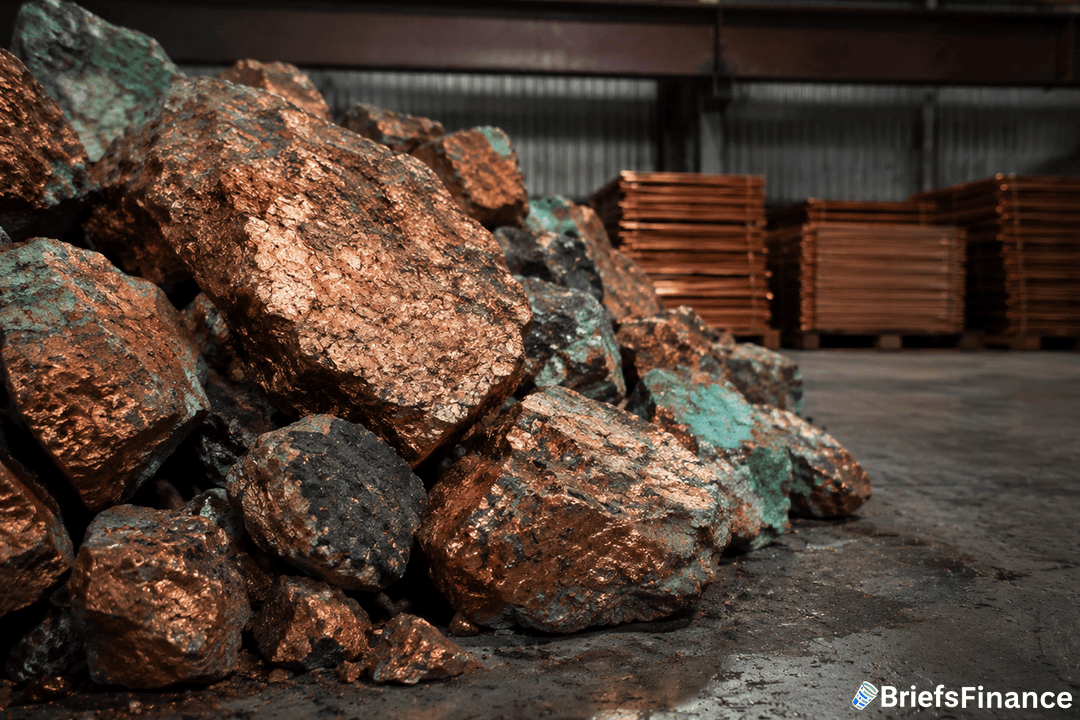
Traders are keeping an eye on upcoming US-Iran peace discussions and the Federal Reserve's monetary policy stance, as copper prices stabilized. On the London Metal Exchange, copper held steady around $13,340 per ton following weekend exchanges of strikes between the US and Iran that cast doubt on the ceasefire's durability. An unnamed US official stated that Washington and Tehran have mutually agreed to halt attacks, with further talks planned.
Besides the Middle East turmoil, traders are monitoring US monetary policy as Fed officials have shown growing support for rate increases in the near future to address persistent inflation. This approach generally strengthens the dollar, which creates a disadvantage for commodity prices.
Get your free investing masterclass bonus when you join Market Briefs, our free daily newsletter
Data released last week revealed that the personal consumption expenditures index climbed 4.1% year-over-year in May, the steepest rise since April 2023. Harry Jiang, who trades for China-Base Ningbo Group Co., remarked: "a strong dollar will remain in place amid resilient US economic data, pressuring base metals."
The recent price movements highlight the delicate balance between supply constraints, geopolitical risks, and demand expectations. However, the subsequent decline reflects ongoing concerns about high inflation and the potential for higher interest rates, which could slow economic growth and dampen metal consumption. Traders are also weighing the implications of the US-Iran conflict, which could disrupt supply chains or boost military spending, further influencing copper's trajectory.
Looking back, copper's rally earlier this year was fueled by tightening mine supply and a surge in orders from renewable-energy and electric-vehicle sectors. Those fundamentals remain intact, but the macro backdrop has shifted as central banks globally signal a longer period of restrictive policy. The interplay between these opposing forces - structural demand growth versus cyclical monetary tightening - will likely keep copper prices volatile in the near term.
Elsewhere, analysts at Goldman Sachs Group Inc. believe the Iran conflict could ultimately benefit metals demand. In a note, analysts including Samantha Dart listed increased electric vehicle adoption, greater renewable energy investment, higher defense budgets, and intensifying competition in artificial intelligence as factors supporting copper demand. The bank recently boosted its copper price forecasts to $13,735 per ton by end-2026 and $13,800 per ton on average in 2027.
By 12:07 p.m. local time on the London Metal Exchange, copper was nearly unchanged at $13,341.50 per ton. Other metals showed mixed results, with aluminum and nickel declining while tin gained slightly.
Subscribe to Market Briefs, our free daily newsletter, and claim your bonus investing masterclass