Free NewsletterPro Login
S&P 500 6,287 +0.42%
DOW 44,521 -0.18%
NASDAQ 21,103 +0.71%
S&P 500 +12.4%
Briefs Finance Fund +24.8%
JOIN THE FUND →

Chinese Existing-Home Values Slip 0.42% in June; Buyers Hold Out for Deeper Cuts

Published Jul 3, 2026
[tts_player]
Share:
Summary:
  • Existing-home prices in 100 major Chinese cities fell 0.42% month-on-month in June 2026, with 88 cities recording declines.
  • The average price per square meter was 12,639 yuan (US$1,750), and year-on-year drops ranged from 5.27% in Shenzhen to 11.45% in Nanjing.
  • Nationwide, new home sales by floor area fell 10.8% in the first five months of 2026, and real estate investment dropped 16.2% over the same period.

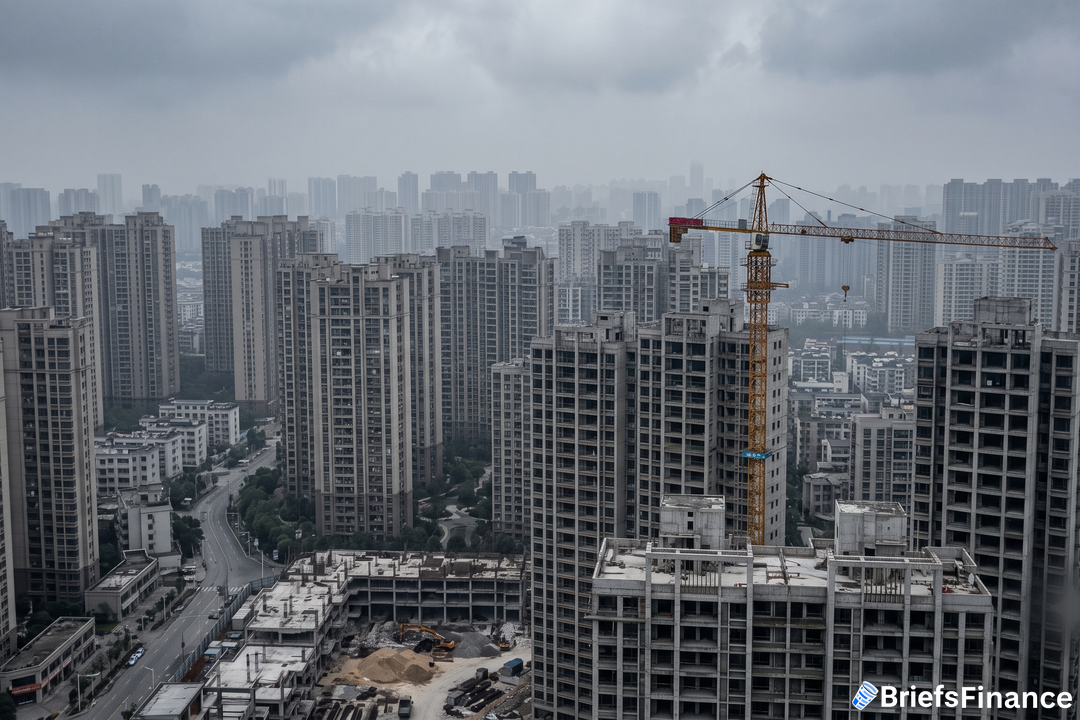
Chinese homebuyers are holding back, unwilling to enter a market that continues to decline. They expect prices to keep dropping, so they wait. Sellers, once confident, now plead for signatures. The result is a housing market that keeps sliding with no clear bottom in sight.

Prices Keep Falling - Buyers Keep Waiting

In June 2026, secondary-market home prices across 100 major cities fell another 0.42%, according to the China Index Academy. The average price per square meter was 12,639 yuan, or about US$1,750. Only 12 of those 100 cities saw prices rise month-on-month.

The year-on-year declines are even starker. In first-tier cities, prices dropped 6.95% from June 2025. Second-tier cities fell 8.21%, and third- and fourth-tier cities dropped 7.48%.

Among the ten largest cities, Nanjing posted the steepest year-on-year decline at 11.45%, followed by Wuhan at 10.89%. Shenzhen, the smallest drop among the ten, fell 5.27%.

Columnist Qingjin Wenwang described a buyer's experience: "A friend of mine started looking for a home to buy ahead of marriage in late 2025. Back then, sellers were confident and showed little willingness to negotiate." But by June 2026, the tables turned. "Sellers had largely softened their tone and kept asking him when he could sign a deal," Wenwang said.

New Homes and Construction Are Shrinking

The slump is not limited to existing homes. In the first five months of 2026, new home sales by floor area fell 10.8% year-on-year. By value, they dropped 13.5%. Real estate investment plunged 16.2%, new construction starts slid 22.6%, and completions fell 23.4%.

Get your free investing masterclass bonus when you join Market Briefs, our free daily newsletter

An anonymous Guangdong-based property columnist put the decline in perspective: "Since 2021, China's property market has undergone a dramatic transformation. New home sales peaked at 1.79 billion square meters that year and have fallen every year since, dropping below one billion square meters in 2025."

That same columnist added: "In many cities, prices have fallen more than 40% from their peak, and some have dropped more than 50%. Such a steep decline in such a short period is by any measure severe."

Why Buyers Won't Bite - and What Comes Next

Three structural reasons explain the standoff. First, China's population has been shrinking since 2022. Fewer people means fewer future buyers.

Second, rapid urbanization is largely over - the big wave of people moving to cities has crested. Third, the total housing stock is now sufficient except in desirable districts of top cities.

Columnist Duanwei Liwen warned against assuming a rebound: "You cannot use one national figure to explain the situation in every Chinese city." He noted that home values in Beijing, Shanghai, and Shenzhen remain "still absurdly high." He cautioned buyers who think they see a bottom: "Over the past few years, many people have already fallen into this trap. They see prices pull back and assume the floor has been reached, or they see policy ease slightly and conclude a rebound is coming. Then prices keep falling, and they cannot sell their properties."

From January to May 2026, just 4 of 70 large cities saw new-home prices rise from a year earlier. For secondary-market prices, the number was zero.

The prolonged downturn reflects deep structural shifts in China's economy and demographics. The shrinking population and near-complete urbanization have fundamentally reduced housing demand, while oversupply in many cities has further depressed prices. As a result, the market remains stuck in a cycle of falling values and cautious buyers.

What to Watch

Market observers interpret the January-to-June figures as evidence that the housing slump is not over, predicting additional price drops for the rest of 2026.

Subscribe to Market Briefs, our free daily newsletter, and claim your bonus investing masterclass

Disclosure

Recent News

1 2 3 32

Get Market Briefs delivered to your inbox every morning for free!

No fluff. No noise. No politics. Just finance news you can read in 5 minutes.

Blogs

June 29, 2026
Portfolio Diversification: Why Putting All Your Eggs in One Basket Destroys Wealth
  • Real diversification means spreading investments across all 11 economic sectors plus bonds, alternatives, and cash so no single bet can sink the portfolio.
  • Different sectors perform at different times, so a diversified portfolio captures upswings while smoothing the brutal drawdowns that wipe out concentrated bets.
  • Total market index funds offer the simplest path to diversification, and annual rebalancing is what keeps the structure working over time.
Read More
June 29, 2026
Non Taxable Income: What It Is and Why It Matters
  • Non taxable income is money you receive that you don't owe income tax on.
  • The tax code treats workers, investors, and business owners very differently, and investors often come out ahead.
  • Learning how income is taxed is a quiet superpower for keeping more of what you earn.
Read More
June 29, 2026
Semiconductor Stocks: A Simple Guide for Investors
  • Semiconductor stocks are companies that design and make computer chips, the brains inside nearly every modern device.
  • The AI boom has turned chips into one of the market's most important and most watched groups.
  • They offer big growth potential, but come with high valuations and a notoriously cyclical history.
Read More
June 25, 2026
How Stocks Work: A Simple Guide for Beginners
  • A stock is a slice of ownership in a company - buy one, and you own a piece of the business.
  • You make money two ways: the share price rising over time, and dividends paid to shareholders.
  • The simplest path for most beginners is buying into the whole market through a low-cost index fund.
Read More
June 25, 2026
Stop Loss vs Stop Limit: What's the Difference?
  • A stop loss order sells your stock once it hits a trigger price, prioritizing getting you out.
  • A stop limit order only sells within a price range you set, prioritizing price over a guaranteed exit.
  • The trade-off: a stop loss almost always executes; a stop limit might not if the price moves too fast.
Read More
June 25, 2026
Energy Stocks: A Simple Guide for Investors
  • Energy stocks are companies that produce and supply the power the world runs on, from oil and gas to newer sources.
  • They make up one of the 11 sectors of the market and tend to move with energy prices and big-picture shifts.
  • Like any sector, the key is diversification and understanding the forces driving demand.
Read More
June 18, 2026
What Is a Stop Loss Order? A Simple Guide
  • A stop loss order automatically sells a stock once it falls to a price you set.
  • It's a tool to cap losses or lock in gains without watching the market all day.
  • It works best for active strategies, and can backfire if used carelessly on long-term holdings.
Read More
June 18, 2026
Best S&P 500 Index Fund: How to Choose One
  • The best S&P 500 index fund for most investors is simply the cheapest, most established one that tracks the index well.
  • Funds like VOO, IVV, and SPY all hold the same 500 companies, so the biggest difference is the fee.
  • Pick one, automate your buys, and let time do the heavy lifting.
Read More
June 17, 2026
What Are Penny Stocks? Risks and Rewards Explained
  • Penny stocks are very low-priced shares of very small companies, often trading for just a few dollars or less.
  • They promise huge gains but carry huge risks: low liquidity, high failure rates, and wild price swings.
  • Most investors are better served by quality companies and funds than by chasing cheap shares.
Read More
June 17, 2026
Best Stocks for Beginners With Little Money
  • The best stocks for beginners with little money usually aren't individual stocks at all - they're low-cost index funds.
  • You can start with $100 or less and use small, regular investments to build wealth over time.
  • Focus on diversification and consistency, not on picking the next big winner.
Read More
1 2 3 24
Share via
Copy link










