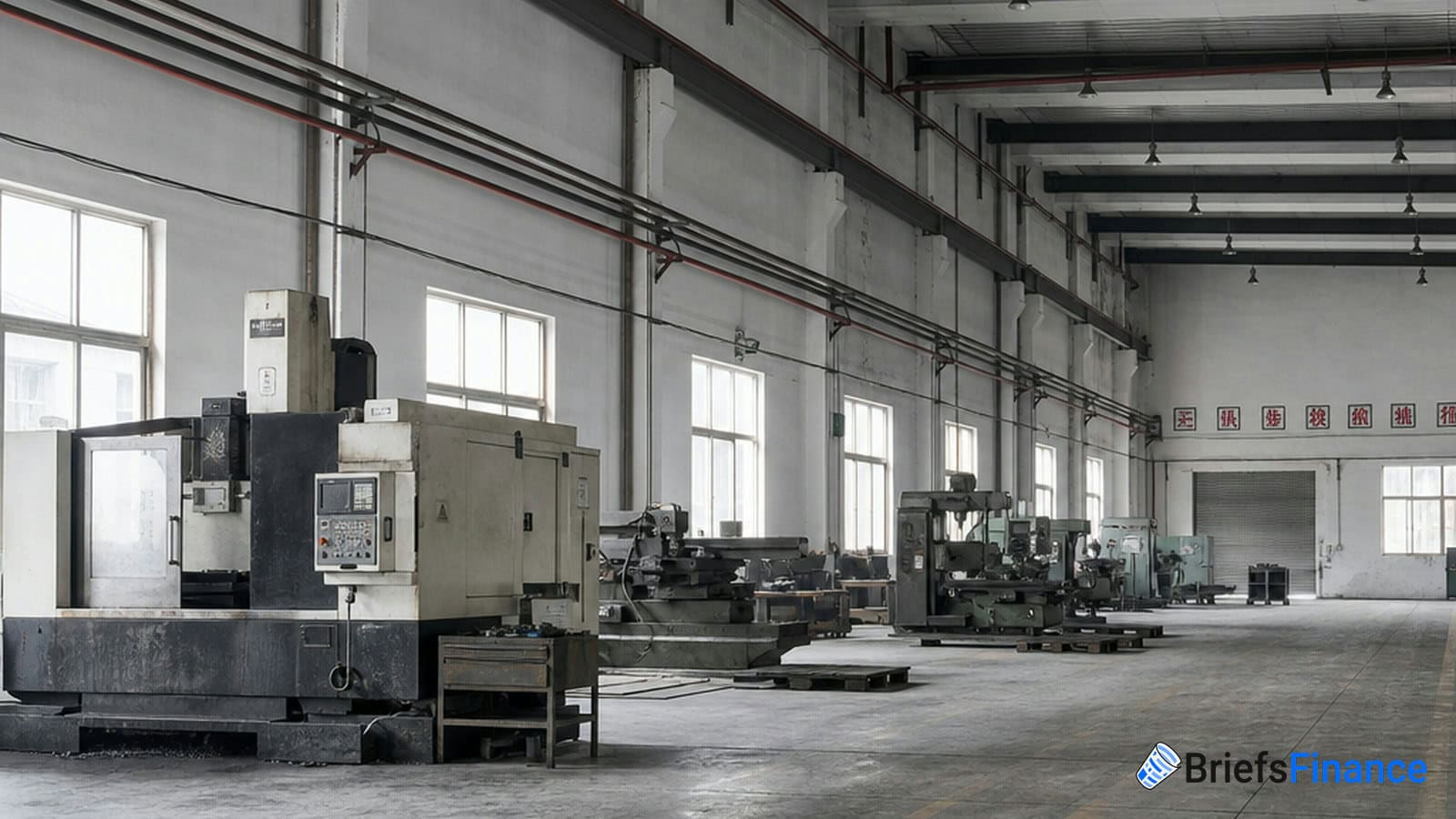
China's factory index just hit 50 - the exact line between growth and contraction - while exports keep running ahead of last year's record pace.
The thing closing that gap is AI.
Manufacturing PMI Hits The Flatline
China's official manufacturing PMI - the monthly survey tracking factory activity - slipped from 50.3 in April to 50 in May. Anything above 50 means growth, anything below means contraction.
A reading right on 50 means the whole sector is balanced on a knife's edge.
The services and construction side climbed back to 50.1 from 49.4, meaning services are inching forward while factories are stuck in place.
The May reading caps a rough stretch - April industrial production and retail sales posted their weakest gains in years, which is why economists started pushing Beijing for stronger policy support.
We break down what moves like this actually mean for your money every morning in Market Briefs - five minutes a day, plus a free investing masterclass when you join.
AI Goods Drive Half Of Export Growth
Goldman Sachs and Nomura estimate that semiconductors, computers, and other AI-related goods made up about half of China's export growth in April - effectively the engine driving the broader number.
Total shipping volumes this year are still running above the record pace set in 2025, fueled by the global build-out of data centers and the power equipment needed to run them.
China posted a $1.2 trillion trade surplus last year as a result - the largest ever recorded.
Strip out the AI-linked categories, and the rest of the export picture looks meaningfully softer.
The Yuan Is Squeezing Exporters
The yuan has stayed strong, and that's hitting Chinese exporters harder than they've felt in years.
Of the roughly 5,500 companies listed onshore, nearly one in four flagged foreign-exchange losses - the hit companies take when currency swings go against them - in their first-quarter earnings.
That's the highest share in at least a decade.
Beijing is starting to respond, with the central bank letting its one-year policy loan rate fall to a record low in May.
The government also rolled out a plan giving migrant workers more access to schools and health care in cities - a longer-term push to get households spending more.
What To Watch
The Trump-Xi summit didn't deliver much in the way of headlines, but two new committees on trade and investment came out of it - and the new US-China Board of Trade is targeting tariff cuts on at least $30 billion worth of goods in each direction.
AI demand has done most of the work keeping China's export numbers high, which means if that demand cools before Chinese consumers start spending again, the broader picture gets harder to defend.
If you want this kind of read on the market every morning, join 350,000+ investors reading Market Briefs - you also get a 45-minute investing course as a bonus.