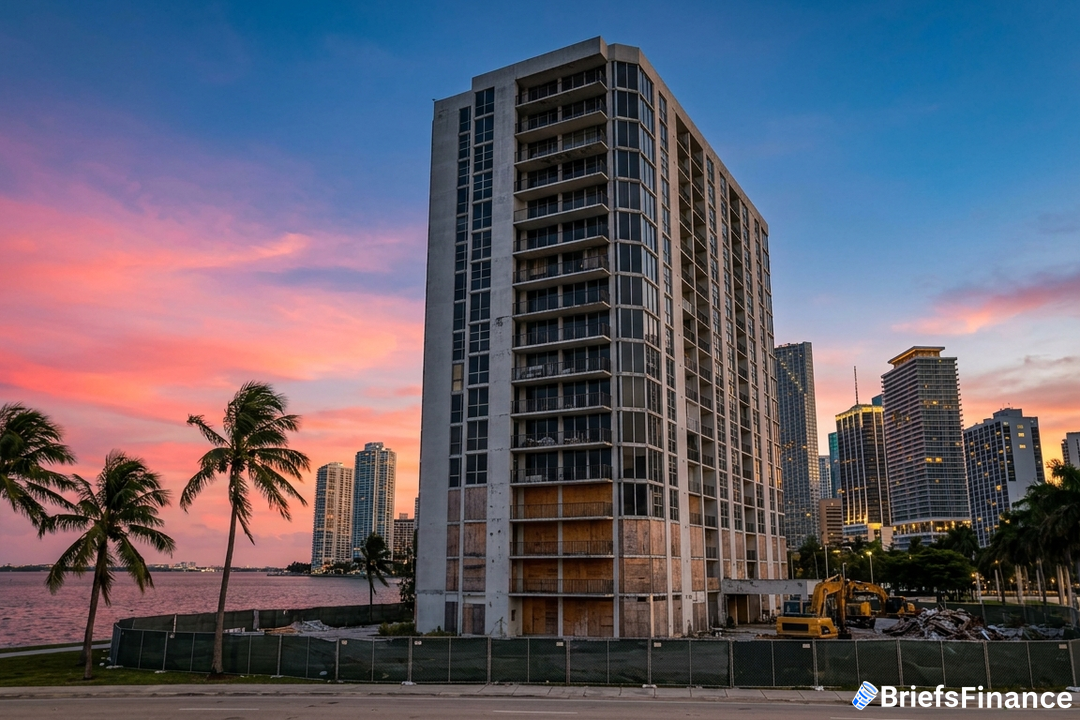
Ken Griffin didn't just buy a Miami apartment tower. He bought every single condo inside it, one by one, so he can knock the whole building down. The holdouts who sold late got more than double what early sellers took - but even the biggest payout was only a fraction of Griffin's total plan.
The Buyout Strategy
Griffin needed the Solaris tower because it sat on one of the last properties he didn't own in Brickell. Starting in late 2022, his team quietly bought units from owners like Mark Clifton, who sold his condo in December 2022 for just over $500,000. "Obviously, we should've held out," Clifton said later. "But the timing was optimum for us."
As owners realized what was happening, holdouts demanded more. Terence Tennant, a retired SEC attorney, initially received a $550,000 offer for his corner unit on the 20th floor. "I kind of shrugged them off," he said.
"I felt like this was my place, I've been living here, and I'm gonna stay." Another offer for $700,000 came, but Tennant still wasn't interested. Ultimately, records show that over three dozen apartments were purchased for at least $1 million each.
Get your free investing masterclass bonus when you join Market Briefs, our free daily newsletter
Real estate broker Mario Borda, whose firm has been behind several high-profile condo terminations, became a polarizing figure for residents. According to one resident, Borda later came back offering five alternative condos in the vicinity that aligned with feng shui principles, after the seller had mentioned that as a reason for moving. Several residents claimed Borda was deceptive about pricing; he had originally stated that any offer exceeding $1 million was impossible, but eventually over 30 units went for at least that amount.
A few owners banded together with legal representation, aiming to delay for a better payout. However, delaying in condo termination deals is risky: if a buyer acquires 80% or more of the voting rights, they can force the other owners to sell, with the price set by an independent fair-market appraisal. Griffin completed his final purchase in September.
Why Griffin Paid a Premium
Griffin's total outlay was around $125 million, calculated from recorded sale amounts and approximations for 27 units whose exact figures were not disclosed. That's a lot more than the property would be worth if it stayed a condo tower. Between late 2022 and mid-2025, Solaris units sold for an average of $875 per square foot - 21% more than typical prices in the area. A nearby similarly aged building, the Club at Brickell Bay, averaged $618 per square foot.
But Griffin wasn't buying condos. He was buying land. "Developers almost always pay more for a condo termination than for an empty lot," said Daryl Fairweather, chief economist for Redfin. "They do it because the larger, unified site allows them to build something far more valuable. In Griffin's case, the strategy signals long‑term ambition in Miami to reshape an entire district."
Griffin had already purchased a waterfront lot across the street for $363 million in 2022, as well as a 28-story office tower, garage and a small building on the corner that was quickly demolished. Acquiring the Solaris gave him control of nearly the entire site, leaving only a small, city-owned historic property outside his assemblage.
A spokesperson for Griffin said, "we are proud to invest in Miami's continued growth and to play a positive role in Brickell's long-term future as it continues to attract residents, businesses and capital from around the world."
Griffin, who has a fortune of $57.5 billion according to the Bloomberg Billionaires Index, is planning a multibillion-dollar complex including a headquarters tower for Citadel and Citadel Securities, hundreds of luxury apartments, a parking garage and potentially a hotel.
What to Watch
Subscribe to Market Briefs, our free daily newsletter, and claim your bonus investing masterclass