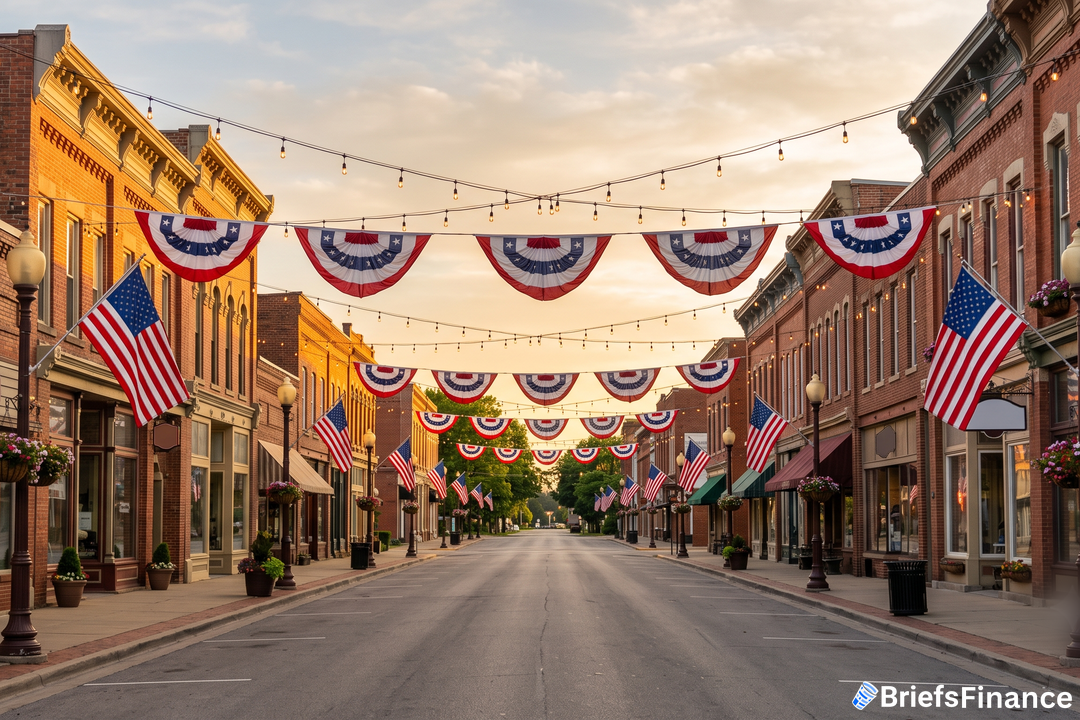
The country's 250th anniversary is coming. But many cities are turning away from the official celebration in Washington. They remember the problems of the 1976 bicentennial.
That event also faced protests, scandal, and an oil crisis. Now, history seems to repeat itself.
The 1976 bicentennial faced significant challenges, including protest, political scandal and an oil crisis. Instead, the American Revolution Bicentennial Administration pivoted, spreading the festivities nationwide. This decentralized approach is being echoed now as cities seek more community-focused and less commercialized commemorations.
Today, the 250th anniversary comes amid political polarization and economic uncertainty, prompting many to seek solace in local, community-driven events rather than large-scale national spectacles. This historical resonance reminds planners that the most memorable celebrations are often those that reflect the genuine spirit of a community rather than a top-down directive. The 1976 model proved effective in engaging millions of Americans, and its lessons are now being applied to the 250th. As one local organizer put it, "This is about neighbors celebrating neighbors."
Get your free investing masterclass bonus when you join Market Briefs, our free daily newsletter
Fifty years later, planners are updating the greatest hits from that era, celebrating traditional crafts and cycling, as well as queer and indigenous history.
These local initiatives build on lessons from 1976, when the decentralized approach allowed communities to shape their own celebrations. Many cities are now organizing events that highlight cycling routes tied to revolutionary history, craft fairs featuring traditional skills, and programs that honor queer and indigenous contributions to the nation's story. This grassroots effort aims to create a more inclusive and reflective commemoration, contrasting with the last-minute, corporate-focused planning in Washington.
Organizers emphasize community involvement, with town halls and volunteer committees guiding the programming. The critique from journalist Alexandra Lange underscores a broader dissatisfaction with the official celebration, pushing cities to take ownership of the anniversary.
While the 250th makes headlines, other major projects are moving forward. Washington's Dulles Airport needs a $22 billion upgrade to become world-class. CityLab journalist Kriston Capps discussed this on Bloomberg This Weekend.
On the other side of the globe, Hanoi is planning a massive redevelopment along the Red River. The project covers 11,000 hectares and is expected to cost $2.5 trillion. The city's population could nearly double in two decades. Residents are concerned they won't have much influence over the project.
Exxon Mobil Corp. is changing its name for the first time in over 25 years. After redomiciling in Texas, the company becomes ExxonMobil Holdings Corp. Shares will trade under the same ticker XOM starting Thursday.
In culture, photographer Carol Highsmith, now 80, is donating 100,000 photos to the Library of Congress. She started in 1992. A new PBS documentary called "Capturing America: The Carol Highsmith Story" airs this week. Joan Tortorico Ruppert said the story "inspired a Chicago television production company to follow Carol across the country and document her astonishing mission."
In Miami, investor Ken Griffin bought all 138 condos in a tower, one by one.
Subscribe to Market Briefs, our free daily newsletter, and claim your bonus investing masterclass