Years ago, the U.S. Army expected its first hypersonic weapon to be operational. Now the program is delayed again, and the Government Accountability Office says production problems are still not fixed.
Why Production Keeps Stalling
The GAO report says the delays come from unresolved production issues tied to the extreme complexity of the missiles. A portion of the assembly process is done by hand, and the contractor's facility has faced ongoing difficulties.
A third-party consultant was brought in to identify challenges and recommend ways to increase production rates. But production came to a halt after earlier flight tests uncovered challenges, forcing the Army and Navy to wait for a successful missile test before restarting manufacturing.
Lt. Gen. Frank Lozano, the Army's top missile programs official, called the weapons "incredibly complex."
What the First Battery Looks Like
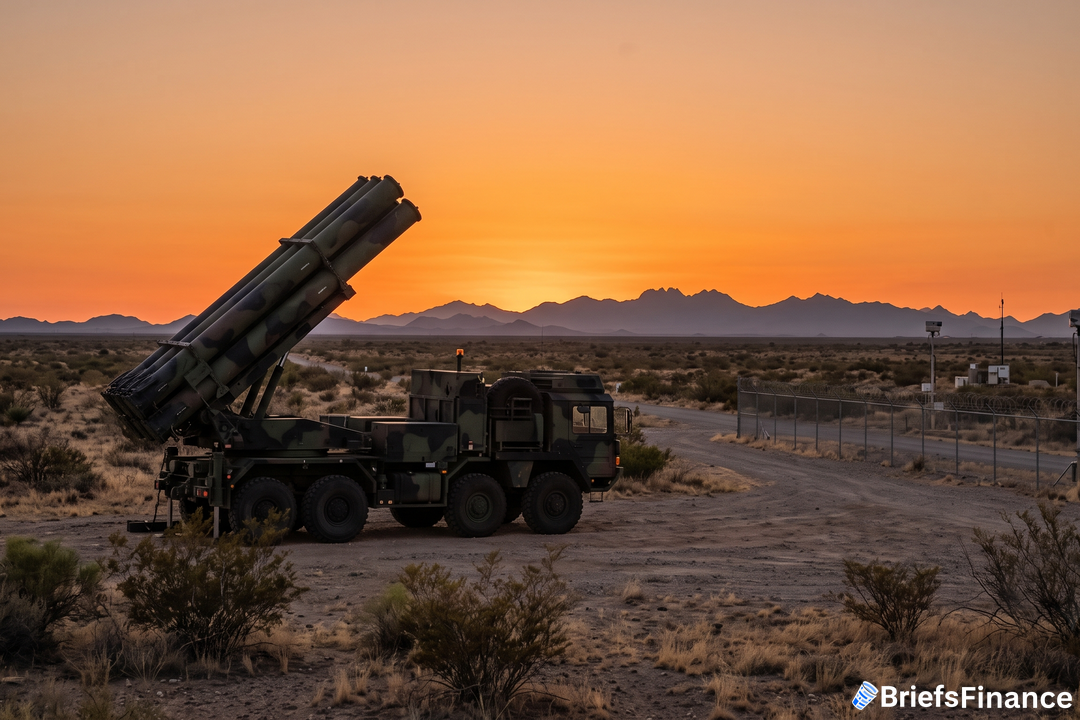
The first battery will have four launchers and eight missiles. It will be operated by the 5th Battalion, 3rd Field Artillery Regiment at Joint Base Lewis-McChord in Washington state.
Get your free investing masterclass bonus when you join Market Briefs, our free daily newsletter
The Army has already activated the battery and fielded the launchers and related equipment. Soldiers are training on that gear. But the missiles have not been delivered.
Shelby Oakley, GAO acquisition director, explained: "The Army considers the battery activated because they have fielded the launcher and related equipment and soldiers have been exercising and training on that equipment." She added: "But the Army has not received the missiles needed to provide this capability. Missiles have been delayed due to a variety of testing and production issues which persist."
Money and Timeline Pressure
The Pentagon's costliest 104 programs together make up a $2.4 trillion portfolio. Total U.S. spending on hypersonic weapon development since 2018 has topped $12 billion.
The primary contractors for the hypersonic weapon program are Lockheed Martin Corp. and a Leidos Holdings Inc. subsidiary.
Despite the setbacks, Lt. Gen. Frank Lozano said on March 17, 2026, that the program was "very close" to fielding the weapon. "We are so close to that first battery being fully equipped with all of its capabilities that I don't want to spoil the surprise when we actually get there, but we're within a few weeks," he said.
What to Watch
The program office continues fielding, training, and integration work, but missile delays persist.
Background on the Program
The Army's Long-Range Hypersonic Weapon (LRHW) is developed jointly with the Navy, sharing a common hypersonic glide body designed to exceed Mach 5. This speed allows the weapon to strike heavily defended targets within minutes, offering a strategic advantage. The first battery, stationed at Joint Base Lewis-McChord, is intended to provide an early operational capability, but persistent manufacturing and testing hurdles have pushed delivery well beyond initial timelines. The overall Pentagon portfolio of 104 major programs totals $2.4 trillion, underscoring the high stakes and funding pressures involved.
Subscribe to Market Briefs, our free daily newsletter, and claim your bonus investing masterclass