Why a Saudi Oil Giant Cares About Rice
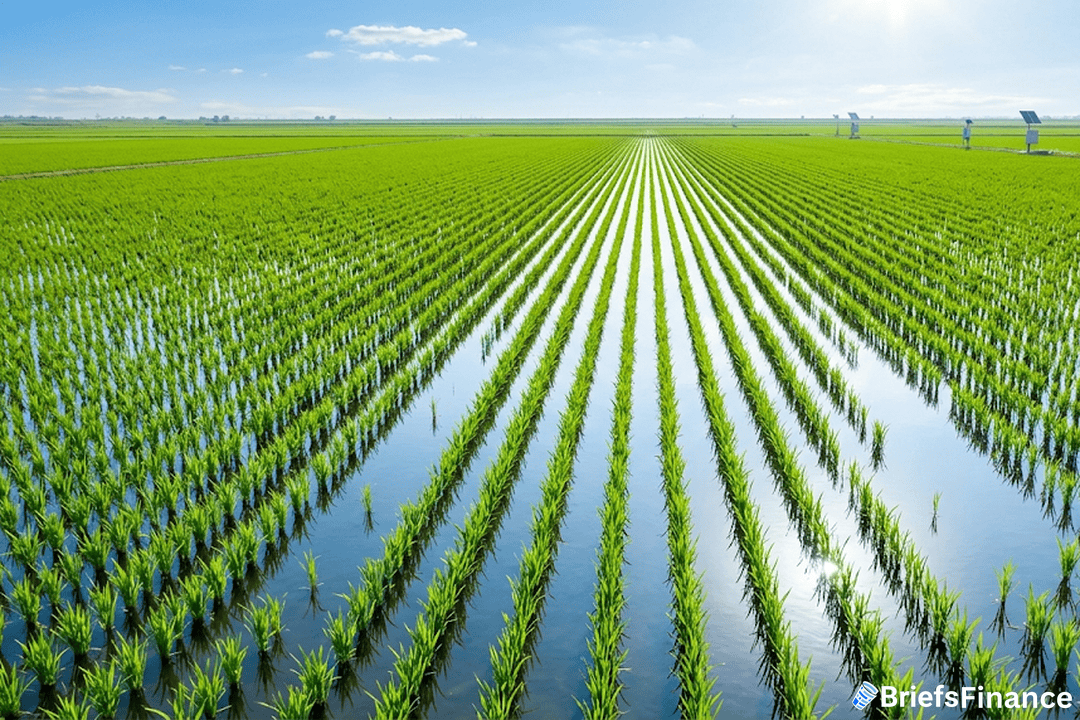
Rice feeds more than half of humanity, but it is a thirsty crop. Its flooded paddies also make rice a major source of farm-related methane.
Mitti Labs, which operates from New York and Bengaluru, started working in rice fields in 2023 to fix both problems.
On August 5, 2026, the company closed a $9.5 million Series A, with Aramco Ventures, Saudi Aramco's venture arm, leading the round.
Lightspeed India, an early backer, returned for the round. Cisco, Volta Circle, the Godrej Industries Group, and the Francis Family Fund also took part.
That deal stands out because Aramco Ventures had never invested in an Indian startup before.
Why would an oil giant back a rice company?
Xavier Laguarta, Mitti Labs co-founder, says Aramco Ventures was drawn to the startup's work on methane reduction, water resilience, and AI-based farming in emerging markets.
He also thinks the tie-up could open doors, giving Mitti Labs access to Aramco Ventures' carbon-market contacts and, in time, making Aramco a customer.
"Obviously, Aramco is one of the largest companies in the world, and being able to have them as a partner and potential customer over time is a really interesting position for us to be in," Laguarta said.
Satellites, AI, and Smallholder Farms
The technology starts with a simple idea. For each rice plot, Mitti Labs creates a computer model that shows how the crop is doing, how much water it uses, and how much methane it releases.
Get the free Always Be Buying eBook and learn the simple system for building wealth on any income
The company calls this system GeoAI. It processes radar-based satellite images, known as synthetic aperture radar or SAR, with resolution between 50 centimeters and 10 meters.
Those images are combined with years of field data from thousands of small farms averaging about one hectare. Laguarta says the real edge is not the satellite images, but the exclusive datasets used to train the AI.
That training lets the system track plant growth, soil dampness, and flooded conditions from afar. "We're really a data company at the end of the day," he said.
Participation climbed from about 8,000 farmers during the 2024 debut season to upwards of 100,000 today, spanning several Indian states. The company aims to reach millions of small-scale farmers by 2030.
The company says its methods cut water use by roughly 40%, lower methane emissions by more than half, and keep yields steady. Companies buy the resulting carbon credits to offset their own emissions, and that money becomes extra income for farmers.
The startup earns revenue from those credits and from its GeoAI platform.
Customers include Cool Effect, a carbon marketplace whose partners include Google and American Airlines. Ebro Foods, a rice supplier, and Syngenta, an agriculture company, are also customers.
Ebro and Syngenta use Mitti Labs' analytics and field data to build water resilience into their supply chains.
What the New Money Buys
The Series A brings Mitti Labs' total funding to $12.5 million; in July 2024, the startup had already collected $3 million in seed financing. The company now employs more than 150 people, mostly in India.
The new money will allow Mitti Labs to launch in the Philippines later in 2026, followed by Indonesia and additional Southeast Asian markets in 2027.
Laguarta says the expansion will let the startup serve compliance carbon markets, where emissions cuts are required by law, in addition to the voluntary market where it already operates. The company will also adapt its approach to different cropping systems and water-delivery networks.
What It Means for Investors
For investors, the deal is a useful clue.
Water and methane are turning into real costs for food and energy companies, and startups that can lower those costs are pulling in money from unexpected places. The $9.5 million is a small check for a company the size of Aramco, but it shows which direction a very large ship is starting to turn.
Mitti Labs has turned satellite monitoring into a product that large companies are willing to pay for.
The company's business model also illustrates how climate finance is reaching smallholder agriculture: it uses carbon credit sales to pay farmers for changing water practices, while selling analytics to corporate agriculture customers.
Download the free Always Be Buying eBook and start putting your money to work today