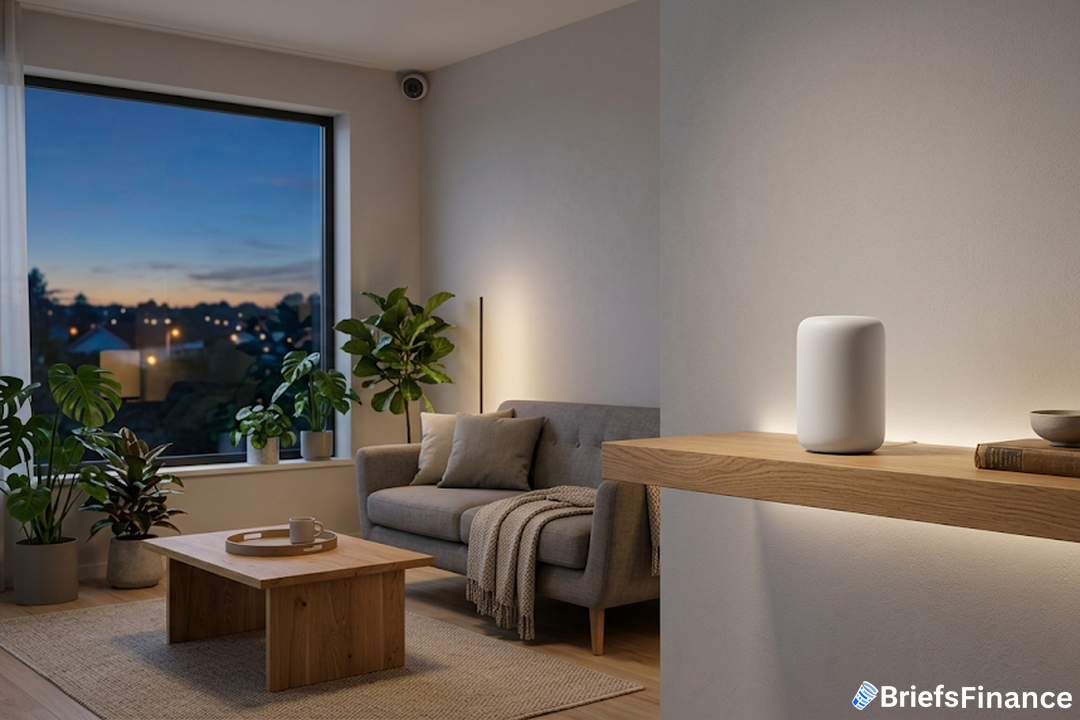
A Long-Awaited Move Into Your Living Room
Apple has spent years watching Amazon and Google own the smart home market. Its HomePod and Apple TV sold decently but never became the centerpiece of the modern household the way a smart speaker or a video doorbell can.
That is about to change.
The company is preparing a full lineup of smart home devices powered by an upgraded version of Siri - the voice assistant that has often felt a step behind its rivals. According to a Bloomberg report from Mark Gurman, Apple will launch a central hub with a square 7-inch display that acts as the command center for your home. Think of it as Apple's answer to the Amazon Echo Show or Google Nest Hub.
Higher-end versions are also in the works, including one with a robotic arm and a 9-inch screen. Add an in-home security camera (codenamed J450), and it starts to look like a serious ecosystem play.
The stock market liked what it heard. Following the announcement, Apple's stock price climbed up to 1.8% and reached $342.89 after markets opened. That small percentage gain was enough to push the company's total market value past $5 trillion for the first time.
Get the market news that matters in a five-minute read with Market Briefs, our free daily newsletter
The Numbers Behind the Launch
The new hardware is arriving on a staggered schedule. The updated Apple TV set-top box (now $199 after a recent price increase) and the refreshed HomePod mini ($129) are both due in fall 2026.
That timeline is later than Apple originally wanted. The company had planned to release an overhauled Siri as far back as 2024, but engineering and quality issues kept pushing the date. The hardware itself was supposed to land as early as spring 2025, then fall 2025, then spring 2026. Each delay cost Apple precious time in a market where Amazon and Google already have millions of devices in homes.
Now the software is finally ready, and Apple is betting that a smarter Siri can be the differentiator. The assistant is the core of the experience - it will control lights, thermostats, locks, and everything else that plugs into the smart home. If it works as well as Apple promises, it could make people rethink why they bought that Echo or Nest in the first place.
What This Means for Investors
Apple is already a $5 trillion company. It does not need another huge product to keep growing, but it does need to prove it can expand beyond the iPhone.
The smart home market is a natural fit. People already trust Apple with their phones, watches, and laptops. Adding a hub that runs your house feels like the next logical step.
The catch: Amazon and Google are not standing still. The Echo Show and Nest Hub have been on shelves for years, and their ecosystems have thousands of compatible devices. Apple will need to convince users that its version is worth switching to - or worth waiting for.
For your portfolio, the story is less about this year and more about 2027 and beyond. Apple's stock already priced in a lot of optimism with that $5 trillion milestone. The real test will come when the hub actually ships and people start deciding whether Siri is finally good enough to run their home.
If it is, Apple could carve out a profitable piece of a market that is only getting bigger. If it is not, the company will have handed its rivals even more time to lock in customers.
Join Market Briefs, our free daily newsletter, for a quick daily rundown of the markets