War Disruption Sent U.S. Oil Exports to a Record
The war with Iran nearly closed the Strait of Hormuz, choking off Mideast crude. That disruption forced buyers to scramble for alternative supplies, and American crude became the answer.
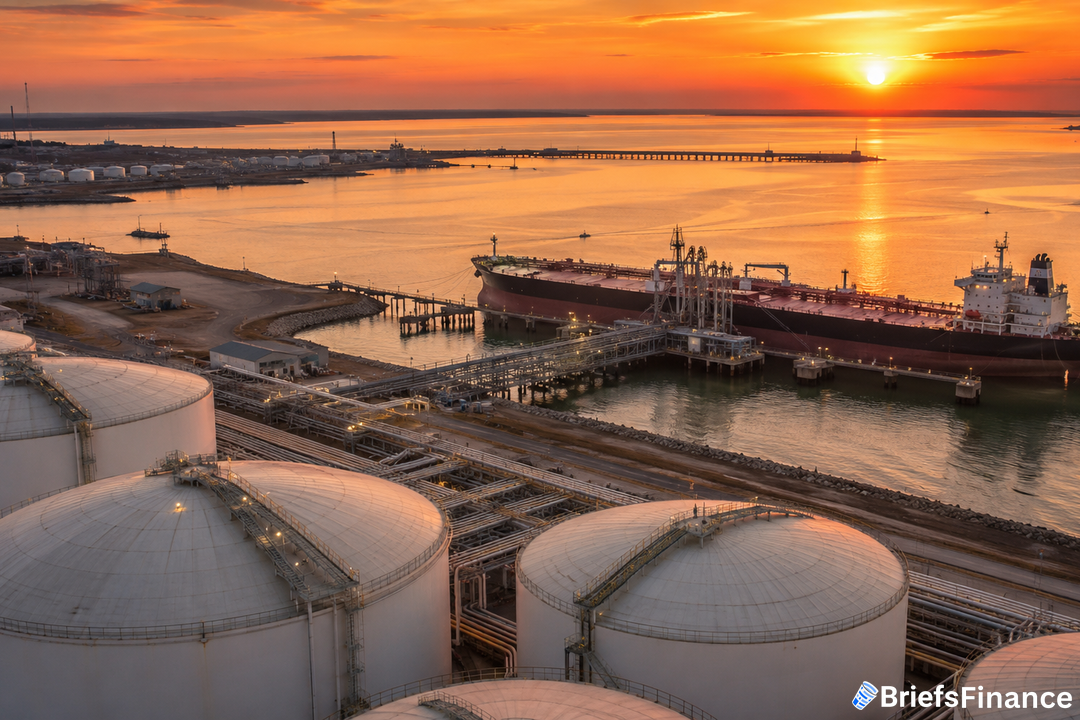
U.S. Gulf Coast ports started pumping out oil at levels nobody had seen before. Exports reached as many as 6.4 million barrels per day. Before the war, the typical daily export volume was about 4 million.
Kent Britton, CEO of the Port of Corpus Christi, described the scene simply: "It's been a nonstop parade of ships past our windows."
The surge in exports underscores the shifting dynamics of global oil trade. Before the conflict, the U.S. had already become a major exporter, but the war accelerated that trend as buyers sought reliable alternatives to Mideast crude. The Port of Corpus Christi, already the largest crude oil export hub in the U.S., has seen its infrastructure pushed to capacity.
Why the CEO Thinks the Surge Sticks Around
The big question for investors is whether this is a temporary blip or a permanent shift. Britton thinks it is the latter.
Get the market news that matters in a five-minute read with Market Briefs, our free daily newsletter
He estimates that the U.S. could likely export a million barrels per day more than it did before the war. That extra million breaks down like this: around 400,000 barrels per day could come from the Port of Corpus Christi alone, with the remainder shipped via other Gulf Coast hubs, including Houston and Louisiana-based terminals.
The Port of Corpus Christi already posted its highest-ever cargo volumes for oil and liquefied natural gas in the first half of this year. That record came as the war drove demand higher.
The catch: Britton says that to sustain these higher export levels, the industry needs a clear signal. "There has to be a demand signal. There has to be a supply signal from the big E&Ps who have to say that they're willing to go fill that need," he said. Large exploration and production companies have to commit to pumping enough oil.
Pipeline Talks Start Up Again
One piece of infrastructure could make a big difference: talks have resumed about building a pipeline from Corpus Christi to the Cushing, Oklahoma oil hub. That route would allow the port to ship crude from Canada and the Bakken region, not just Texas oil.
Two companies, Plains All American Pipeline LP and Phillips 66, had previously planned pipelines on that corridor but halted their projects amid a slow recovery in U.S. oil output after the Covid-19 pandemic. Now, discussions are underway again.
Britton is clear on what he would do. "If I were building for the future, I would get a pipeline out of Cushing," he said.
Gabe Guerra, Chairman of the Port of Corpus Christi Commission, pointed to the strategic importance of the port: "There's no coincidence to why the president stood in Corpus Christi the day he made a decision to go into Iran."
With a fragile ceasefire between the U.S. and Iran breaking down as fresh attacks erupt, it is uncertain whether America will cement its role as the world's oil market safety net.
Join Market Briefs, our free daily newsletter, for a quick daily rundown of the markets