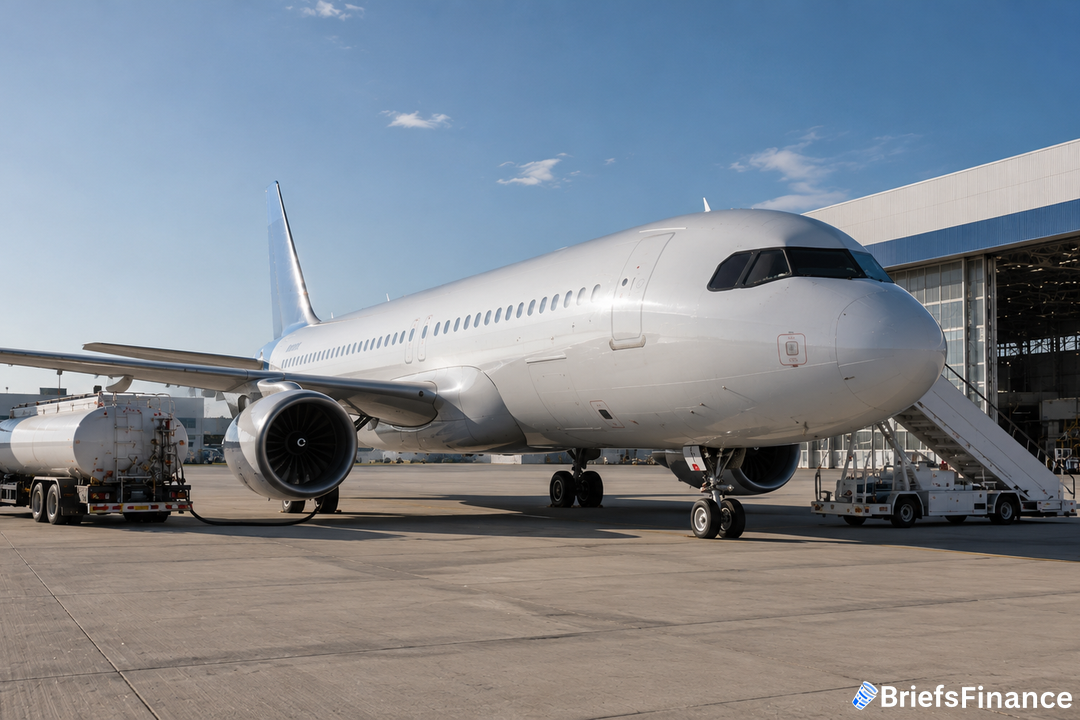
Despite persistent supply chain disruptions, the European planemaker is steadily increasing production.
Industry Context
The aviation industry is in a period of high demand for fuel-efficient narrowbody jets, with both Airbus and Boeing working to increase production. The A320 family, which includes the A320neo and A321neo, is the backbone of Airbus's commercial aircraft business and accounts for the majority of its deliveries. Airbus's struggles with supply chain bottlenecks, particularly for engines and other components, have hindered its ability to meet the 75-per-month A320 family target.
The A320neo family alone has a backlog of thousands of orders, and airlines are eager to receive these fuel-efficient jets to expand routes and replace older, less economical aircraft. Delays in production have forced carriers to extend leases on older planes and adjust schedules, adding pressure on Airbus to accelerate output.
Get your free investing masterclass bonus when you join Market Briefs, our free daily newsletter
These delays have caused friction with suppliers and customers alike. Boeing, after a protracted crisis involving the 737 Max and other issues, has begun to recover, with monthly output rising and new orders coming in, partly thanks to political support. The delivery numbers for the first half of 2026 highlight the contrasting fortunes of the two aerospace giants.
"Shipment rates usually pick up in the final months of the year," an industry analyst noted. The company has delayed its target of constructing 75 A320 family jets per month multiple times, attributing the setbacks to pandemic-era supply chain problems that limited availability of components and engines. Additionally, Airbus engaged in a public dispute with RTX Corp.'s Pratt & Whitney over the engine maker's slower-than-expected production.
Boeing Co., in contrast, has emerged from a prolonged period of turmoil. The American company is boosting its monthly output and securing additional orders, assisted in part by support from President Donald Trump. Through the end of May, Boeing had delivered 250 aircraft this year.
Read More: Boeing Delivers 60 Aircraft in May After Repairing Wiring Issue
Airbus did not offer any remarks prior to the scheduled release of its monthly delivery and order figures.
Impact on Airlines and Supply Chain
The production shortfalls have forced major carriers to keep aging aircraft in service longer than planned, while some have cut frequencies on busy routes due to insufficient new deliveries. Airbus's order backlog - spanning over 7,000 A320neo jets - remains a strong revenue driver, but the company must resolve persistent engine and component shortages to hit its ambitious 2026 target. The second-half ramp-up will be critical for meeting customer expectations and maintaining competitive momentum against a resurgent Boeing.
Subscribe to Market Briefs, our free daily newsletter, and claim your bonus investing masterclass