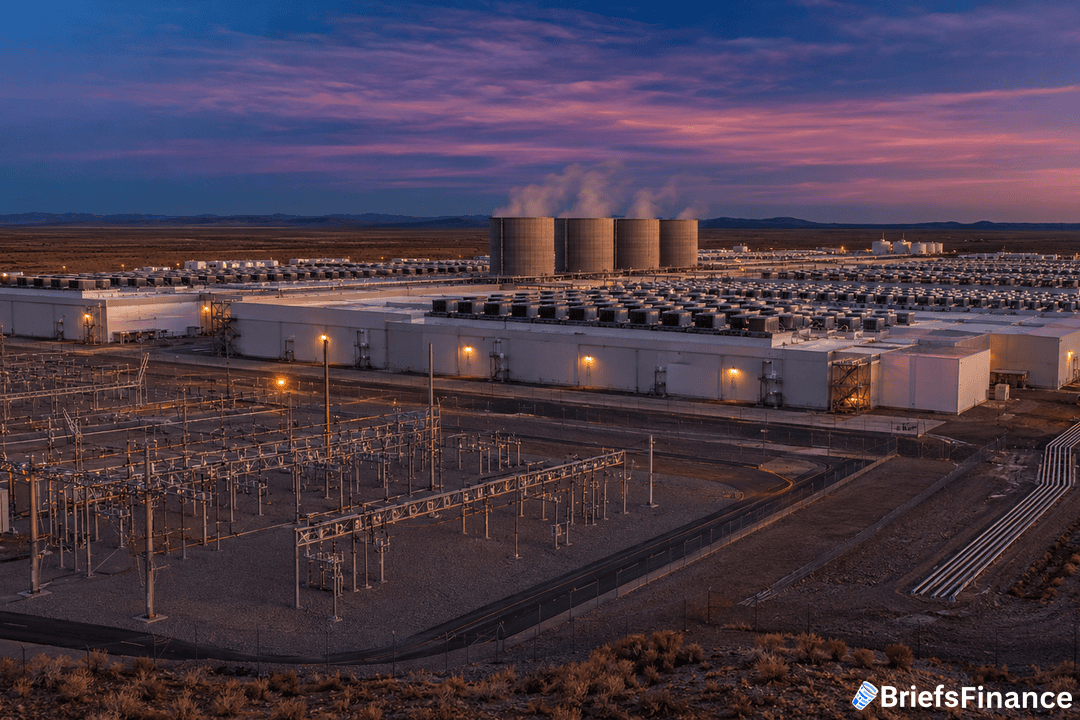
For years, big tech could shrug off the Fed because cash was piled up, debt was small, and rates were somebody else's problem. That changed when AI capex started getting funded with debt.
Now Nvidia, Oracle, Amazon, Alphabet and Meta are all leaning on bond markets, with Treasury yields suddenly mattering again.
Tech Is Now A Rates Story
The four biggest hyperscalers - Amazon, Alphabet, Microsoft and Meta - are on pace to combine for roughly $750 billion of AI infrastructure spend this year, an 80%-plus jump versus 2025. To fund that push, Nvidia, Oracle and the rest of the megacap pack are leaning on bond markets.
SpaceX is already lining up at least a $20 billion bond offering after its Nasdaq debut on June 12, Reuters reported. OpenAI's CFO has cited similar logic, flagging bond market access as one reason to go public at all.
Bond issuance from megacap tech has climbed in 2026, with each of the top hyperscalers tapping the market for tens of billions of dollars.
That makes tech a lot more like an old-school industrial company, the kind that lives or dies by the cost of borrowing. Higher rates squeeze cash flow, and bigger debt loads pile on more pressure.
We break down what moves like this actually mean for your money in Market Briefs every weekday morning, and you also get a free investing masterclass when you join.
The Cash Cushion Looks Thinner Than It Looks
Goldman Sachs noted that capex as a share of cash flow is at the highest level since the dot-com era. The firm now expects total 2026 spending closer to $920 billion across big tech, calling past analyst estimates "too conservative" for three years running.
Amazon, which has guided to roughly $200 billion in spending this year, is widely expected to see negative free cash flow. Nvidia is the exception, with free cash flow jumping past $48.5 billion last quarter from $26.1 billion a year earlier.
Jeff Kilburg of KKM Financial called it an "insatiable demand" for AI funding, adding that "tech leadership is embracing debt." That comfort with leverage doesn't apply equally, with Jay Woods of Freedom Capital Markets noting that Nvidia's deep cash bench gives it flexibility other hyperscalers don't have.
Peter Boockvar of One Point BFG Wealth Partners summed it up: "Tech investors are learning what it's like to be an investor in old-economy industrial businesses that are capital intensive."
What To Watch
Kevin Warsh held his first FOMC press conference as Fed Chair on Wednesday, and markets read it as leaving the door open for another rate hike in 2026. The Fed held the funds rate at a 3.50% to 3.75% range.
His statement was about 60% shorter than the prior one and dropped the usual forward guidance language, and nine of 18 Fed officials now see at least one hike before year-end, according to the latest dot plot.
The 10-year yield is now sitting near 4.45% - the number tech investors used to ignore.
They can't anymore.
If you want this kind of read on markets every morning, join the daily Market Briefs newsletter - you also get a 45-minute investing masterclass as a bonus.