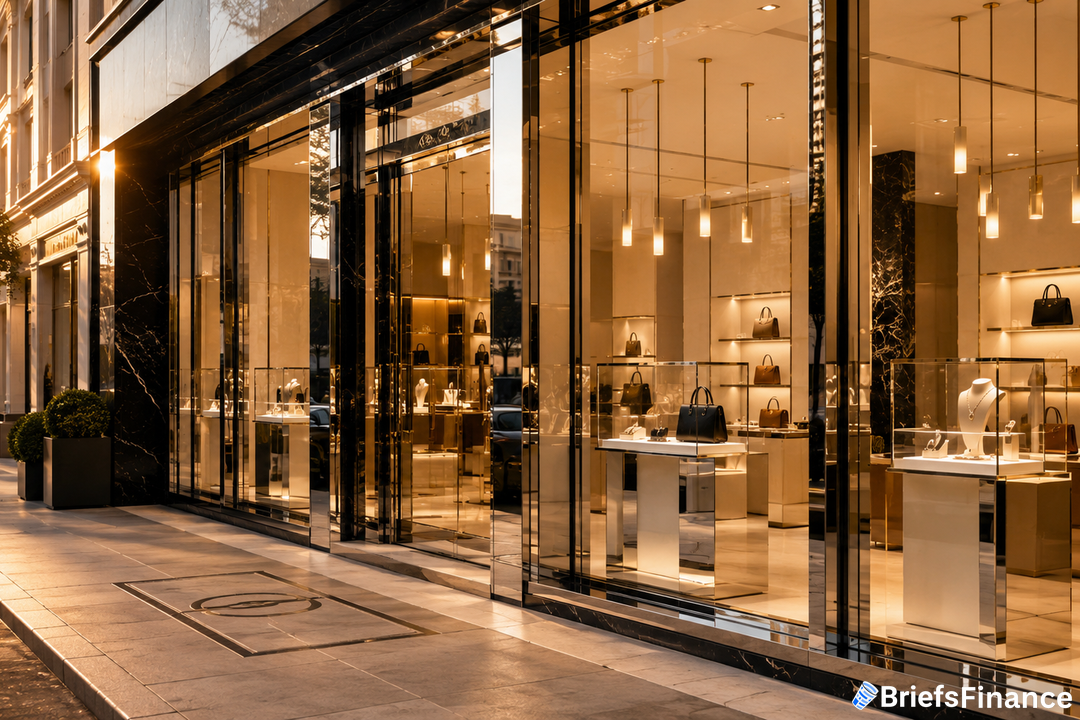
On Friday, Saks Global revealed its new corporate identity following its emergence from bankruptcy, having reduced both its store footprint and debt load. The organization that manages Bergdorf Goodman, Neiman Marcus, and Saks Fifth Avenue now calls itself Exemplar Luxury Group (ELG), pivoting its emphasis toward high-end shopping.
"Moving forward as Exemplar Luxury Group reflects the shared ideals that anchor each of our banners and our commitment to setting the standard of excellence for luxury retail across all three," said CEO Geoffroy van Raemdonck. "As the gateway to the U.S. luxury customer, we are uniting coveted brands with unrivaled customer experiences to drive growth for Exemplar Luxury Group and the broader luxury ecosystem," he added.
According to the company, the bankruptcy restructuring erased 75% of its prior debt, eliminated shareholder equity, and reduced the number of stores. Additionally, 12 Saks Fifth Avenue stores and three Neiman Marcus locations were closed in March. At the time of entering bankruptcy, Saks Fifth Avenue had 33 stores.
Get your free investing masterclass bonus when you join Market Briefs, our free daily newsletter
During the restructuring process, Saks Global terminated its agreement with Amazon to sell merchandise on the platform, after luxury brands objected to being sold on a mass-market channel. The $2.7 billion merger with Neiman Marcus in 2024, engineered by the previous CEO, aimed to form a luxury giant but saddled Saks with debt precisely when global luxury demand was declining, making an already tough turnaround even harder.
After more than a year of poor sales and growing debt, Saks filed for bankruptcy in January with $3.4 billion in liabilities, including over $337 million owed to key vendors such as Chanel and Kering (owner of Gucci). In February, the company obtained approval for a $1 billion bankruptcy loan, intending to use $600 million of it to pay suppliers.
The restructuring allowed Exemplar Luxury Group to emerge with a stronger balance sheet, though it came at the cost of significant store closures and the loss of its partnership with Amazon. The company's focus now is on its remaining full-line luxury stores, including Bergdorf Goodman in New York and flagship Saks Fifth Avenue and Neiman Marcus locations in major cities. Industry analysts note that the reduced debt load and streamlined operations position ELG to better navigate the challenging luxury retail environment, which has seen consumers pull back on high-end spending amid economic uncertainty.
The new board of ELG will have two members each from Pentwater Capital Management and Bracebridge Capital, the investment firms that supported the company throughout the restructuring.
Subscribe to Market Briefs, our free daily newsletter, and claim your bonus investing masterclass