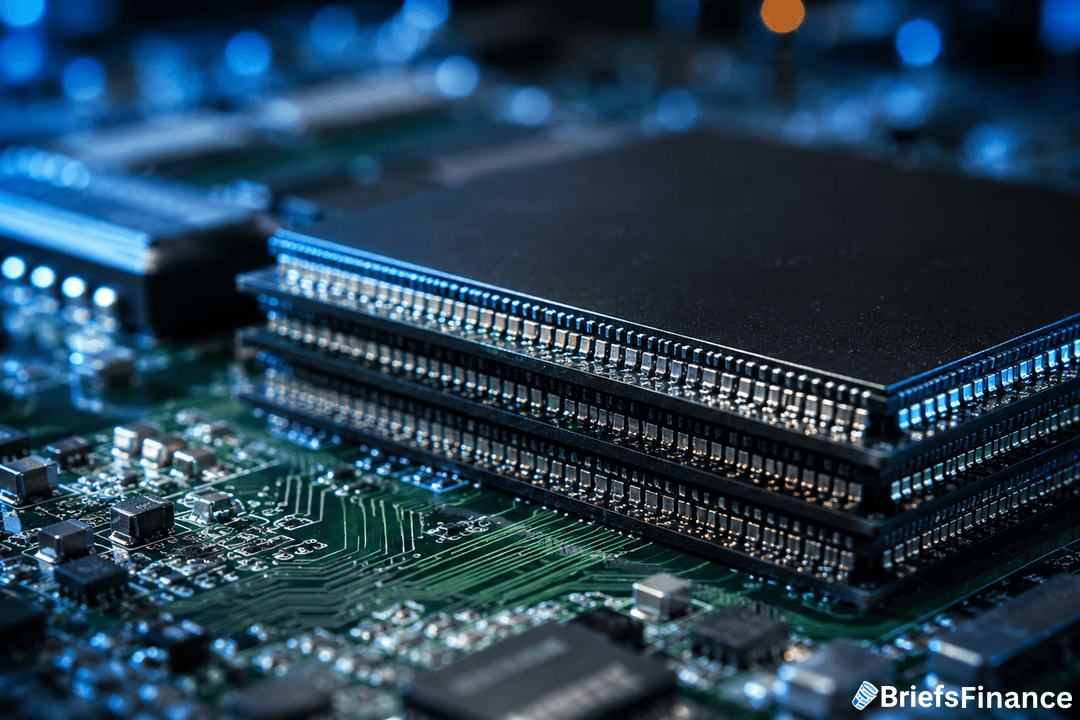
The chipmaker most investors couldn't name a year ago just joined a club worth more than the GDP of most countries. Micron crossed a $1 trillion market value Tuesday for the first time, with shares jumping about 18%.
The push came from an AI memory shortage that has no clear end, and UBS thinks the stock can still double from here.
An AI Race That Quietly Became A Memory Race
The early years of the AI boom belonged to Nvidia, but the next stage is starting to look different. Investors are reaching past chip designers and into the layer underneath them - the memory chips that store and feed the data those AI systems run on.
Micron is one of the biggest winners. AI agents that plan, decide, and act on their own need far more memory than older AI tools, and the world doesn't have enough of it.
That shortage has let Micron and rivals SK Hynix and Samsung push prices higher, helping push Micron's stock to more than triple this year. It joined the trillion-dollar club only a few weeks after first clearing a $700 billion valuation.
Every morning, Market Briefs walks investors through moves like this in about five minutes, plus a free investing masterclass when you join.
UBS Just Set A Price Target That Says The Run Isn't Over
UBS nearly tripled its price target on Micron, taking it from $535 to $1,625 a share. That figure suggests the stock could more than double again from Friday's close of about $751.
The reason: long-term supply deals with partially locked-in pricing. UBS argued the market is starting to treat Micron less like a boom-bust chip play and more like a key AI supplier - and that the stock can keep moving higher as those changes become visible.
Micron isn't alone. Intel is up more than six times from its lows after a major U.S. government investment last summer and is trading near all-time highs.
Qualcomm, AMD, and Marvell Technology have all hit new records too.
What To Watch
Memory pricing is the whole story now. As long as AI demand keeps outrunning supply, Micron's pricing power and earnings keep moving in one direction.
The risk: a sudden swing in chip orders, or new supply coming online faster than expected. For now, neither is happening.
A trillion dollars used to be reserved for the biggest names in tech. Now it includes the company that makes the memory inside them.
If you want this read on the market every weekday morning, join 350,000+ investors reading Market Briefs and grab the free 45-minute investing masterclass that comes with sign-up.