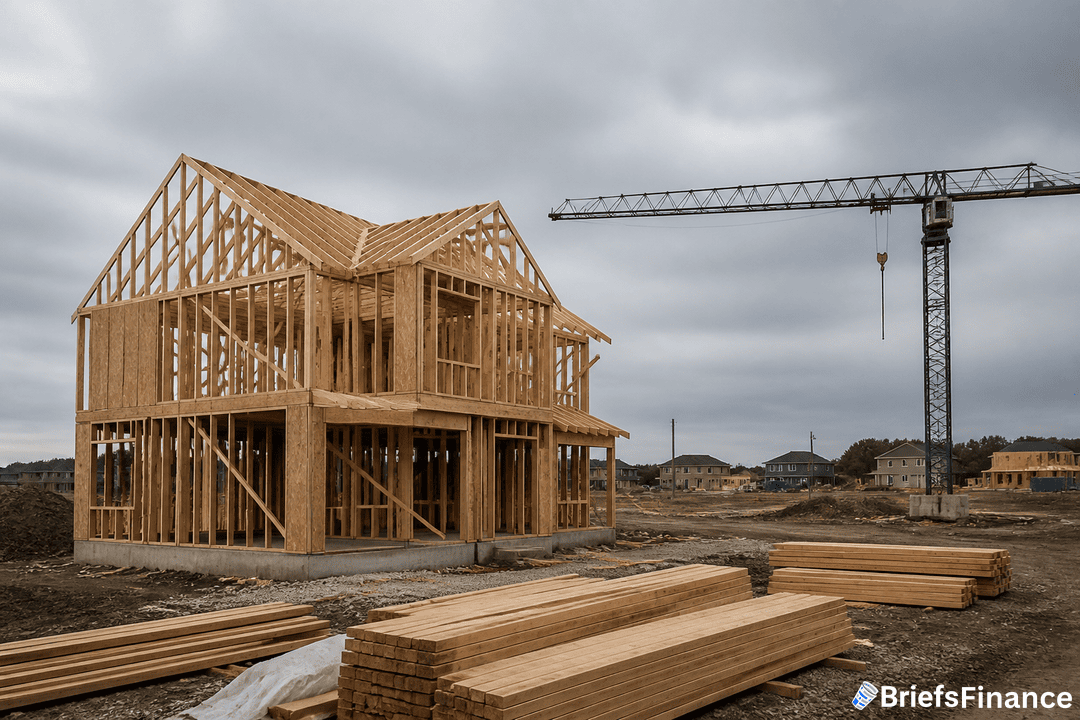
Sentiment Slumps as Costs and Rates Rise
Homebuilder confidence just hit a 14-year low as financing gets pricier and building remains costly. The National Association of Home Builders/Wells Fargo index fell to 29 this month from 32, missing the 31 median forecast and marking the softest reading since June 2012.
A sub-50 score means the share of builders calling conditions poor exceeds those saying they're good, and this gauge has sat below that line for more than two years. The current sales component slid to 33, also a 14-year low. Expectations for sales over the next six months eased to the weakest since November 2022, and the index tracking potential buyer traffic fell to its lowest since the pandemic began.
Builders Sweeten Deals, Margins Get Squeezed
Rising borrowing costs are curbing buyer demand while new-home inventory remains elevated, pushing builders to sharpen pencils on pricing. The share reporting price cuts climbed to 43%, and roughly two-thirds used incentives this month, which helps move homes but pressures operating margins. Relatedly, mortgage rates reached about 7.5% as a home-buying slump extended into a sixth week.
In a Monday statement, NAHB chief economist Robert Dietz said, "Housing remains squeezed by supply-side constraints and significant affordability challenges," and added, "Demand persists, but higher mortgage rates, elevated construction costs and weaker consumer confidence are keeping more buyers on the sidelines."
When housing headlines feel constant, get clarity by signing up for our free Market Briefs newsletter, covering markets and real estate in five minutes
Regional Moves and What Investors Should Watch
Across regions, the South posted the softest confidence reading since mid-2012. In the West, sentiment fell by 10 points to the lowest since late 2011. The Midwest slipped, while the Northeast improved. Investor mood mirrors the survey: the iShares US Home Construction ETF has been sliding for the past three months.
Coming up next, the federal government will publish Tuesday's data on housing starts and building permits, and the National Association of Realtors will post last month's pending-home sales. The bottom line: affordability headwinds and cautious buyers can slow closings and pressure pricing, which matters if your portfolio leans on homebuilders, construction materials, or housing-linked ETFs.
Keeping perspective takes time, so join Market Briefs, our free newsletter explaining the economy, stocks, crypto, and real estate in minutes