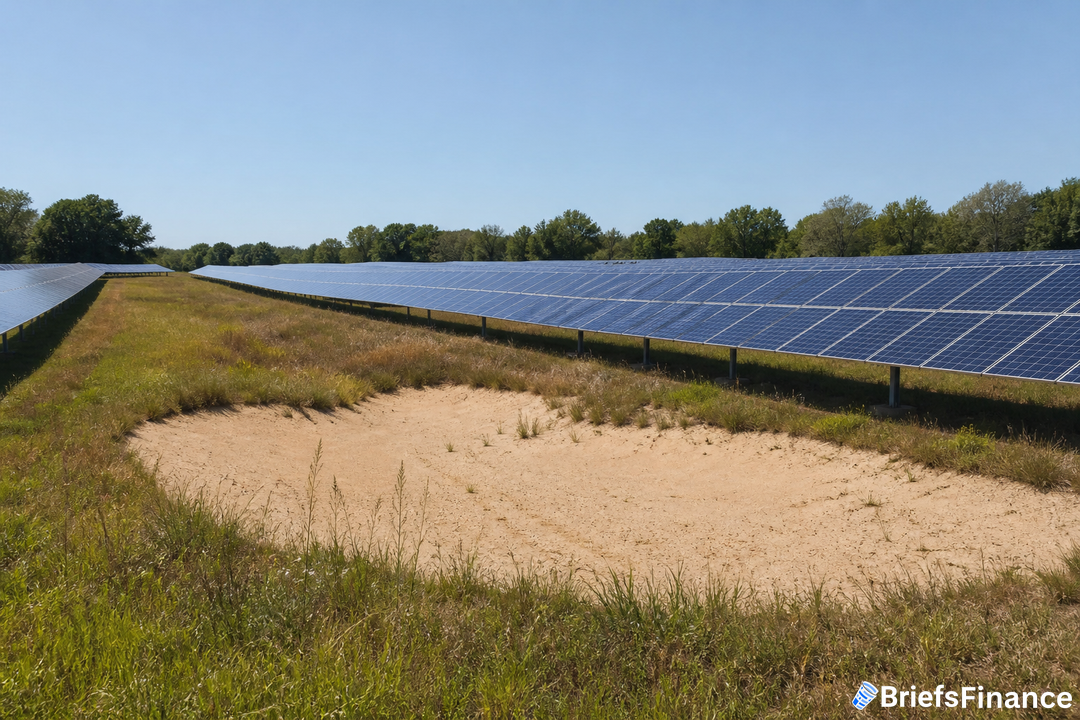
From fairways to panels: one course's planned transformation
Two hours from central Tokyo, the Minohara Country Club rolls through wooded hills in Gunma. In the next few years, those greens are slated to give way to long ranks of photovoltaics. In 2025, Kamisato Kensetsu Ltd., which operates in construction and real estate and also develops solar projects, bought the 27-hole property and plans to install 152 megawatts of panels across it.
While environmental reviews and other planning steps play out, the company has taken over daily operations and is keeping the course running. The goal is to close the club in 2030, the same year construction is due to kick off.
"This establishment is losing money," Toya said, noting the club drops more than ¥2 million a year. A day of unlimited play costs ¥5,000 ($31.87), yet turnout is still thin.
Why golf courses make sense for big solar projects
Space is the developer's biggest headache. Japan's terrain is tough, and even where land is suitable on paper, projects can stall. Andrew Chapman of Kyushu University, where he serves as an associate professor, estimates that fully exploiting all technically suitable solar and wind locations could produce 14 times the nation's yearly electricity consumption. Reality is different.
Mega projects need sun, a nearby grid connection and enough separation from neighborhoods. Many golf courses happen to have those ingredients.
"If you can snap up a cheap golf course, which is nice and flat, gentle slopes, not mountainous, it's probably cheap land," Chapman said. "So it makes a lot of sense, especially if they're going into regional areas." The 1980s construction boom left Japan with a large number of courses, yet the game's appeal has waned, especially in depopulating rural areas. That is why some of the nation's largest mega solar sites have risen on former fairways, including Japan's biggest in Okayama prefecture in western Honshu.
When landscapes change, steady investors look for ways to protect and grow capital. Join Briefs Finance CEO Jaspreet Singh on September 29th for a FREE live investor workshop, How to Profit From A Dollar That's Losing its Value, where he shows how we're spotting investment opportunities as the dollar falls. Save your spot.
How this fits into Japan's broader solar buildout
Solar surged after the 2011 Fukushima disaster, when Japan shut all 54 nuclear reactors that once produced roughly one third of its electricity. A generous feed-in tariff guaranteed utilities would buy renewable power at prices that worked for developers. Installations peaked in 2015, then slowed as subsidies were ratcheted down. That cool-down collides with policy goals: by 2040, the government wants solar to provide up to 29% of the power mix - nearly triple its current share - with net zero slated for a decade later.
Former golf courses have been critical to getting steel in the ground. At least 1 gigawatt of projects that are announced or under construction are on courses, which Bloomberg figures is around 10% of the current pipeline. Communities are pushing back more often over tree clearing, landslide risk and altered views, and Prime Minister Sanae Takaichi has been outspoken against these large developments.
Some builders argue course conversions can limit environmental disruption. EDP SA, which recently finished a project on a shuttered course in Fukushima prefecture, said it sees golf sites as a way to use available land while reducing the need for extensive tree cutting.
Based on BloombergNEF data counting projects of 0.9 megawatts or larger, roughly 9% of Japan's utility-scale solar capacity now sits on repurposed golf courses.
Community pushback, alternatives and what it means for your portfolio
Golf courses are not limitless, so developers are scouting other options. Renova Inc. has pivoted toward smaller arrays on abandoned farmland. The government is betting on perovskite cells that could eventually coat rooftops, walls and other places where conventional panels struggle, though wide rollout is still ahead of us. Meanwhile, environmental assessments alone can take up to four years, which means bigger projects may move in slow motion.
For your money, this adds up to a Japan solar story built on two tracks. Expect more large one-off sites where courses no longer work as businesses, paired with a steadier flow of smaller regional builds and, later, new tech on buildings. The opportunity is sizable, but timelines are long and local sentiment matters.
Sustainable opportunities can help keep your portfolio aligned with long term goals. Our CEO Jaspreet Singh is hosting a FREE live investor workshop, How to Profit From A Dollar That's Losing its Value, on September 29th. Sign up free to join him live.