Free NewsletterPro Login

Free Live Investors Workshop

Seats limited

Tue, Sep 29.

The dollar is losing value.

Here’s how investors can still profit.

Hosted By

Jaspreet Singh

Founder, Briefs Finance

X

Warning: Undefined variable $stocks in /var/www/briefs.co/htdocs/wp-content/plugins/oxygen/component-framework/components/classes/code-block.class.php(133) : eval()'d code on line 448

Warning: foreach() argument must be of type array|object, null given in /var/www/briefs.co/htdocs/wp-content/plugins/oxygen/component-framework/components/classes/code-block.class.php(133) : eval()'d code on line 448

Warning: Undefined variable $funds in /var/www/briefs.co/htdocs/wp-content/plugins/oxygen/component-framework/components/classes/code-block.class.php(133) : eval()'d code on line 472

Warning: foreach() argument must be of type array|object, null given in /var/www/briefs.co/htdocs/wp-content/plugins/oxygen/component-framework/components/classes/code-block.class.php(133) : eval()'d code on line 472
/* the link was here */

Florida Buyer's $30,000 4Runner Is a Snapshot of Used-Car Sticker Shock

Published Sep 19, 2026
Share:
Summary:
  • Benjamin Young paid $30,000 for a 12-year-old Toyota 4Runner with 90,000 miles and said, "I'm definitely getting less for the money."
  • Edmunds says $10,000 to $15,000 now buys an almost 9-year-old car with about 98,000 miles; in 2019 that budget typically got something under 5 years old with roughly 58,000 miles.
  • With the average new car near $50,000, used prices have climbed above $30,000 and the share under $15,000 keeps shrinking.

One Buyer's Reality Check

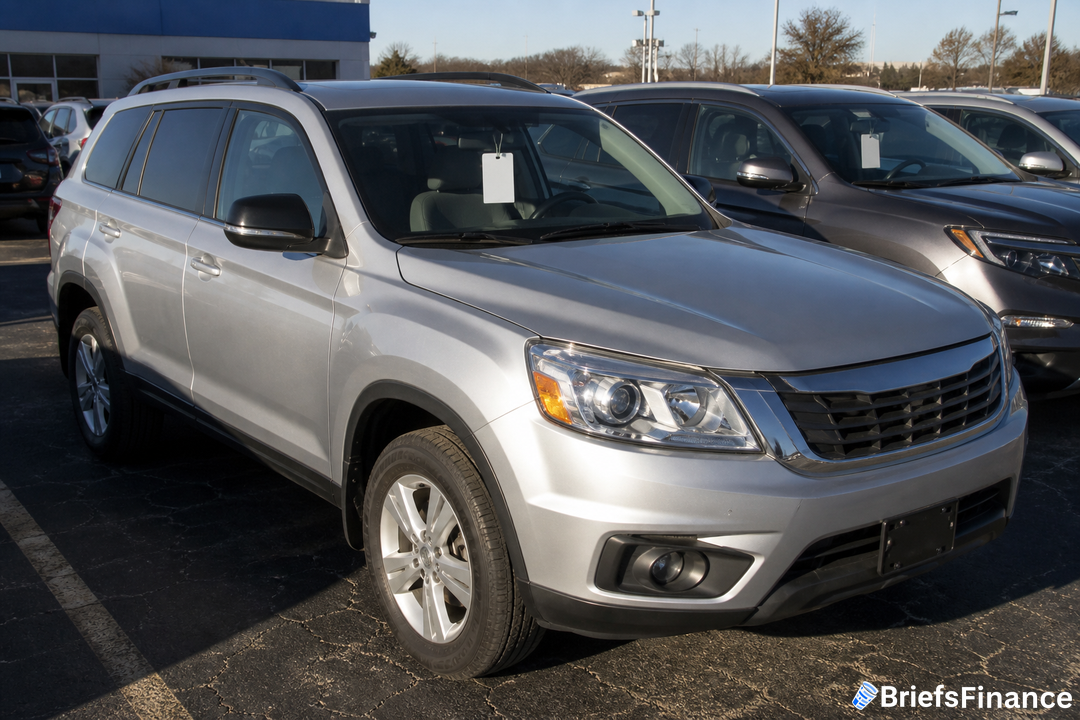
Benjamin Young shelled out $30,000 for a 12-year-old Toyota 4Runner with 90,000 miles. "I'm definitely getting less for the money," said Young, 48, a process engineer near Jacksonville. He likes the SUV, but a fluid leak is affecting the shocks, and repair quotes run into the thousands.

He's been sparring with the retailer over the bill. "It's kind of the way of the world," he said.

The price pressure is everywhere. Relative to Young's $30,000 purchase, a new 4Runner would run roughly double that amount, and the entry-level Honda Civic now starts at $25,000. For many shoppers, that means settling for older, higher-mileage cars that are more likely to need work.

How We Got Here: Pricier New Cars, Pricier Used Cars

Stretching $10,000 to $15,000 on a used car now typically lands you something almost nine years old with around 98,000 miles, according to Edmunds. In 2019, the same budget typically bought a car less than five years old with around 58,000 miles. On average, a newly purchased car goes for about $50,000 today.

Given that cars lose roughly 40% of their value within three years, the typical used model now fetches over $30,000, versus about $20,000 in 2019. Edmunds also reports the average price paid for a three-year-old car is approaching $33,000 as of the second quarter of 2026.

Automakers changed tactics during and after the pandemic. For two decades before Covid, discounts, 0% financing, and cheap leases kept new models accessible and sent a steady stream of low-mileage lease returns to used lots. Supply chain snarls taught car companies they could earn more by building fewer, higher-priced models, and investors applauded.

This year, both General Motors and Ford have drawn investor attention with price-supported profits and raised earnings guidance. In second-quarter results, GM cited an average transaction price of $52,000 with incentives running lower than many rivals, while Ford said net pricing added $200 million to quarterly profit. GM plans to introduce updated Chevrolet Silverado and GMC Sierra models later this year, and, as Chief Financial Officer Paul Jacobson put it to investors, that "means there is pricing potential."

When purchases feel pricier, a steady plan helps protect and grow your money. Join Briefs Finance CEO Jaspreet Singh on September 29th for a FREE live investor workshop, How to Profit From A Dollar That's Losing its Value, where he shows how we're spotting investment opportunities as the dollar falls. Save your spot.

Some of the higher prices reflect costs, not just fatter margins, said Diane Swonk, KPMG's chief economist. She points to Trump's tariffs, which have cost automakers billions, and the war with Iran that has pushed up energy prices, especially diesel for truckers hauling parts and vehicles around North America.

Fewer Leases, Tighter Lots, Fiercer Hunts

In Columbus, Ohio, dealer group owner Rhett Ricart observed that sub-$20,000 choices are scarce and often come with heavy mileage. "They're like gold," he said. "They're out there, but we have to pay record prices to get them."

Shoppers are competing with each other too. Amy Hyken, 58, a child family therapist, spent months combing listings before finding a Lexus NX 250 with fewer than 50,000 miles for $35,000. It was in Florida, so she paid $800 to ship it and waited another two months for delivery to her home near Kansas City.

The delay let her claw back the shipping fee. "It's a thinner market than it was in the past," she said.

The Bigger Economic Backdrop and Your Wallet

The affordability squeeze is landing as the broader economy delivers more headwinds. Voters sent President Donald Trump back to the White House, in part on his pledge to rein in prices. Following the late-February decision by the president to go to war with Iran, inflation stayed above 3% and energy costs rose.

The Federal Reserve raised interest rates this week, and investors are betting on more hikes to cool inflation, making borrowing even pricier. US mortgage rates have climbed to their highest point in over a year, and September consumer sentiment missed forecasts. Surveys indicate Democrats hold a lead as they try to win back the House in the November midterms, and they are seen as having strong odds in the Senate as Trump's approval ratings lag.

For everyday buyers, the math is simple and stubborn: elevated new-car prices are lifting used values, fewer leases mean fewer three- to four-year-old, low-mileage vehicles hitting used lots, and higher rates push up monthly payments. That is why cheaper used cars draw a crowd and why more shoppers end up in older, higher-mileage rides.

Keeping long term goals in sight helps you navigate costly choices with confidence. Our CEO Jaspreet Singh is hosting a FREE live investor workshop, How to Profit From A Dollar That's Losing its Value, on September 29th. Sign up free to join him live.

Disclosure

Recent News

1 2 3 80

Get Market Briefs delivered to your inbox every morning for free!

No fluff. No noise. No politics. Just finance news you can read in 5 minutes.

Blogs

September 18, 2026
Kevin Warsh Just Defied Trump: What the Fed Rate Hike Means for Your Money
  • The Fed raised rates for the first time since 2023 in a unanimous vote led by Kevin Warsh, the chairman President Trump appointed to cut them.
  • Higher rates make the $40 trillion national debt, business loan resets and mortgages more expensive, but they strengthen the dollar and pay investors holding cash.
  • The war with Iran is pushing up oil, grocery and chip prices, another hike is likely in 2026, and recession talk is about to get louder.
Read More
September 17, 2026
Why America Bailed Out the Yen: The Japan Carry Trade, the Dollar and Your Mortgage Rate
  • In July 2026 the US sent money to steady the yen because Japan is the largest foreign owner of US debt, and Washington needs Japan to keep lending.
  • For decades the Japan carry trade let Wall Street borrow yen at essentially 0% and pour it into US stocks, real estate and Treasuries, and rising Japanese rates are shutting that off.
  • A weaker yen means fewer buyers for the dollar and for US debt, which pushes Treasury rates up and drags mortgage, car loan and credit card rates up with them.
Read More
September 16, 2026
Treasury Yields Are Spiking Because Lenders Are Backing Away From U.S. Debt
  • The U.S. is paying its highest 30-year borrowing rate in about two decades because its biggest lenders, the Fed, foreign governments, and banks, are all pulling back from Treasuries.
  • Every mortgage, car loan, credit card, and business loan is priced off the 10-year Treasury yield, so when Washington pays more to borrow, so do you.
  • With about $40 trillion of debt against a $32 trillion economy, the country either outgrows its debt or slides into a doom loop, and investors need a plan for both.
Read More
September 15, 2026
Fiat Currency Runs on Trust, and the World Just Stopped Trusting the Dollar
  • Gold has overtaken US treasuries as the world's top reserve asset, and central banks are now buying less US debt and more gold.
  • The US dollar is a fiat currency, meaning it's backed by a promise rather than gold, so it loses value when fewer countries want to hold it.
  • Whether the US economy or its national debt grows faster from here decides which assets stand to benefit next.
Read More
September 14, 2026
Why RAM Prices Are Soaring - and Where the Money Is Moving
  • Memory chips - the RAM inside phones, laptops, fridges, and trucks - are in a shortage Tim Cook called a 100-year flood, and some memory prices have climbed about 90% in a single quarter.
  • Four forces hit at once: AI demand, a production shutdown in 2023, build times that push any fix to 2028 at the earliest, and a bombed helium plant in Qatar.
  • The last two supply shocks ended in aggressive Fed rate hikes and market drops of around 45% and 20%, and this time Washington is spending heavily to bring memory production home.
Read More
September 11, 2026
How Is the Economy Doing? Washington Says It's Fixed, but the Numbers Don't Agree
  • Treasury Secretary Scott Bessent says the economy is fixed because lower earners' incomes are now rising faster than top earners'.
  • The Atlanta Fed and Bank of America show different numbers, and Hilton, Marriott, and McDonald's can't agree on what they're seeing either.
  • Whichever side is right, the economy is built to make investors rich, and inflation is how it does it.
Read More
September 10, 2026
US National Debt Hits $40 Trillion: Why the Economy Hasn't Collapsed Yet
  • The US national debt crossed $40 trillion in 2026 and is growing faster than the economy. The debt to GDP ratio now sits at 125%, the highest outside the pandemic and higher than World War II.
  • On September 9, 2026, Treasury Secretary Scott Bessent rolled out an emergency plan for the government to lend money to itself. Ray Dalio now says the dollar has roughly three years before real pain.
  • Empires rarely default. They debase. Since 1971, median household income grew about 8x while houses grew 17x and the S&P 500 grew 360x, so investors got richer while workers fell behind.
Read More
September 9, 2026
Your 401k Is Fueling the AI Bubble
  • About $10 trillion of 401k money sits in a $77 trillion stock market, mostly through target date funds and S&P 500 funds. Roughly 30% of every S&P 500 dollar lands in five AI-heavy tech stocks.
  • Four bubble signals run hotter today than before the 2000 crash: top-ten concentration, tech's share of the index, the Buffett Indicator, and how much of the market index funds own.
  • You only lock in an AI bubble loss if you sell. The 2022, 2020, 2008, and 2000 crashes were all buying windows for long-term investors, and the US-China AI race means government money could keep flowing in.
Read More
September 9, 2026
What Is Wealth Preservation? How To Protect Your Money From Anything
  • Wealth preservation is an investing strategy built around keeping the money you've already made instead of chasing growth.
  • It leans on assets that hold steady when markets fall - gold, Treasury bonds, and companies that keep earning through wars, crashes, and pandemics.
  • The tradeoff is real: you give up some upside, and the two key numbers to check are maximum drawdown and correlation to the market.
Read More
September 8, 2026
Why Is Everything So Expensive? Why Prices May Never Come Back Down
  • Official inflation is 3.4% and prices are up 32% since 2020, but rent (41%), gas (47%), car insurance (64%) and ground beef (79%) all outran the 28% median wage.
  • The Federal Reserve targets 2% inflation on purpose. Rising prices push extra dollars to investors and shrink the real cost of a $40 trillion national debt.
  • Investors who simply owned the S&P 500 gained about 150% over the same six years, and the Fed's September 16 decision will show whether it protects the dollar or the economy first.
Read More
1 2 3 27
Share via
Copy link











