Free NewsletterPro Login
S&P 500 6,287 +0.42%
DOW 44,521 -0.18%
NASDAQ 21,103 +0.71%

Warning: Undefined variable $funds in /var/www/briefs.co/htdocs/wp-content/plugins/oxygen/component-framework/components/classes/code-block.class.php(133) : eval()'d code on line 491

Warning: foreach() argument must be of type array|object, null given in /var/www/briefs.co/htdocs/wp-content/plugins/oxygen/component-framework/components/classes/code-block.class.php(133) : eval()'d code on line 491
/* the link was here */

Copper Giant Cuts Output Forecast After Wild Weather Hits Its Biggest Mine

Published Aug 13, 2026
[tts_player]
Share:
Summary:
  • Antofagasta Plc now expects 625,000 to 655,000 metric tons of copper output in 2026, down from its earlier 650,000 to 700,000 estimate.
  • Severe rain and snow at its Los Pelambres mine in Chile forced an orderly shutdown and triggered a catastrophe declaration from the Chilean government.
  • Copper prices remain close to record highs as demand from electric vehicles, power grids, and AI data centers keeps outpacing supply.

Copper is everywhere. It's in your phone, your car, and the power lines outside your window. And the companies that dig it up are having a harder time getting it out of the ground.

Antofagasta Plc, one of the world's biggest copper miners, just slashed its production forecast for this year after severe storms battered its Los Pelambres mine in Chile. The news is a reminder that the metal powering the modern world depends on weather that is getting harder to predict.

Storms Force a Reality Check

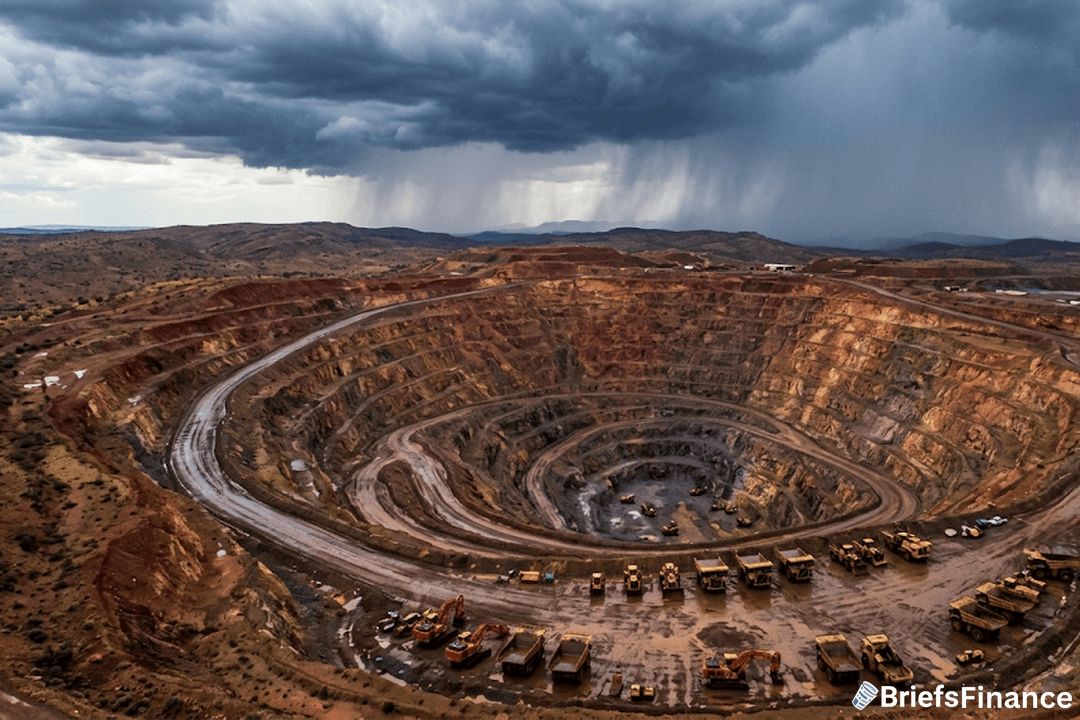
The London-listed company now expects to produce 625,000 to 655,000 metric tons of copper in 2026, down from its earlier estimate of 650,000 to 700,000. The revision came after intense rain and snow hit the mine, which sits high in Chile's Coquimbo region.

The storms were bad enough that the Chilean government issued a catastrophe declaration for the area. The mine was shut down in an orderly way, and while key facilities avoided serious damage, snow is still lingering in some spots. The company is slowly bringing operations back online.

Get the free Always Be Buying eBook and learn the simple system for building wealth on any income

CEO Ivan Arriagada did not sugarcoat what happened. He said the storms over the past month were the worst Los Pelambres has seen since it started operating. He described the weather as drought for long stretches, then rain and snow "concentrated in very few days."

Copper Prices Stay Hot

Antofagasta is feeling that tailwind. The company's first-half cash profit rose 27% from a year earlier, helped by stronger prices. In plain terms, the company is making more money per ton even as it wrestles with the weather.

The catch: the same forces pushing copper prices up are making production harder. Extreme weather is becoming a bigger threat in Chile, the world's top copper-producing country. And forecasters expect El Niño to intensify for the rest of the year, which means more heavy rain risk in parts of Chile and Argentina.

What This Means for Your Portfolio

For investors, this is a story about supply and uncertainty. When a major miner trims its forecast, it tightens the global supply picture even further. That can support higher copper prices, which is good news if you own mining stocks or funds that track commodities.

But it also highlights a risk that is easy to overlook: mining companies aren't just battling geology anymore. They are battling the weather.

Antofagasta is studying ways to bounce back faster after severe storms, including extra investment and safer restart procedures. Arriagada says the company will keep looking for ways to increase resilience.

That is the right instinct, but resilience takes time and money. In the meantime, the updated forecast accounts for the chance of more bad weather before winter ends in Chile. The company is planning adapting for the worst while hoping for the best.

For the rest of us, the takeaway is simpler. Copper is essential, supply is tight, and the weather is making things less predictable. If you own copper-related investments, expect some ups and downs as miners adapt to a climate that no longer follows the old rules.

Download the free Always Be Buying eBook and start putting your money to work today
Disclosure

Recent News

1 2 3 54

Get Market Briefs delivered to your inbox every morning for free!

No fluff. No noise. No politics. Just finance news you can read in 5 minutes.

Blogs

June 29, 2026
Portfolio Diversification: Why Putting All Your Eggs in One Basket Destroys Wealth
  • Real diversification means spreading investments across all 11 economic sectors plus bonds, alternatives, and cash so no single bet can sink the portfolio.
  • Different sectors perform at different times, so a diversified portfolio captures upswings while smoothing the brutal drawdowns that wipe out concentrated bets.
  • Total market index funds offer the simplest path to diversification, and annual rebalancing is what keeps the structure working over time.
Read More
June 29, 2026
Non Taxable Income: What It Is and Why It Matters
  • Non taxable income is money you receive that you don't owe income tax on.
  • The tax code treats workers, investors, and business owners very differently, and investors often come out ahead.
  • Learning how income is taxed is a quiet superpower for keeping more of what you earn.
Read More
June 29, 2026
Semiconductor Stocks: A Simple Guide for Investors
  • Semiconductor stocks are companies that design and make computer chips, the brains inside nearly every modern device.
  • The AI boom has turned chips into one of the market's most important and most watched groups.
  • They offer big growth potential, but come with high valuations and a notoriously cyclical history.
Read More
June 25, 2026
How Stocks Work: A Simple Guide for Beginners
  • A stock is a slice of ownership in a company - buy one, and you own a piece of the business.
  • You make money two ways: the share price rising over time, and dividends paid to shareholders.
  • The simplest path for most beginners is buying into the whole market through a low-cost index fund.
Read More
June 25, 2026
Stop Loss vs Stop Limit: What's the Difference?
  • A stop loss order sells your stock once it hits a trigger price, prioritizing getting you out.
  • A stop limit order only sells within a price range you set, prioritizing price over a guaranteed exit.
  • The trade-off: a stop loss almost always executes; a stop limit might not if the price moves too fast.
Read More
June 25, 2026
Energy Stocks: A Simple Guide for Investors
  • Energy stocks are companies that produce and supply the power the world runs on, from oil and gas to newer sources.
  • They make up one of the 11 sectors of the market and tend to move with energy prices and big-picture shifts.
  • Like any sector, the key is diversification and understanding the forces driving demand.
Read More
June 18, 2026
What Is a Stop Loss Order? A Simple Guide
  • A stop loss order automatically sells a stock once it falls to a price you set.
  • It's a tool to cap losses or lock in gains without watching the market all day.
  • It works best for active strategies, and can backfire if used carelessly on long-term holdings.
Read More
June 18, 2026
Best S&P 500 Index Fund: How to Choose One
  • The best S&P 500 index fund for most investors is simply the cheapest, most established one that tracks the index well.
  • Funds like VOO, IVV, and SPY all hold the same 500 companies, so the biggest difference is the fee.
  • Pick one, automate your buys, and let time do the heavy lifting.
Read More
June 17, 2026
What Are Penny Stocks? Risks and Rewards Explained
  • Penny stocks are very low-priced shares of very small companies, often trading for just a few dollars or less.
  • They promise huge gains but carry huge risks: low liquidity, high failure rates, and wild price swings.
  • Most investors are better served by quality companies and funds than by chasing cheap shares.
Read More
June 17, 2026
Best Stocks for Beginners With Little Money
  • The best stocks for beginners with little money usually aren't individual stocks at all - they're low-cost index funds.
  • You can start with $100 or less and use small, regular investments to build wealth over time.
  • Focus on diversification and consistency, not on picking the next big winner.
Read More
1 2 3 24
Share via
Copy link













