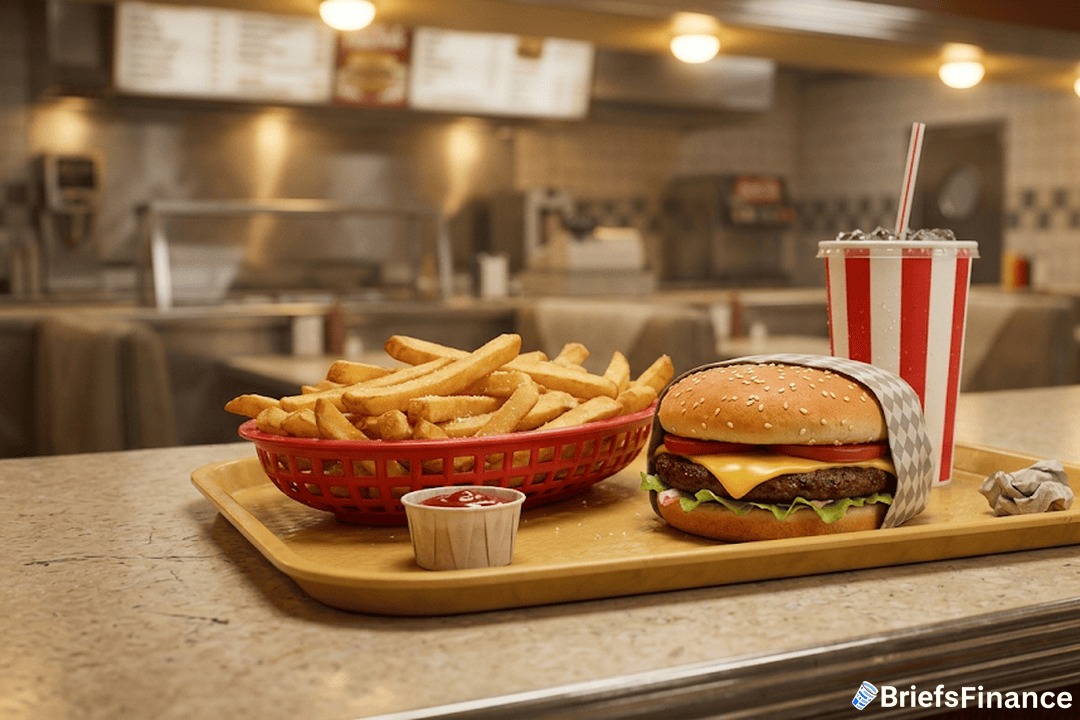
The $15 Combo Is Getting Hard to Find
A burger, fries and a soda used to be the default cheap lunch. In most of the country, that era is over.
DoorDash's annual Cheeseburger Index came out on August 9, 2026, and it calculates the usual total cost of the same three menu items in cities across the U.S. It appears in DoorDash's State of Local Commerce report.
The list of cities that stay under $15 is short. These are the only four in the whole study that hit the mark:
- Austin, Texas: $12.94
- Laredo, Texas: $13.39
- Lincoln, Nebraska: $13.86
- Detroit, Michigan: $14.99
Philadelphia comes next at $15.41, which puts it just over the line. The difference between making the list and missing it is less than half a dollar.
By holding the food order constant, DoorDash can show how the same lunch shifts with local costs.
The Same Meal Can Cost Much More Elsewhere
That price gap is the whole point.
A $15 bill that covers the full meal in Austin would cover only about half of it in Anchorage.
The index turns a dry conversation about local economies into something everyone has an opinion on: the price of lunch.
Get the free Always Be Buying eBook and learn the simple system for building wealth on any income
Jessica Lachs, DoorDash's chief analytics officer, said, "The Cheeseburger Index is a really great way to distill the information into a simple, fun and relatable metric."
"There isn't one economy. There are a lot of local economies," Lachs said. "The same basket of goods, a cheeseburger, fries and a drink, costs $12.94 on average in Austin, Texas, but $28.28 in Anchorage, Alaska."
Most of the 10 best-value cities on DoorDash's Cheeseburger Index sit in the Midwest or Texas, and Texas puts four cities on that list. DoorDash says Southern and Southeastern cities tend to have structurally lower operating costs, meaning the day-to-day cost of running a restaurant is cheaper, and that helps keep the region among the cheapest for both restaurant meals and groceries.
A restaurant cannot easily move when rent goes up. So the local cost of labor, rent and energy usually shows up directly in the menu price.
How the Index Works
The company uses one fixed order as its measuring stick for every city. That makes the price gaps easier to interpret: they come from local costs, not from different orders.
The State of Local Commerce report is DoorDash's wider annual look at local economies around the country, and the cheeseburger basket is designed to turn that broader data into a single, easily understood number.
Why the Price Is Creeping Up
The national average for the combo rose 3.2% from a year earlier.
Beef prices have been a notable worry lately. DoorDash's report says the increases reflect broader costs like labor, rent and energy, not food costs alone.
The next time a local burger place raises prices, the patty is not the only thing to blame. The rent, the cook's paycheck and the electric bill all factor into the final tab.
A 3.2% increase does not sound dramatic, but it pushes more cities past the $15 line. In a place that was already close to that cutoff, it is enough to nudge the full meal over it.
What This Means for Your Wallet
The picture is not a national burger crisis. It is a local one.
Where you live shapes what you pay for the same three items. A $15 order can be a full meal in one city and less than half a meal in another.
Those differences add up quickly. A few dollars on every lunch, multiplied by a month of lunches, is real money.
That is the real point of the index. The national economy is a collection of local economies, and the price on your menu is the one that matters.
Download the free Always Be Buying eBook and start putting your money to work today