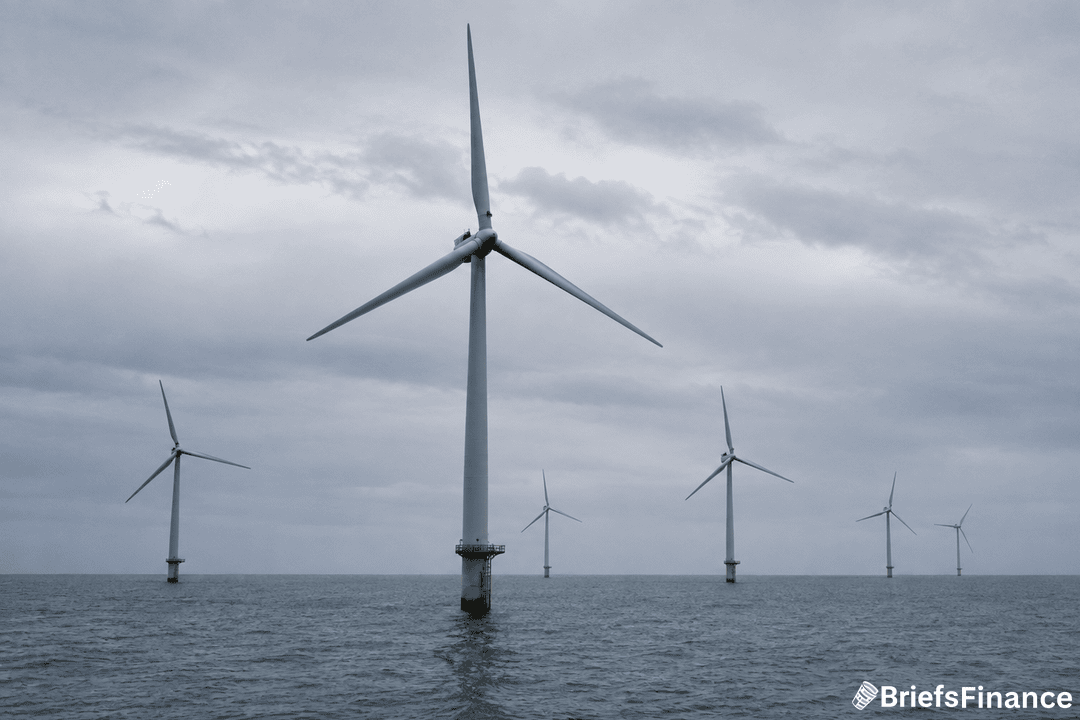
A $1.2 Billion Check to Walk Away
That is a big number for projects that never produced electricity, and it is not a loan or a bet. It is money spent so the leases stay empty.
The largest payment is going to RWE, a German utility.
A gigawatt is a measure of how much electricity a plant can produce at full strength. By that measure, the dropped New York project was a serious amount of power.
The same federal effort has ended projects planned off the coasts of California and Louisiana too. Developers are handing those leases back, and the government is covering the cost.
The 12 leases cover projects planned off New York, California, and Louisiana.
Where the Money Goes Next
RWE already has a plan for the payout.
Get the free Always Be Buying eBook and learn the simple system for building wealth on any income
The other $300 million is earmarked for natural gas turbines. Those turbines are meant for 15 peaking power plants spread around the country.
Peaking plants are the ones utilities turn on when electricity demand jumps. They are among the most expensive and polluting gas plants to operate, so this is a notable place for the money to land.
There is also a timing problem. A backlog for gas turbines runs into the early 2030s, which leaves the completion timeline unclear.
So the overall direction is clear. Money that was tied up in offshore wind is being shifted toward gas.
RWE's Next Move Says a Lot
RWE may be done with U.S. offshore wind, but it is not done with offshore wind. The company says it recently bought 6.9 gigawatts of capacity in a U.K. offshore wind auction.
In fact, the U.K. purchase is a bigger number than the New York project the company is being paid to abandon. That is a useful signal for investors, because this is not a story about wind power failing as a technology but about wind power losing ground in the U.S. while still finding buyers in other markets.
What This Means for Your Money
For investors, the important part is the direction of federal dollars. The money is moving away from offshore wind and toward natural gas projects, including peaking plants that come with high operating costs.
That does not mean every natural gas company wins or every wind developer loses. It does mean government policy is now a major factor in which energy projects make financial sense.
The timeline adds to the uncertainty. With gas turbine supplies backed up into the early 2030s, the plants being funded today may not be running for years.
For most investors, the takeaway is not about one utility or one lease. It is about how fast the rules can change when an administration decides to spend billions to redirect the energy system.
The bottom line: policy, not just physics, decides which energy projects get built. For a portfolio, that is part of the reason energy investing requires keeping an eye on Washington, not just on the weather.
Download the free Always Be Buying eBook and start putting your money to work today