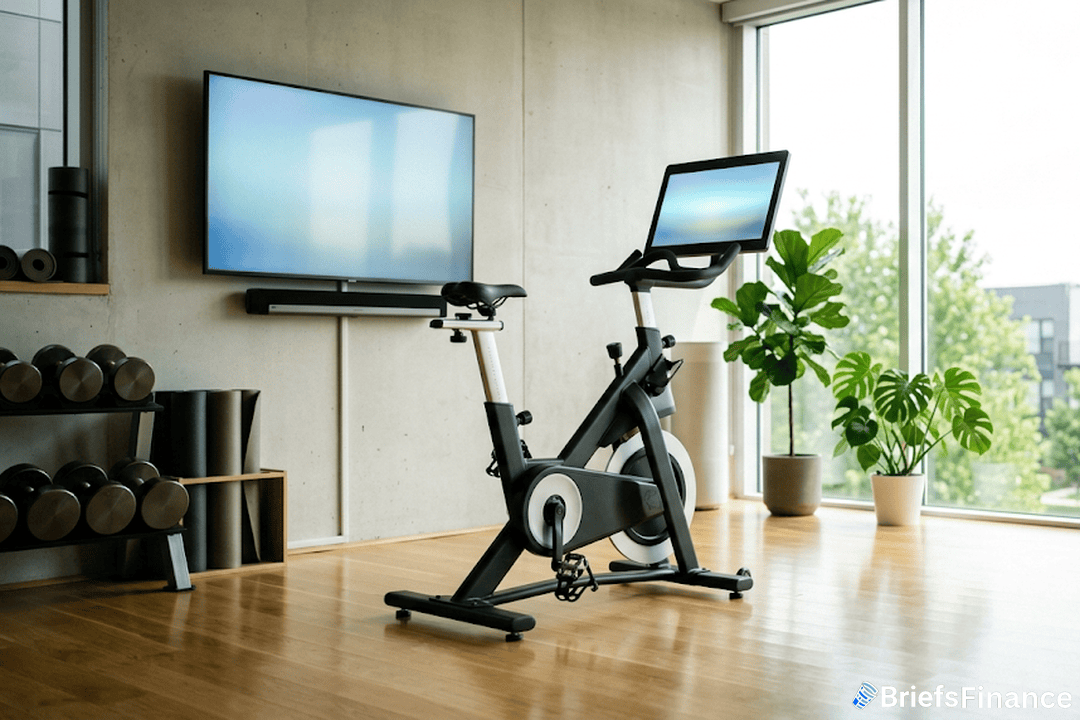
For the first time ever, Peloton has made money. The connected fitness company posted a $63.2 million profit for fiscal 2026, a huge swing from the $118.9 million loss it recorded the year before.
A Landmark Year, With a Catch
The profit was a genuine milestone. CEO Peter Stern called fiscal 2026 a "landmark" year and told CNBC, "This was the year where Peloton sort of grew up." Price increases on equipment and subscriptions, introduced last fall, helped push the company into profitability. It also posted a full year of operating income for the first time.
The quarter itself looked solid too. Net income for the three months ended June 30 came in at $61.6 million, or 13 cents a share. That matched the 13 cents per share analysts had forecast, while revenue of $607.7 million beat the $598 million consensus and ticked up modestly from $606.9 million a year earlier.
But here is the tension: full-year sales actually fell in fiscal 2026, even with the price hikes. The company still struggles to sell its high-priced equipment, and keeping members engaged and paying remains a constant fight.
The Outlook That Spoiled the Party
The company says the expected drop comes from comparisons with periods that already included last fall's price increases. In plain terms, the easy year-over-year wins are gone.
Get the free Always Be Buying eBook and learn the simple system for building wealth on any income
The catch: Peloton still expects to generate positive free cash flow in fiscal 2027, and it sees gross margin and adjusted EBITDA rising year over year. So the business is getting healthier, just not bigger.
Stern acknowledged the slow path. "We're not at the stage yet where we turn the net of all those things positive, but we're getting better and better," he said. "We're a work in progress, but the trajectory is getting better in '27 than it's been in a long time."
A New Face for Member Experience
The company is also shaking up its content leadership. Peloton hired Sarah Robb O'Hagan as chief content and member development officer, replacing Jen Cotter. Her job is to fight subscriber churn, the term for members who cancel.
Stern says Robb O'Hagan will oversee onboarding, live-class experiences, and new instructor hiring. She has also been working on keeping the talent the company already has.
"The other thing that Sarah's done is at the same time that we're adding new instructors, she has re-signed contracts with a significant portion of our existing instructors," Stern said.
There is also a commercial push brewing. Peloton recently announced a Spotify partnership and plans to release its first commercial Bike and Tread this fall for gyms. The company says there has been "plenty of interest," though Stern was careful to note that no sales have been made yet.
"We're having lots of conversations, but we're not actually making sales yet," he said.
What It Means for Investors
Peloton is in a strange place. The company finally fixed its cost problem, but it still has a growth problem. The path forward depends on two big bets: getting more out of the members it already has, and convincing gyms to put Peloton equipment in front of people who may never buy one for their living room.
The stock market has little patience for companies that shrink, even when the shrinking comes with better profits. But there is a real argument that a leaner, steadier Peloton is a better long-term story than the pandemic-era hype machine that spent aggressively and lost money.
For your portfolio, the takeaway is about the difference between a good headline and a good future. A first-ever profit is real progress. Whether it translates into growth is the question investors will be watching all year.
Download the free Always Be Buying eBook and start putting your money to work today