Free NewsletterPro Login
S&P 500 6,287 +0.42%
DOW 44,521 -0.18%
NASDAQ 21,103 +0.71%

Warning: Undefined variable $funds in /var/www/briefs.co/htdocs/wp-content/plugins/oxygen/component-framework/components/classes/code-block.class.php(133) : eval()'d code on line 491

Warning: foreach() argument must be of type array|object, null given in /var/www/briefs.co/htdocs/wp-content/plugins/oxygen/component-framework/components/classes/code-block.class.php(133) : eval()'d code on line 491
/* the link was here */

Danube's Historic Low Water Halts Hungary's Only Nuclear Station

Published Jul 30, 2026
[tts_player]
Share:
Danube's Historic Low Water Halts Hungary's Only Nuclear Station
Summary:
  • Hungary's Paks nuclear plant will shut down by Monday due to record-low Danube water levels, removing 2,000 megawatt-hours from the grid.
  • The plant supplies roughly 40% of the nation's electricity, and Prime Minister Peter Magyar indicated a quick restart is improbable given the ongoing drought.
  • Large industrial users, including automakers and battery manufacturers, have been asked to voluntarily cut power use, with mandatory limits being prepared if voluntary measures fail.

Prime Minister Peter Magyar of Hungary cautioned that the electricity market will confront "dire circumstances" starting next week because of the temporary shutdown of the nation's sole nuclear power plant.

In addition, a separate power plant failure has caused a further reduction of 400 megawatt-hours of capacity, Magyar stated.

Magyar said Hungary intends to boost electricity imports from neighboring countries. He also urged both households and businesses to use power responsibly over the coming weeks.

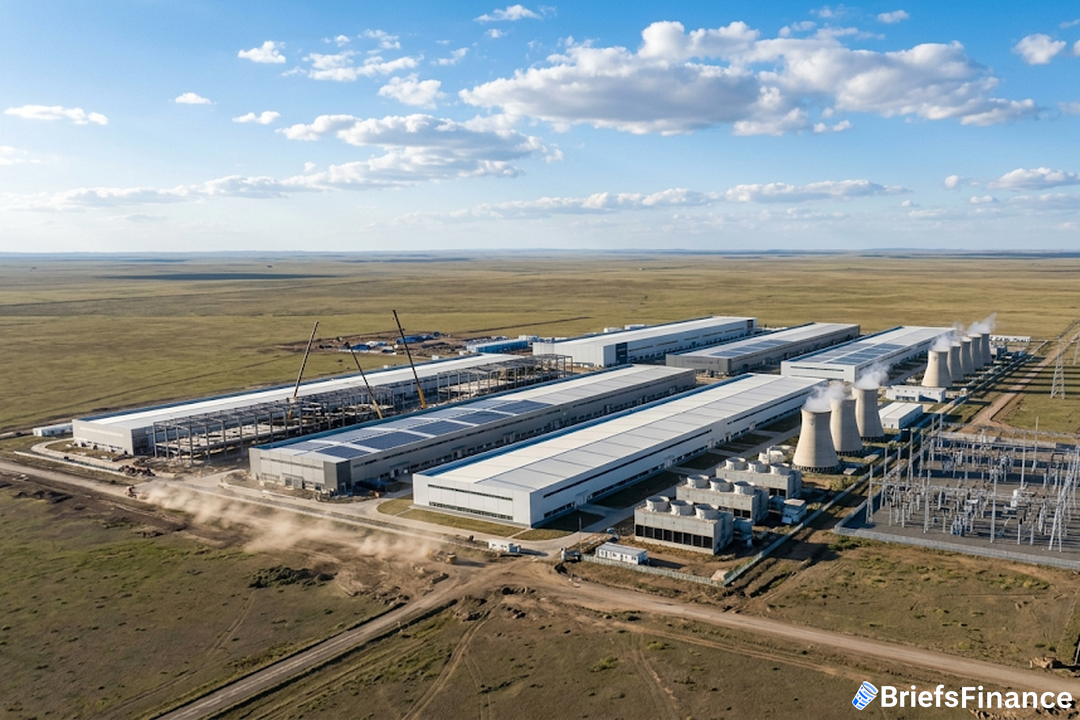
To cool its reactors, the Paks nuclear station requires a steady supply of Danube water. The river's water level has dropped to its lowest point ever recorded amid a prolonged drought that has affected large parts of Central Europe. Without sufficient cooling water, the plant cannot operate safely, forcing the temporary shutdown.

Get the market news that matters in a five-minute read with Market Briefs, our free daily newsletter

This double blow to Hungary's power grid exacerbates the strain, as electricity imports from Austria, Slovakia, and Ukraine may not fully compensate for the loss. The ongoing drought is part of a broader pattern of extreme weather across Central Europe, with several rivers hitting record lows. The Paks plant, which began operations in the 1980s, uses a once-through cooling system that depends on a consistent flow of Danube water. Without sufficient water, the reactors cannot dissipate heat safely, making shutdown unavoidable.

Hungary, being landlocked, has limited alternatives for base-load power generation. The country typically imports a fraction of its electricity, but with the nuclear outage, import demand is expected to surge, potentially straining regional grids.

What It Means for Investors

The abrupt loss of about 40% of Hungary's power supply raises immediate concerns for energy-intensive industries. Carmakers and battery producers, which are central to Hungary's export economy, face the risk of production cuts or higher energy costs. If mandatory limits are enacted, industrial output could slow, affecting quarterly earnings.

On the energy side, increased reliance on imports will likely drive up wholesale electricity prices in Hungary and could spill over into neighboring markets. Investors in Hungarian utilities and industrial firms should monitor the government's next steps closely.

Broader Context

The shutdown highlights the vulnerability of nuclear plants to climate-related water shortages. While nuclear power is often touted for its low carbon emissions, it requires consistent access to large volumes of cooling water. Droughts, which are becoming more frequent and severe across Europe, pose a systemic risk to such facilities.

Hungary's predicament also underscores the importance of grid interconnection; the country's ability to import power from Austria, Slovakia, or Ukraine will be tested. Prime Minister Magyar's call for voluntary conservation suggests the government hopes to avoid compulsory rationing, but the window for voluntary action is narrow.

Join Market Briefs, our free daily newsletter, for a quick daily rundown of the markets
Disclosure

Recent News

1 2 3 45

Get Market Briefs delivered to your inbox every morning for free!

No fluff. No noise. No politics. Just finance news you can read in 5 minutes.

Blogs

June 29, 2026
Portfolio Diversification: Why Putting All Your Eggs in One Basket Destroys Wealth
  • Real diversification means spreading investments across all 11 economic sectors plus bonds, alternatives, and cash so no single bet can sink the portfolio.
  • Different sectors perform at different times, so a diversified portfolio captures upswings while smoothing the brutal drawdowns that wipe out concentrated bets.
  • Total market index funds offer the simplest path to diversification, and annual rebalancing is what keeps the structure working over time.
Read More
June 29, 2026
Non Taxable Income: What It Is and Why It Matters
  • Non taxable income is money you receive that you don't owe income tax on.
  • The tax code treats workers, investors, and business owners very differently, and investors often come out ahead.
  • Learning how income is taxed is a quiet superpower for keeping more of what you earn.
Read More
June 29, 2026
Semiconductor Stocks: A Simple Guide for Investors
  • Semiconductor stocks are companies that design and make computer chips, the brains inside nearly every modern device.
  • The AI boom has turned chips into one of the market's most important and most watched groups.
  • They offer big growth potential, but come with high valuations and a notoriously cyclical history.
Read More
June 25, 2026
How Stocks Work: A Simple Guide for Beginners
  • A stock is a slice of ownership in a company - buy one, and you own a piece of the business.
  • You make money two ways: the share price rising over time, and dividends paid to shareholders.
  • The simplest path for most beginners is buying into the whole market through a low-cost index fund.
Read More
June 25, 2026
Stop Loss vs Stop Limit: What's the Difference?
  • A stop loss order sells your stock once it hits a trigger price, prioritizing getting you out.
  • A stop limit order only sells within a price range you set, prioritizing price over a guaranteed exit.
  • The trade-off: a stop loss almost always executes; a stop limit might not if the price moves too fast.
Read More
June 25, 2026
Energy Stocks: A Simple Guide for Investors
  • Energy stocks are companies that produce and supply the power the world runs on, from oil and gas to newer sources.
  • They make up one of the 11 sectors of the market and tend to move with energy prices and big-picture shifts.
  • Like any sector, the key is diversification and understanding the forces driving demand.
Read More
June 18, 2026
What Is a Stop Loss Order? A Simple Guide
  • A stop loss order automatically sells a stock once it falls to a price you set.
  • It's a tool to cap losses or lock in gains without watching the market all day.
  • It works best for active strategies, and can backfire if used carelessly on long-term holdings.
Read More
June 18, 2026
Best S&P 500 Index Fund: How to Choose One
  • The best S&P 500 index fund for most investors is simply the cheapest, most established one that tracks the index well.
  • Funds like VOO, IVV, and SPY all hold the same 500 companies, so the biggest difference is the fee.
  • Pick one, automate your buys, and let time do the heavy lifting.
Read More
June 17, 2026
What Are Penny Stocks? Risks and Rewards Explained
  • Penny stocks are very low-priced shares of very small companies, often trading for just a few dollars or less.
  • They promise huge gains but carry huge risks: low liquidity, high failure rates, and wild price swings.
  • Most investors are better served by quality companies and funds than by chasing cheap shares.
Read More
June 17, 2026
Best Stocks for Beginners With Little Money
  • The best stocks for beginners with little money usually aren't individual stocks at all - they're low-cost index funds.
  • You can start with $100 or less and use small, regular investments to build wealth over time.
  • Focus on diversification and consistency, not on picking the next big winner.
Read More
1 2 3 24
Share via
Copy link












