Free NewsletterPro Login
S&P 500 6,287 +0.42%
DOW 44,521 -0.18%
NASDAQ 21,103 +0.71%
S&P 500 +12.4%
Briefs Finance Fund +24.8%
JOIN THE FUND →

Drone Attacks on Wildberries Warehouses Trigger Rethink of Russian Supply Chains

Published Jul 22, 2026
[tts_player]
Share:
Summary:
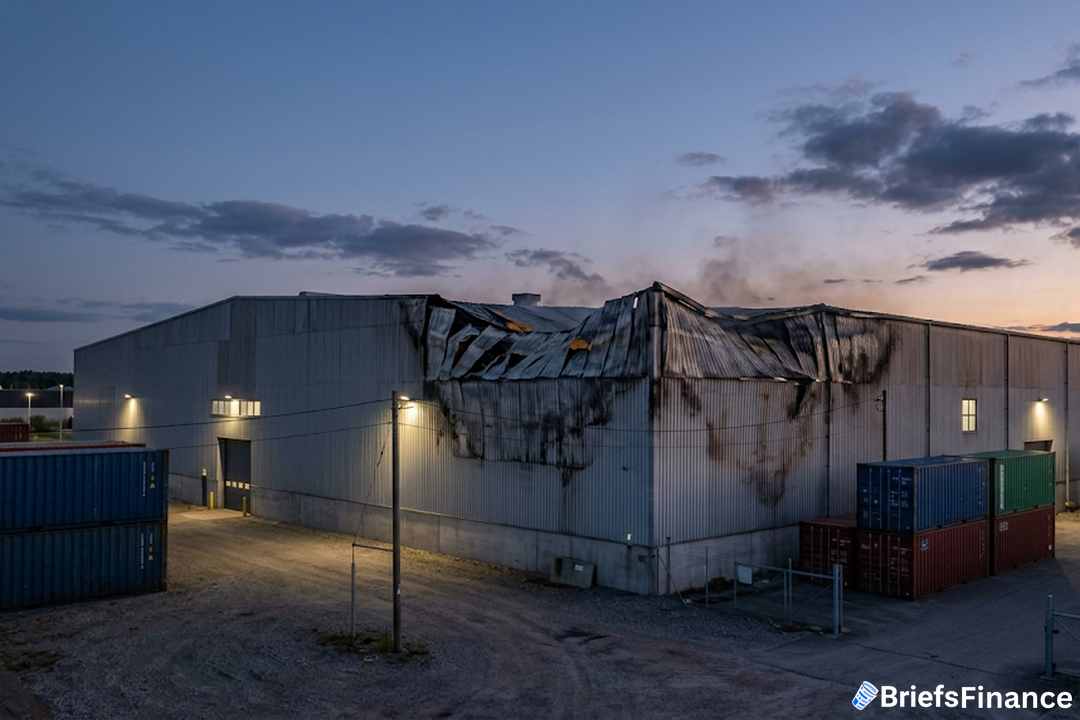
  • Ukrainian drone strikes hit two Wildberries warehouses, killing seven and causing massive destruction.
  • Seller losses could reach 170 billion rubles, prompting major food retailers to reconsider warehouse distribution.
  • Ozon shares fell roughly 12% on the Moscow Exchange after the attacks, while Sberbank and T-Bank offered loan restructuring to impacted sellers.

What Happened and Who Paid the Price

The physical damage to the warehouses is pegged at roughly 30 billion rubles ($381 million).

But the real pain is for the sellers who stored their products there. According to estimates cited in Russian media, their losses could amount to 170 billion rubles.

Wildberries is not a small operation. Last year, the total value of goods handled by Wildberries amounted to nearly three percent of Russia's entire economic output. The assaults initially knocked out around 10% of Wildberries' warehouse capacity.

Tatyana Kim, the billionaire who founded Wildberries, owns 65% of the combined company following a merger with Russ Group, Russia's biggest outdoor advertiser. The Bloomberg Billionaires Index puts her net worth at $8.8 billion.

How Russia's Biggest Retailers Are Reacting

Russia's largest grocery chains, including X5 Retail Group and Lenta IPJSC, are now investigating ways to spread their warehousing and stock across a wider array of sites to limit potential fallout from future incidents.

Get the market news that matters in a five-minute read with Market Briefs, our free daily newsletter

A leading grocery retailer is adopting a more decentralized logistics strategy. Rather than constructing mega-distribution centers spanning 100,000 to 200,000 square meters, the firm plans to use a broader network of regional hubs of 10,000 to 30,000 square meters, ensuring that losing one site wouldn't halt operations. The plan also includes building distribution centers split into separate fire- and blast-resistant units, utilizing stores as local fulfillment points, and holding more inventory at supplier locations until just before it is needed.

Representatives of major grocery chains X5, Lenta, and Magnit PJSC, along with an Ozon spokesperson and the Russian government's press office, declined to comment when contacted. Dmitry Peskov, the Kremlin's spokesperson, said that authorities are in contact with the firm and described the situation as "difficult" because of the damage inflicted on Wildberries and small- to medium-sized enterprises.

Ukrainian President Volodymyr Zelenskyy characterized the warehouse attacks as revenge for Russian strikes on Ukraine's infrastructure. Bloomberg News could not independently verify the information.

The Bigger Question for the Russian Economy

Larger businesses, such as Turkish clothing retailer Koton, have also incurred inventory losses.

Bloomberg Economics' View…

*A crucial uncertainty is whether this signals the beginning of a prolonged Ukrainian effort targeting logistics centers. The lasting effects would be decidedly unfavorable. Businesses might need to sacrifice efficiency for resilience by spreading out inventories, adding redundant capacity, and increasing security spending.

That would further undermine productivity, already a major bottleneck for Russia's long-term expansion. Additionally, higher logistics and operational costs would ultimately lead to increased prices for consumers.* - Ekaterina Vlasova, economist covering Central and Eastern Europe and Russia.

Wildberries reported that it is reviewing seller losses and will determine what assistance it can offer, though it has no legal obligation to compensate them.

Join Market Briefs, our free daily newsletter, for a quick daily rundown of the markets
Disclosure

Recent News

1 2 3 40

Get Market Briefs delivered to your inbox every morning for free!

No fluff. No noise. No politics. Just finance news you can read in 5 minutes.

Blogs

June 29, 2026
Portfolio Diversification: Why Putting All Your Eggs in One Basket Destroys Wealth
  • Real diversification means spreading investments across all 11 economic sectors plus bonds, alternatives, and cash so no single bet can sink the portfolio.
  • Different sectors perform at different times, so a diversified portfolio captures upswings while smoothing the brutal drawdowns that wipe out concentrated bets.
  • Total market index funds offer the simplest path to diversification, and annual rebalancing is what keeps the structure working over time.
Read More
June 29, 2026
Non Taxable Income: What It Is and Why It Matters
  • Non taxable income is money you receive that you don't owe income tax on.
  • The tax code treats workers, investors, and business owners very differently, and investors often come out ahead.
  • Learning how income is taxed is a quiet superpower for keeping more of what you earn.
Read More
June 29, 2026
Semiconductor Stocks: A Simple Guide for Investors
  • Semiconductor stocks are companies that design and make computer chips, the brains inside nearly every modern device.
  • The AI boom has turned chips into one of the market's most important and most watched groups.
  • They offer big growth potential, but come with high valuations and a notoriously cyclical history.
Read More
June 25, 2026
How Stocks Work: A Simple Guide for Beginners
  • A stock is a slice of ownership in a company - buy one, and you own a piece of the business.
  • You make money two ways: the share price rising over time, and dividends paid to shareholders.
  • The simplest path for most beginners is buying into the whole market through a low-cost index fund.
Read More
June 25, 2026
Stop Loss vs Stop Limit: What's the Difference?
  • A stop loss order sells your stock once it hits a trigger price, prioritizing getting you out.
  • A stop limit order only sells within a price range you set, prioritizing price over a guaranteed exit.
  • The trade-off: a stop loss almost always executes; a stop limit might not if the price moves too fast.
Read More
June 25, 2026
Energy Stocks: A Simple Guide for Investors
  • Energy stocks are companies that produce and supply the power the world runs on, from oil and gas to newer sources.
  • They make up one of the 11 sectors of the market and tend to move with energy prices and big-picture shifts.
  • Like any sector, the key is diversification and understanding the forces driving demand.
Read More
June 18, 2026
What Is a Stop Loss Order? A Simple Guide
  • A stop loss order automatically sells a stock once it falls to a price you set.
  • It's a tool to cap losses or lock in gains without watching the market all day.
  • It works best for active strategies, and can backfire if used carelessly on long-term holdings.
Read More
June 18, 2026
Best S&P 500 Index Fund: How to Choose One
  • The best S&P 500 index fund for most investors is simply the cheapest, most established one that tracks the index well.
  • Funds like VOO, IVV, and SPY all hold the same 500 companies, so the biggest difference is the fee.
  • Pick one, automate your buys, and let time do the heavy lifting.
Read More
June 17, 2026
What Are Penny Stocks? Risks and Rewards Explained
  • Penny stocks are very low-priced shares of very small companies, often trading for just a few dollars or less.
  • They promise huge gains but carry huge risks: low liquidity, high failure rates, and wild price swings.
  • Most investors are better served by quality companies and funds than by chasing cheap shares.
Read More
June 17, 2026
Best Stocks for Beginners With Little Money
  • The best stocks for beginners with little money usually aren't individual stocks at all - they're low-cost index funds.
  • You can start with $100 or less and use small, regular investments to build wealth over time.
  • Focus on diversification and consistency, not on picking the next big winner.
Read More
1 2 3 24
Share via
Copy link












