Why June's Inflation Report Stands Out
Canada's price growth decelerated more than anticipated in June, helped by lower gasoline costs and a crucial gauge of underlying inflation falling under 2% for the first time in close to six years.
According to Statistics Canada, the consumer price index increased 2.8% in June. That figure compares with a 3.2% gain in May and undershot the 2.9% median forecast from a Bloomberg poll of economists.
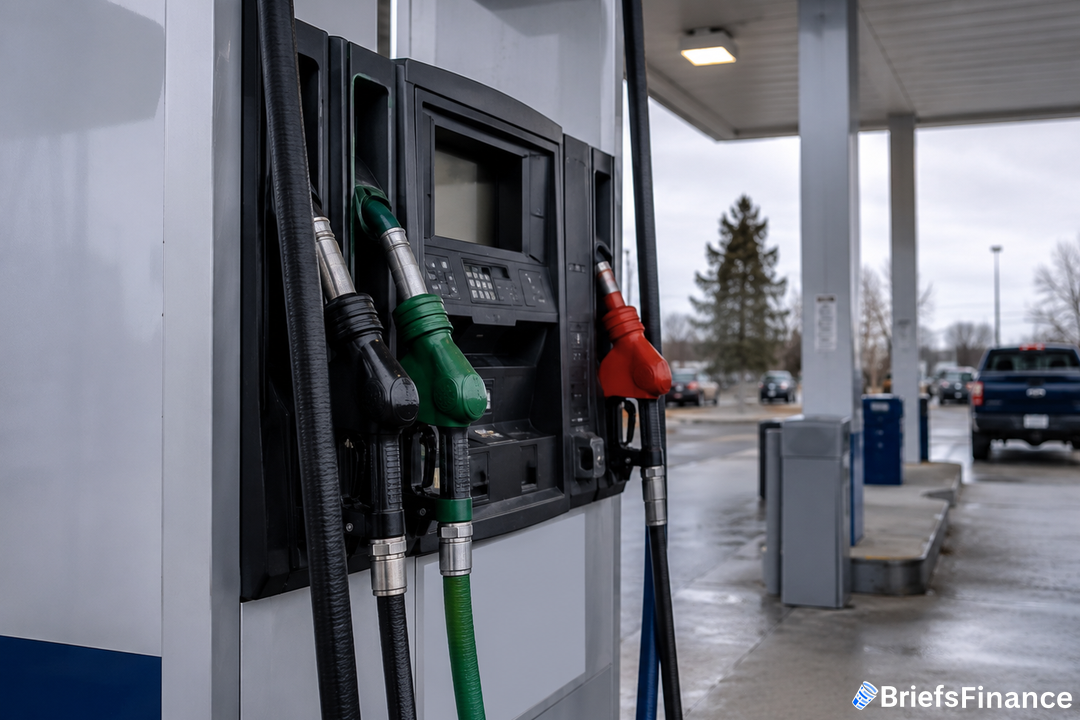
The main culprit for the cooldown was gasoline. Prices at the pump fell 10.2% from May to June, the largest monthly drop since April 2025. Year over year, gas was up 20.5%, but that was down from May's 33.2% increase.
The Bank of Canada's two core inflation gauges - the median and trim - averaged 1.85%, the lowest reading since September 2020. The central bank's core inflation measures dipped beneath the 2% mark for the first time in roughly six years.
Servus Credit Union's chief economist Charles St-Arnaud commented, "This report confirms the recent view from the bank that higher energy costs are not leading to broad inflationary pressures. "However, with gasoline prices remaining elevated and oil prices increasing in recent weeks - leading to continued elevated freight costs - it is probably still too early for the bank to lower its guard"."
Last week, the Bank of Canada maintained its benchmark interest rate at 2.25% for the sixth meeting in a row, and its forecasts indicate that economic growth will recover while price pressures subside.
Get the market news that matters in a five-minute read with Market Briefs, our free daily newsletter
What This Means for Interest Rates and the Loonie
The central bank left its key rate unchanged at 2.25% for the sixth straight meeting last week.
Win Thin, an economist at Bank of Nassau 1982, remarked, "The wait-and-see approach for the Bank of Canada appears to be the right choice and suggests the same for the Fed and Bank of England."
After the data came out, the Canadian dollar touched its lowest level of the day against the U.S. dollar, dropping 0.15% to C$1.4043 by 10:00 a.m. Ottawa time. Short-dated Canadian bonds gained, as the two-year yield slipped roughly four basis points to 2.823%.
On a year-over-year basis, gasoline costs remained 20.5% higher in June, though that was a slowdown from a 33.2% rise in May. Month over month, gasoline prices tumbled 10.2% as peace initiatives to resolve the conflict between the United States and Iran began lowering worldwide crude costs. The two nations had agreed to a truce in the middle of June, but that ceasefire later broke down, heightening uncertainty around energy costs.
In a client note, TD Bank managing director and senior economist Leslie Preston stated, "The rise in oil prices in recent weeks means that the downdraft from lower gasoline prices is likely to evaporate in July's CPI. "With oil prices remaining below recent highs, we still think inflation has peaked in Canada this year"."
Other Price Signals Worth Watching
The cost of groceries rose 3.9% from a year earlier in June, decelerating from a 4.3% pace in May. The moderation reflects weaker increases in fruit prices, particularly for grapes which became cheaper.
Housing cost inflation eased to 1.5% in June, staying under 2% since February.
In contrast, hotel and lodging prices surged 10.1% year over year, accelerating from a 2.5% rise in May, driven by the start of the FIFA World Cup. Tour package costs also climbed 6.8% from a year earlier, a sharp jump from May's 0.7% increase.
According to the Bank of Canada's monetary policy outlook, inflation is expected to average 2.5% in 2026 and return to 2% by early that year.
Join Market Briefs, our free daily newsletter, for a quick daily rundown of the markets