Free NewsletterPro Login
S&P 500 6,287 +0.42%
DOW 44,521 -0.18%
NASDAQ 21,103 +0.71%
S&P 500 +12.4%
Briefs Finance Fund +24.8%
JOIN THE FUND →

U.S. Officials Claim Chinese AI Startup Moonshot Obtained Restricted Nvidia Hardware

Published Jul 22, 2026
[tts_player]
Share:
Summary:
  • According to a White House official, the Chinese startup Moonshot allegedly employed US AI models and Nvidia chips without authorization to build its Kimi K3 system.
  • Moonshot's Kimi K3 system surpasses most competitors, and the firm is suspected of distilling U.S. AI models.
  • Nvidia's stock rose 3.35% to $214.24 on July 22, and lawmakers are advancing legislation to penalize such practices.

The Accusation and the Timeline

The White House is pointing fingers at a Chinese AI startup over banned chips and stolen tech. On the Wednesday before July 22, Michael Kratsios, who leads the White House's Office of Science and Technology Policy, posted on social media that Moonshot AI had "acquired GB300-equipped servers and has accessed GB300s in Thailand, likely to train its AI models."

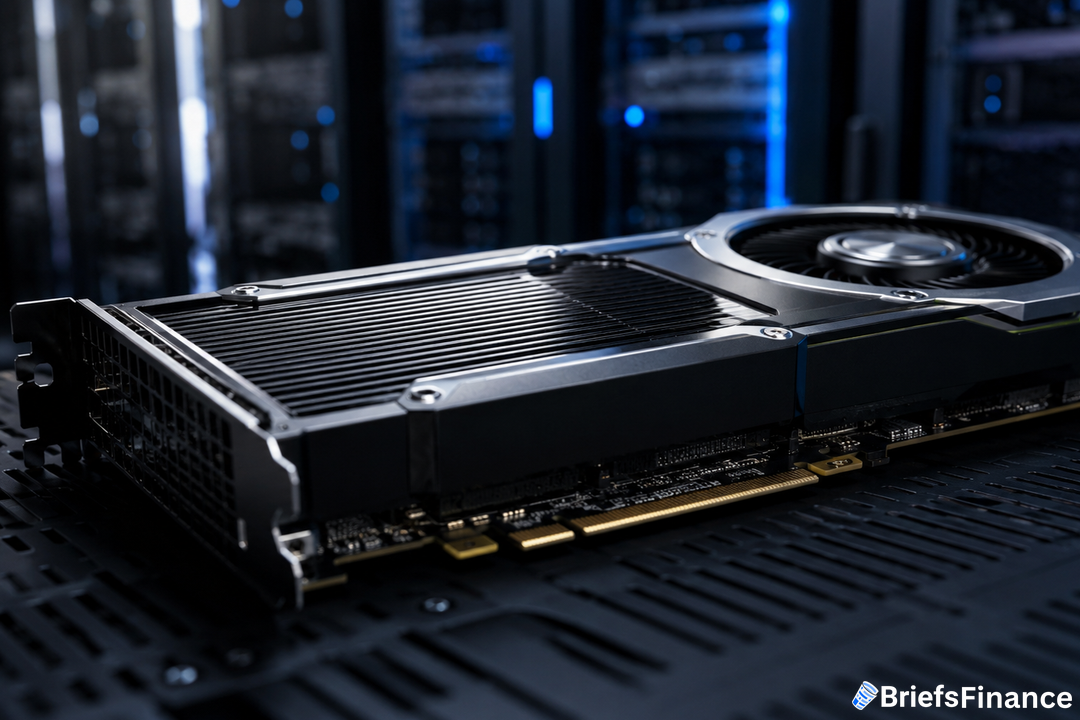
The GB300 servers belong to Nvidia's Blackwell product line, which the U.S. bans from sale to Chinese companies. Moonshot had just shown off its Kimi K3 system the previous week. Only two other systems - one from Anthropic (Claude Fable 5) and one from OpenAI (GPT-5.6) - edge it out in overall performance.

On Tuesday, Treasury Secretary Scott Bessent expressed similar worries about distillation, although not specifically about Moonshot, concerning open-source Chinese AI firms that steal intellectual property. "This administration supports open source models, but what we do not support is IP theft," Bessent said on Fox Business. "If we see, especially, that overseas models are stealing from our great companies, we have the ability to sanction them."

The central technique is distillation, where AI researchers take the outputs of one model - the teacher - and use them to train another model, the student, replicating some of its abilities. Kratsios said Moonshot "developed a sophisticated internal platform to conduct large scale distillation against US models." Anthropic has previously accused Moonshot of distilling its models in a targeted manner. The startup has not responded to those allegations.

Get the market news that matters in a five-minute read with Market Briefs, our free daily newsletter

Why It Matters for the Chip Business

This is not just a political spat. The accusation touches a nerve in the U.S. tech world because the stakes are enormous. Nvidia's chips are the engine of the AI boom, and the U.S. has spent years trying to keep the most advanced ones out of China.

If Moonshot really did find a way to get GB300 servers in Thailand, it means the export controls have a hole in them. Trump officials are now investigating whether companies used a loophole to ship these chips to Chinese subsidiaries. The Trump administration has promised more steps to stop adversarial distillation, and lawmakers in both the House and Senate have introduced bills that could blacklist or sanction any Chinese firm caught stealing.

Why does it matter? If those bills pass, companies like Moonshot could lose access to U.S. technology entirely. That would tighten the AI supply chain even more, and it could make every U.S. chipmaker - especially Nvidia - even more valuable to investors who bet on American dominance.

What It Means for Your Portfolio

Nvidia's stock actually went up on the day the article ran, closing at $214.24 with a 3.35% gain. That seems odd at first. A government accusation about banned chips, and the stock rises?

Investors may be reading the news as a positive sign for Nvidia. If the Trump administration cracks down harder on Chinese access, Nvidia's chips become even more of a luxury item that only U.S. and allied customers can buy. That demand is not going anywhere. AI spending is still surging, and Nvidia is the main supplier.

But there is a risk too. If the investigation uncovers a wider pattern of smuggling, it could lead to more aggressive export restrictions that hurt Nvidia's sales to other countries. For now, the market seems to trust that the ban is mostly holding - and that any enforcement action actually helps U.S. chipmakers in the long run.

For your portfolio, the key question is whether you own Nvidia or other AI stocks. This story is a reminder that U.S.-China tech tensions are not going away. Every new accusation or bill adds a layer of uncertainty.

But it also reinforces the core bet: American AI hardware is still the gold standard, and keeping it that way is a national priority. The companies that make that hardware could benefit from the chaos, as long as the rules stay clear and enforced.

Join Market Briefs, our free daily newsletter, for a quick daily rundown of the markets
Disclosure

Recent News

1 2 3 40

Get Market Briefs delivered to your inbox every morning for free!

No fluff. No noise. No politics. Just finance news you can read in 5 minutes.

Blogs

June 29, 2026
Portfolio Diversification: Why Putting All Your Eggs in One Basket Destroys Wealth
  • Real diversification means spreading investments across all 11 economic sectors plus bonds, alternatives, and cash so no single bet can sink the portfolio.
  • Different sectors perform at different times, so a diversified portfolio captures upswings while smoothing the brutal drawdowns that wipe out concentrated bets.
  • Total market index funds offer the simplest path to diversification, and annual rebalancing is what keeps the structure working over time.
Read More
June 29, 2026
Non Taxable Income: What It Is and Why It Matters
  • Non taxable income is money you receive that you don't owe income tax on.
  • The tax code treats workers, investors, and business owners very differently, and investors often come out ahead.
  • Learning how income is taxed is a quiet superpower for keeping more of what you earn.
Read More
June 29, 2026
Semiconductor Stocks: A Simple Guide for Investors
  • Semiconductor stocks are companies that design and make computer chips, the brains inside nearly every modern device.
  • The AI boom has turned chips into one of the market's most important and most watched groups.
  • They offer big growth potential, but come with high valuations and a notoriously cyclical history.
Read More
June 25, 2026
How Stocks Work: A Simple Guide for Beginners
  • A stock is a slice of ownership in a company - buy one, and you own a piece of the business.
  • You make money two ways: the share price rising over time, and dividends paid to shareholders.
  • The simplest path for most beginners is buying into the whole market through a low-cost index fund.
Read More
June 25, 2026
Stop Loss vs Stop Limit: What's the Difference?
  • A stop loss order sells your stock once it hits a trigger price, prioritizing getting you out.
  • A stop limit order only sells within a price range you set, prioritizing price over a guaranteed exit.
  • The trade-off: a stop loss almost always executes; a stop limit might not if the price moves too fast.
Read More
June 25, 2026
Energy Stocks: A Simple Guide for Investors
  • Energy stocks are companies that produce and supply the power the world runs on, from oil and gas to newer sources.
  • They make up one of the 11 sectors of the market and tend to move with energy prices and big-picture shifts.
  • Like any sector, the key is diversification and understanding the forces driving demand.
Read More
June 18, 2026
What Is a Stop Loss Order? A Simple Guide
  • A stop loss order automatically sells a stock once it falls to a price you set.
  • It's a tool to cap losses or lock in gains without watching the market all day.
  • It works best for active strategies, and can backfire if used carelessly on long-term holdings.
Read More
June 18, 2026
Best S&P 500 Index Fund: How to Choose One
  • The best S&P 500 index fund for most investors is simply the cheapest, most established one that tracks the index well.
  • Funds like VOO, IVV, and SPY all hold the same 500 companies, so the biggest difference is the fee.
  • Pick one, automate your buys, and let time do the heavy lifting.
Read More
June 17, 2026
What Are Penny Stocks? Risks and Rewards Explained
  • Penny stocks are very low-priced shares of very small companies, often trading for just a few dollars or less.
  • They promise huge gains but carry huge risks: low liquidity, high failure rates, and wild price swings.
  • Most investors are better served by quality companies and funds than by chasing cheap shares.
Read More
June 17, 2026
Best Stocks for Beginners With Little Money
  • The best stocks for beginners with little money usually aren't individual stocks at all - they're low-cost index funds.
  • You can start with $100 or less and use small, regular investments to build wealth over time.
  • Focus on diversification and consistency, not on picking the next big winner.
Read More
1 2 3 24
Share via
Copy link











