A Public Win for Intel's Foundry
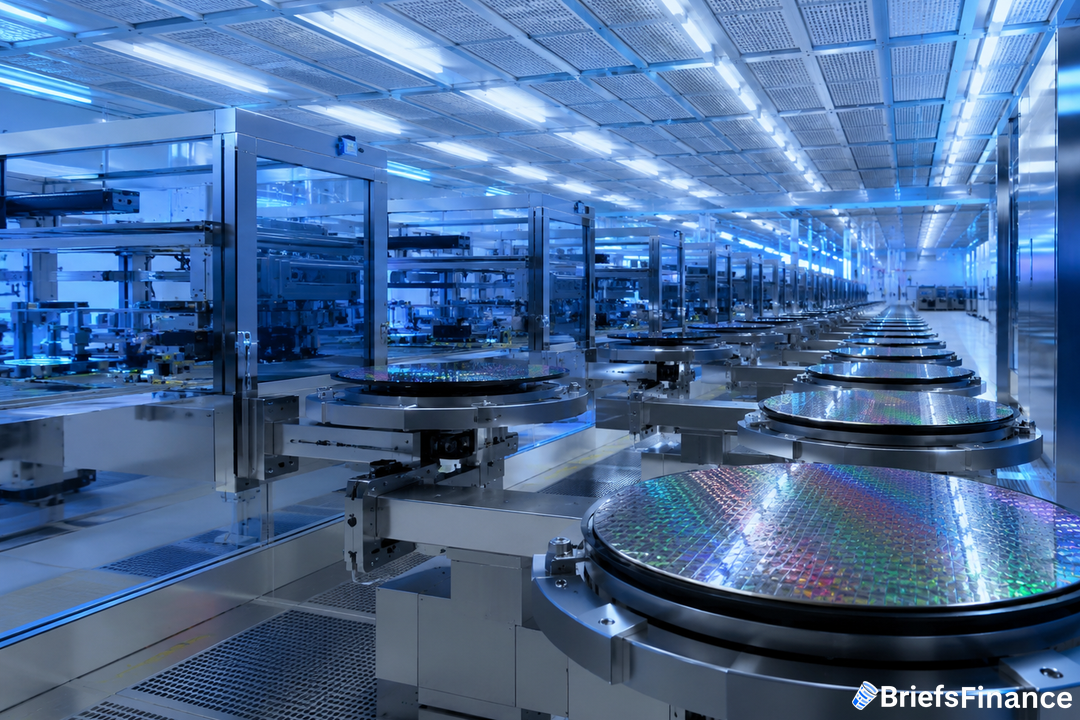
Intel has been telling investors for months that it has "multiple customers" working with its foundry business, but it would not name them. Now it has one it can talk about.
On July 21, 2026, the chipmaker announced that Fortinet, a company that makes cybersecurity hardware, agreed to have Intel produce its next security processor. The chip will be built using Intel's 4 process, a manufacturing node that is not cutting-edge and was originally designed for less complex chips like ASICs used in networking. Fortinet's chip is called the SP6.
Tan told CNBC's Jim Cramer in May that "multiple customers" were working with Intel's foundry, but he declined to name any. Now one is out in the open.
Fortinet's shares have increased by over 100% so far this year. During its most recent earnings conference in May, Fortinet stated that it plans to continue pouring resources into its ASIC technology.
Why This Deal Matters
Intel's foundry business is the key to its turnaround. The company spent heavily to build new factories in the U.S. and overseas, and it needs big outside customers to make that investment pay off.
Get the market news that matters in a five-minute read with Market Briefs, our free daily newsletter
While Pat Gelsinger was still Intel's CEO, Microsoft revealed a collaboration with the company to produce a certain processor in 2024, and later that same year Amazon stated it would rely on Intel to create a bespoke AI chip. Those disclosed deals involved chips with quite modest production volumes. Last April, Intel announced it would collaborate with Google on the design of an ASIC that the company refers to as an infrastructure processing unit.
Additionally, Intel is assisting Elon Musk's Tesla and SpaceX in constructing a chip plant named Terafab. In June, President Donald Trump stated that Apple will employ Intel to produce chips inside the United States, yet neither firm has formally verified an agreement.
Fortinet lacks the brand recognition of giants like Apple, Tesla, or major cloud providers, but it competes in a booming sector thanks to surging need for sophisticated cybersecurity amid AI's growing influence.
The Bigger Picture Still Needs Work
Intel still has a major piece of the puzzle missing. In an April regulatory document, Intel stated that it continues to seek a "significant" client for its cutting-edge fabrication process, aiming to validate the enormous spending required to erect plants domestically and abroad. Intel's top-tier manufacturing technologies for producing CPUs are called 14A and 18A.
Right now, Fortinet's chip is not built on Intel's highest-end process. That is fine for Fortinet, but investors want to see a big-name customer commit to the top-tier technology. Without that, confidence among chip designers and investors remains incomplete.
Analysts have noticed the momentum. Stacy Rasgon of Bernstein said in a video caption on CNBC, "I am feeling better about Intel than I have in a long time."
What Comes Next for Your Portfolio
Intel plans to release its second-quarter financial figures on Thursday following the market close. That report will be the first real look at whether the foundry business is starting to move the financial needle.
For investors watching Intel, the Fortinet deal is a concrete step. The key question is whether Intel can land that "significant" customer for its advanced processes.
Join Market Briefs, our free daily newsletter, for a quick daily rundown of the markets