What was announced and who said it
"Iran has requested a meeting," Donald Trump wrote on Truth Social. "It will take place tomorrow in Doha." The White House added details a short time later: Press Secretary Karoline Leavitt told Fox News that special envoy Steve Witkoff and Jared Kushner will head to Qatar for high-level Iran meetings, with technical experts convening alongside. She said the president wants the peace track to continue, while warning that "violence will be met with violence."
Iran hasn't publicly signed off on the format. According to Tasnim, Deputy Foreign Minister Kazem Gharibabadi earlier stated that there are no technical meetings on the calendar.
The pause and how it came together
After a tense burst of hostilities around the Strait of Hormuz, a US official speaking anonymously said the two parties would temporarily refrain from hostilities and permit ships to transit the corridor. Axios previously reported the understanding to stop fighting and get back to talks.
The truce push follows a Thursday incident in which Iran hit a Singapore-flagged container vessel in the strait. The US responded, and a string of reprisals followed, with Washington and Tehran accusing each other of breaching their prior understanding.
The weekend strikes and the shipping picture
On Sunday, Iran's Islamic Revolutionary Guard Corps reported firing missiles and drones toward Ali Al Salem Air Base in Kuwait and the US 5th Fleet's facility in Salman Port, Bahrain. Kuwaiti authorities said they intercepted two missiles and reported no injuries or damage. Bahrain said a residential building was hit but there were no fatalities.
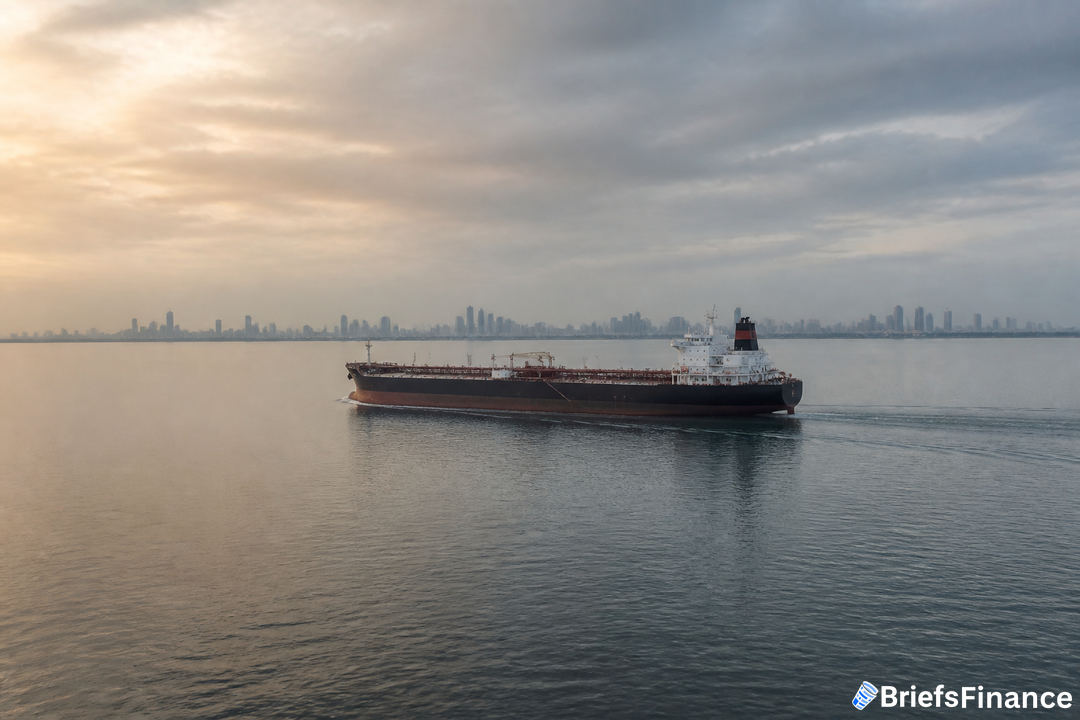
The latest volleys show how fragile the ceasefire effort is and how hard it will be for shipowners to restore normal traffic. Ships kept moving on Monday, but fewer broadcast their positions than a week earlier, and some operators said the weekend attacks dented confidence. Traffic had picked up notably after June 17, the date Trump signed an MoU with Iran intended to bring the war to a close. Over the weekend, a fully loaded supertanker was also attacked, yet transits continued.
The best financial decisions come from understanding the whole picture. Join Market Briefs free and get the full brief each morning.
Energy prices, possible passage fees, and why it matters to you
Before the conflict erupted in late February, about one fifth of global oil and liquefied natural gas flowed through the strait. Crude pulled back from its intraday peak after the halt-in-attacks agreement and the odds of talks improved, with Brent last up 0.9% at $72.66. Haris Khurshid, chief investment officer at Chicago based Karobaar Capital LP, said, "The market feels increasingly comfortable treating these moves as tactical rather than structural." "Until something fundamentally changes, traders are happy to fade both the rallies and the sell-offs."
On governance of the waterway, Gharibabadi said Iran and Oman held an initial meeting about how the strait might be managed, posting the update on X. The US, European countries, and Gulf Arab states are growing uneasy about the idea of charging for passage, arguing it would likely push up energy costs and set a risky precedent. US Secretary of State Marco Rubio said in Bahrain last week that "any tolls or fees would be unacceptable." Privately, Oman has told European officials there is no return to the pre-war normal and that some level of charge may be necessary, Bloomberg reported, even as Muscat publicly says it will adhere to international maritime law.
For your wallet, the near-term ceasefire and scheduled talks could tamp down volatility at the pump and on utility bills, but the situation is still fluid. Shipping is moving, yet cautiously, and fees for passage are on the table. Keep an eye on whether Tuesday's meetings stick and whether traffic through Hormuz keeps improving, because both shape the risk premium baked into energy costs.