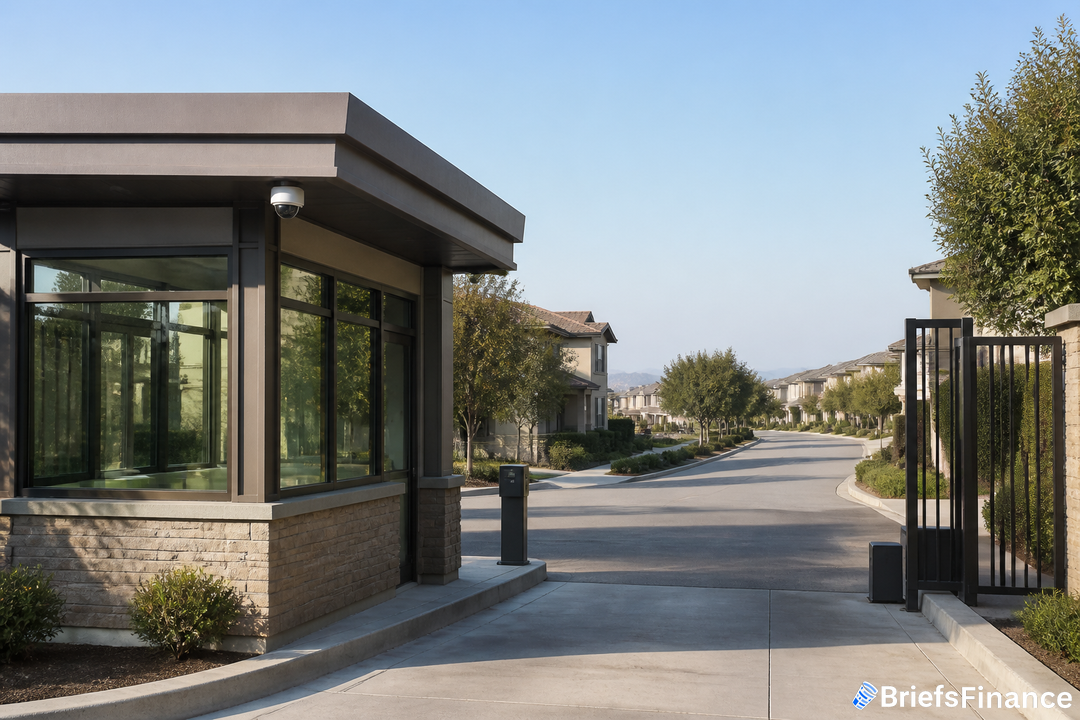
Local reaction: Hillcrest pays for daily patrols
Hillcrest, a popular neighborhood in San Diego, became a flashpoint after violent acts and hate crimes. In response, members of the Hillcrest Business Association in 2024 began funding third-party unarmed patrols, budgeting about $400,000 per year for eight hours a day. The group plans to add about $150,000 next year to cover a second shift. Benjamin Nicholls, the association's executive director, said, "It's about setting a tone in the neighborhood."
Even though federal data shows violent crime has fallen sharply over decades, a string of headline incidents tied to businesses, politicians and community groups has pushed more places to pay for protection. That unease is turning into actual budgets.
Big players and how they operate
The biggest name riding this wave is Allied Universal, a privately held firm operating in more than 100 countries with about $23 billion in annual revenue. Its uniformed teams handle lines, run entry screening and bag checks at stadiums, music festivals and office buildings. The company says it serves more than 80% of the Fortune 500 and has supported major events, including this summer's World Cup.
The company's chief executive, Steve Jones, has talked openly about taking the company public.
Allied bills itself as the world's seventh largest private employer, with roughly 800,000 workers. For context, that is nearly double Target's headcount and more than triple Disney's. Each week in North America, the firm says it receives about 65,000 applications, interviews roughly 40,000 people and hires around 3,500.
"We're everywhere," said Glen Kucera, who leads Allied Universal's enhanced protection services division. In Lower Manhattan, its canine teams and guards are posted at both the Staten Island Ferry and the World Trade Center complex. One weekday morning at the ferry terminal, guards answered questions and offered directions while dogs inspected bags and bikes for explosives.
The visible layer is only part of the setup. Allied deploys plainclothes staff to walk city blocks and look for trouble, while another unit watches camera feeds in a command center and alerts on-site teams to possible threats. "Everyone sees the overt security measures," said Justin Kelley, a company vice president, in an interview at a canine training site in Windsor, Connecticut.
Who is buying and why costs are rising
As of early August, Equilar's look at company filings found about 40% of S&P 500 firms providing some executive security in 2025, compared with just under 19% in 2019. Over that period, the median cost jumped 178%. Walmart and other large companies have only recently added executive protection, and in July Cracker Barrel said it would keep paying for protective services for former CEO Julie Masino.
Security leaders have ranked workplace violence as their top concern since 2021, according to trade publication Security. Said Steve Amitay, the National Association of Security Companies' executive director: "Who would have thought 10 years ago that you would need to hire private security at a school board meeting or at a town meeting." He added that the country is highly divisive and inflammatory right now. Amitay also pointed to pressure from insurers, saying carriers increasingly view a security plan as part of "duty of care."
The best financial decisions come from understanding the whole picture. Join Market Briefs free and get the full brief each morning.
Local governments are leaning in, too. In July, Louisville, Kentucky, passed a measure requiring certain late night businesses to employ private security. Santa Fe, New Mexico's Public Works Department budgeted nearly $1 million in its current fiscal year for contract guards at various facilities.
"People need to choose their destiny," said Jonah Nathan, vice president of Texas-based Ranger Guard. "You are your first responder. You have to mitigate things before you can rely on the local law enforcement groups."
The workforce, pay and risks
By May 2025, nearly 1.3 million people in the U.S. worked as security guards, almost twice the total employed as police and sheriff's patrol, according to the Bureau of Labor Statistics. Between 2016 and 2025, the guard workforce expanded by more than 16%, while police ranks grew about 2%.
The UC Berkeley Labor Center reported in July that the total number of guards is projected to remain roughly flat through 2034, though hiring will likely continue because turnover is high. In 2024, annual churn reached 89% in security, versus a 66% average across the private sector.
The jobs are pitched as socially useful and less exposed to AI automation, but they can be risky and the pay lags many occupations. The average guard earned $20.42 per hour, or $42,470 a year, as of May 2025. Police and sheriff's patrol averaged $38.08 hourly, or $79,200 annually. Across all occupations, the average was $33.54 an hour or $69,770 a year.
Benefits and safety remain pressure points. The UC Berkeley report found more than two in five guards lack health coverage through their employer or a family member, and guards face higher on-the-job fatality risk than the typical worker. "This is an essential workforce that's being asked to do more and more," said Enrique Lopezlira, director of the UC Berkeley Center's Low-Wage Work Program. "Yet the pay, training and other labor standards of the job have not kept up."
The spotlight moments that keep demand elevated
In May, a guard on duty was one of three people who died in a shooting at the Islamic Center of San Diego. Officials credited the fallen guard with slowing the attack and helping to prevent a larger tragedy. According to the San Diego Police Department, its officers arrived within minutes of the reported shooting even with staffing shortages, the department said. The department said it would review.
Zoom out and the business case is clear. Robert H. Perry & Associates estimates private security revenue in 2025 topped $50 billion, up 17% over ten years, with U.S. outsourced services a little over $35 billion. And as Amitay noted, gatherings that once felt routine now often include a security plan.
What does that mean for your money? More dollars are being routed to guards, dogs and monitoring rooms, from corporate suites to city budgets. That affects where companies spend, how wages evolve and which firms win contracts. If you are tracking how everyday risk fears turn into business trends, private security is quietly becoming one of the clearest tells.