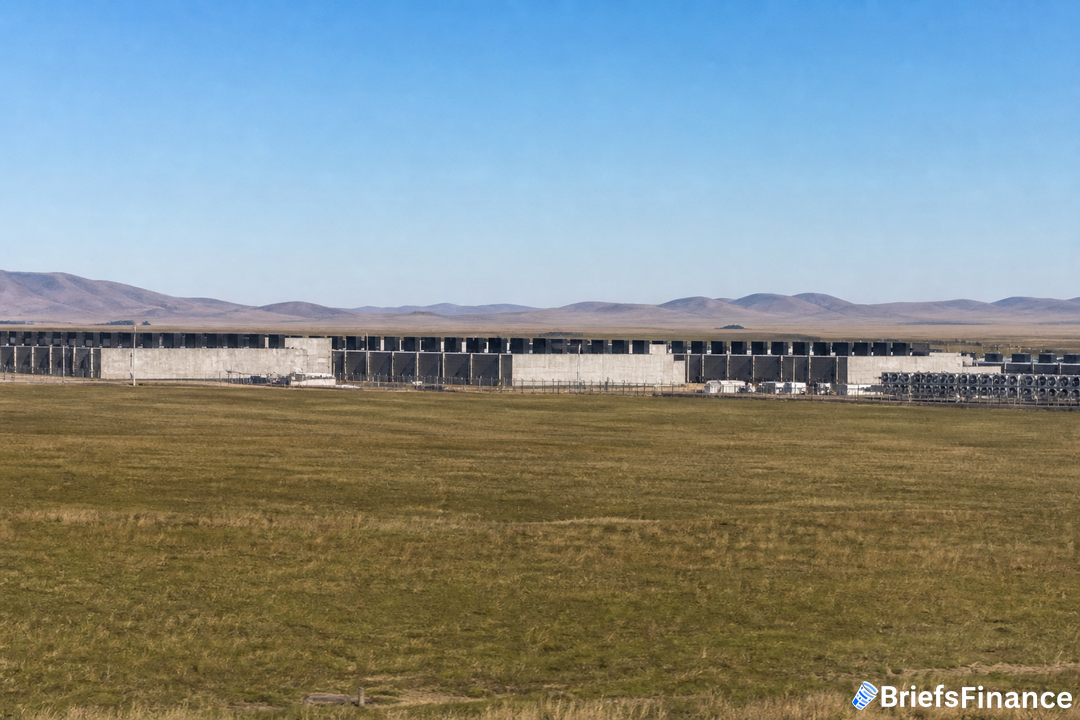
What DeepSeek is building
DeepSeek is putting together a massive AI hub in Inner Mongolia built around a minimum of 160,000 Huawei accelerators. The site is central to the company's next phase of model development. People with knowledge of the buildout say DeepSeek plans to use Huawei's next-generation Ascend 950DT for operating its models, even though Huawei positioned that chip for the heavier lift of training. The startup is not currently planning to use the 950DT for training.
DeepSeek previously attempted to train models on Huawei silicon but has relied on Nvidia gear for that crucial step. The company wants to buy more of Huawei's best parts to expand capacity.
Supply, timing, and policy crosswinds
The schedule hinges on how quickly Huawei can make the hardware. Huawei's output of the 950DT is limited this year by tight supplies of pieces like high end memory, landing production in the low hundreds of thousands, according to one person. With Huawei juggling other customers and looking to send small quantities abroad, filling DeepSeek's purchase could take more than a year.
People discussing the confidential arrangement requested anonymity. DeepSeek asked Beijing for help nudging Huawei to prioritize more chips for the startup, and faster. China's Ministry of Industry and Information Technology did not reply to a faxed query.
Requests for comment to DeepSeek went unanswered, and a Huawei spokesperson said there was no immediate comment.
Huawei has become China's go to champion for advanced chips out of Shenzhen, while Hangzhou based DeepSeek has shaped a playbook for disruptive model releases that others, including Moonshot, have followed. According to Bloomberg's reporting last year, Huawei intends to turn out about 1.6 million Ascend dies in 2026, which would provide sufficient cores for roughly 600,000 of its 910C processors plus some other variants. The 950DT, unveiled around a year ago, is a more capable successor that many see as roughly in line with Nvidia's previous Hopper generation for power.
Washington began tightening exports in 2022 over concerns American AI chips could support China's military, and Nvidia, based in San Jose, has argued the shift toward homegrown Chinese silicon is the predictable outcome of those rules. Beijing is urging domestic labs to switch to local hardware, though enthusiasm varies across companies.
Markets move every day, and most of it never reaches you in time. Get the free Market Briefs daily newsletter and stay ahead of it.
How this stacks up in the AI arms race
A single site with more than one hundred thousand chips would put DeepSeek's ambition in the neighborhood of Western hyperscale data centers, though the hardware populating China's data halls would be comparatively lower-end. Nvidia's accelerators remain the global standard for both training and running AI models, but most sales to China require U.S. approval. While the Trump team was prepared to allow sales of up to 1 million Nvidia H200 chips, Beijing has so far approved only a fraction of that amount for import.
Chinese firms can still tap huge pools of Nvidia's top chips by renting compute located overseas, which generally fits within U.S. rules. The private sector in China still tends to prefer Nvidia, as seen in substantial purchases by Alibaba and Tencent placed after US President Donald Trump relaxed Washington's restrictions. U.S. officials have accused companies including Moonshot and DeepSeek of relying on smuggled Nvidia hardware for development.
Additionally, officials from the Trump administration said DeepSeek acquired Nvidia's leading Blackwell chips and put the hardware to work in Inner Mongolia; Bloomberg has not been able to verify that assertion independently.
China's domestic scene is building momentum. About six months ago, a Shenzhen city newspaper said the nation's first intelligent computing cluster of 10,000 chips built on Huawei's Ascend series went live. In 2024, Elon Musk's SpaceXAI put a roughly 100,000 chip cluster online.
In June, Meituan stated it trained an AI model with 50,000 domestically produced chips, offering no additional specifics. And in July, Z.AI Co. completed a 1 gigawatt data center that it plans to fill only with Chinese chips, though installed cards are currently around 10,000. By the time DeepSeek's Inner Mongolia project switches on, one person familiar with Huawei's manufacturing capacity expects China could have several clusters of similar size.
Power, scale, and what to watch next
DeepSeek's infrastructure target in Inner Mongolia is on the order of 1 gigawatt. At that level, power consumption would be sufficient for roughly 750,000 households. Only a portion of that capacity would come from the 160,000 Ascend 950DT chips.
It is not yet clear what other processors DeepSeek will use for the rest. The company is negotiating to secure billions of dollars to finance the expansion. It is also possible that some of the hardware will change as supply catches up.
For your money, the real takeaway is that compute scarcity and policy friction are shaping timelines and who gets chips when. If Huawei ramps output or Beijing leans harder on allocation, it could accelerate domestic AI capacity and ripple into demand for data center power, equipment, and related infrastructure across China. Keep an eye on confirmations from DeepSeek and Huawei, and any signs that production bottlenecks ease.