Free NewsletterPro Login

Goldman Sachs Is Building an 800,000-Square-Foot Campus in Downtown Dallas

Published Sep 4, 2026
Share:
Summary:
  • An 800,000-square-foot Goldman Sachs campus is rising in downtown Dallas, targeted to open in January 2028.
  • The site will unite two Dallas offices and add an auditorium, wellness and fitness spaces, backup daycare, multiple cafeteria-style options, a coffee bar, shaded outdoor areas, underground parking, a retail space across the street, and a park of roughly 1.5 acres.
  • Dallas is already Goldman's No. 2 U.S. base after New York, and leadership cites talent, policy, taxes, and environment as drivers, while the firm also helped kick off the new Texas Stock Exchange.

Inside the Dallas build

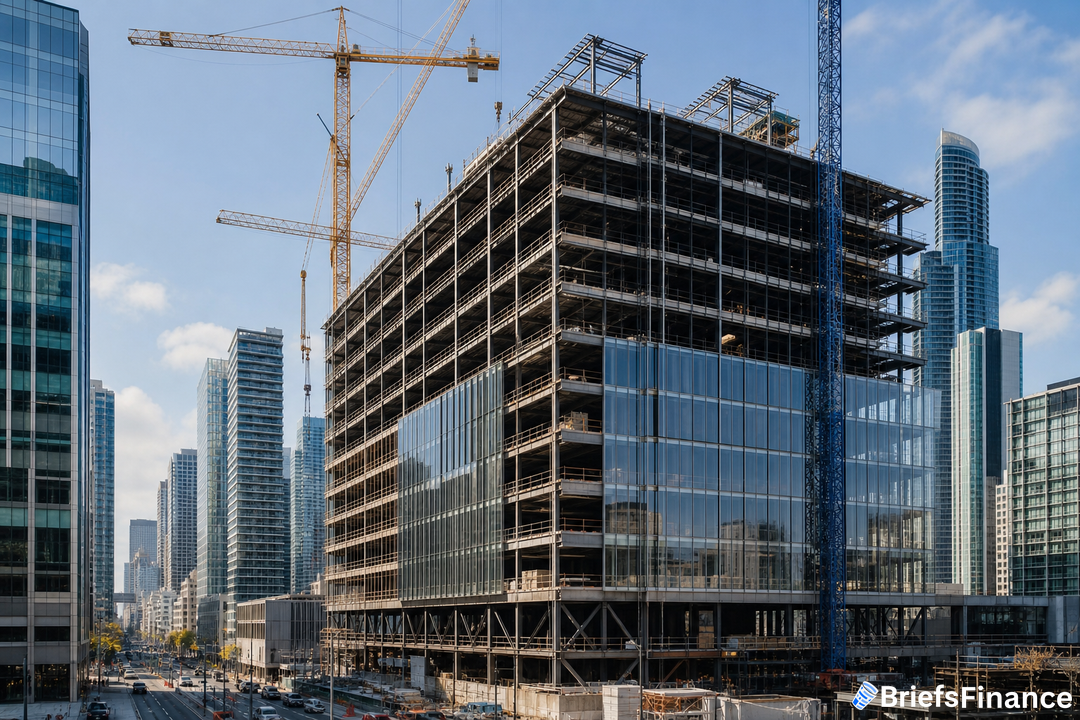
Goldman Sachs is putting up a sprawling new campus in downtown Dallas beside the Perot Museum, with an eye on a January 2028 debut. Plans call for city and museum views, including from outdoor areas. Inside, the layout features an auditorium, a wellness center, a fitness facility, a backup daycare, a coffee bar, and several cafeteria or cafeteria-like spots.

Outside, expect trees, shade, and a park of about an acre and a half, which crews were working on during a recent site visit. Employees will park beneath the building, and a retail space across the street is planned to add more close-by options.

Chief Administrative Officer Ericka Leslie toured the site and said the exterior is largely finished, which is needed before crews can start fitting out the interior and getting the air conditioning running. She added that there will be plenty of places to grab a coffee or meet for a quick chat: "I find people want to leave their desk, so to speak, and go to another place, but maybe they only have 30 minutes free, and they want to grab a coffee or have a conversation with people." With Dallas heat in mind, she noted the importance of flexible indoor and outdoor spaces: "There are a lot of places where you can meet up and sit down and be outside or be inside. And I think that's really important to people because it gets hot there in the summer, people don't want to have to walk around outside, it's completely air-conditioned."

How Goldman plans to use it

The new complex will bring together staff now split between two Dallas buildings so different business units can work side by side. As Leslie put it, "We're in two buildings now, we're going to be able to combine everybody into this state-of-the-art space, and it's right next to the Perot museum, and the city itself is very vibrant. So we're looking forward to it, and we're going to grow there."

Timing wise, the company is preparing to start interior buildout soon and continues to project a January 2028 move-in. Leslie said the project is "mostly on time," with minor slippage tied to fierce competition for labor amid a broader Dallas construction surge. She also called Dallas "a great place to do business" and "a really vibrant place to do business," adding, "The building is beautiful."

A few minutes a day is enough to stay genuinely informed about your money. Join Market Briefs free and start tomorrow.

Why Dallas is the bet

Dallas is already Goldman's second-largest U.S. location after its New York City headquarters, and leadership is leaning in. CEO David Solomon told CNBC this week that the firm's New York City headcount is "a little less than 10,000" and has not grown in about two decades, even as overall U.S. staffing has risen in markets such as Dallas and Salt Lake City. His take: "Talent plays a role in it - where is talent available - but also policy, taxes, environment."

Leslie echoed the talent theme: "We like to go to places where you can attract young talent, and New York has always been a place where people want to work when they first get out of college." On a walk along Dallas's Katy Trail, she said she saw "thousands of people - I almost couldn't make my way, I had to keep going around people," and called it "a really nice thing to see." She also expects downtown to keep densifying as more companies arrive, with more people choosing to live in the city rather than commute from the suburbs. She summed it up simply: "I think Dallas has a really bright future."

Leslie noted that Goldman Sachs was among the companies that helped launch the Texas Stock Exchange based in Dallas, and it marked the start of full operations in late July.

What this means for your money

Goldman is consolidating its Dallas footprint into a single, high-amenity base and targeting a January 2028 move-in, even with a tight labor market nudging timelines. If you follow GS, the stock screen showed THE GOLDMAN SACHS GROUP INC. at 1,038.61, up 0.68 or 0.07%. For everyday investors, the takeaway to watch is how quickly jobs and activity tilt toward lower-cost, high-talent cities like Dallas, and what that does to productivity and long-run growth.

Disclosure

Recent News

1 2 3 … 108

Get Market Briefs delivered to your inbox every morning for free!

No fluff. No noise. No politics. Just finance news you can read in 5 minutes.

Blogs

October 16, 2026
How Boring Math Makes You Rich: The Briefs Money Spreadsheet, Explained
  • Briefs Money shows you what to do with every paycheck, and in what order: how much to spend, save, and invest, when to build an emergency fund, and which debt to pay off first.
  • The Climb to Wealth course walks you through the system step by step, and the Personal Finance Spreadsheet is where you track your own numbers.
  • Investing is one piece of building wealth. The system that gets money to your investments, and keeps it there, decides the outcome.
Read More
October 16, 2026
Common Investing Mistakes: Why a Stock Grade Is One Tool, Not the Whole Toolkit
  • The Briefs Score shows growth, income, and wealth preservation investors how well a stock fits their goal, with a separate letter grade for each one.
  • The most common mistake is treating the letter as an instruction. An A tells you a stock scores well for one goal, not that you should buy today.
  • Research works best as one input in a process you own. The grade shows how a stock stacks up. You supply the goal, the timeline, and the rules for being wrong.
Read More
October 16, 2026
How to Read a Company's Numbers Without a Finance Degree (Using Briefs Terminal)
  • Briefs Terminal lets you size up any public company in about ten minutes: what the stock costs, what it earns, how fast sales are growing, and what it pays you, all on one page.
  • It lines those numbers up against the company's closest competitors for you, so you can tell if a number is impressive or just average.
  • Below that are the income statement, balance sheet, and cash flow statement from the company's SEC filings, the latest news, and transcripts of its earnings calls.
Read More
October 16, 2026
What Type of Investor Am I? The Three Investor Archetypes, Explained
  • Briefs sorts its stock grades and monthly reports by three investor goals: growth, income, and wealth preservation. Pick yours and you know which report and which grade to read first.
  • Growth investors want stocks that beat the S&P 500. Income investors want to get paid in cash. Wealth preservation investors want stocks that hold up when the market drops.
  • The same stock can score an A- for one goal and a D- for another, so picking your goal comes before picking any stock.
Read More
October 16, 2026
How to Build a Stock Watchlist That Isn't Just Stocks You Heard About
  • A watchlist on Briefs Terminal lets you group stocks by the idea you're tracking and follow each one's price, one-day move, and 52-week high and low in one place.
  • Each list has its own name and description, so you always know why a stock is on it, and you can make as many lists as you have ideas.
  • The monthly growth, income, and wealth preservation reports under the Briefs Research tab hand you new themes to track that you didn't hear about online.
Read More
October 16, 2026
How to Choose an ETF That Matches Your Idea (Using the ETF Planning Tool)
  • The ETF planning tool takes an idea like "I want to invest in fast food companies," asks what you mean, and finds the ETFs that match, with the reasons, the holdings, and the sources.
  • Build a Plan then shows what your money could grow to in those ETFs over the years you choose, with conservative, expected, and optimistic estimates next to the S&P 500.
  • It gets you from an idea to an actual plan without researching dozens of companies one at a time.
Read More
October 16, 2026
Is This Stock a Good Buy? How to Use the Briefs Score to Tell If a Stock Fits the Way You Invest
  • The Briefs Score shows growth, income, and wealth preservation investors how well a stock fits their goal, with a separate letter grade for each one.
  • One stock can score very differently for each. Nvidia showed an A- for growth and a D- for income, because it grows fast and pays almost no dividend.
  • Seven sub scores under each grade show what earned the letter, so you can see exactly where a stock is strong or weak for your goal.
Read More
October 16, 2026
How to Tell an Asset From a Liability: The One Question to Ask Before You Buy Anything
  • The typical American household earned more in 2025 than in any year on record, yet only 30% of Americans say they could pay a surprise $1,000 bill from savings, so the problem isn't income but what the income gets spent on.
  • An asset puts money in your pocket and a liability takes money out, and the wealthy buy assets first, then let the assets pay for the fun stuff.
  • Before you buy anything, ask one question: does this put money in my pocket, or take money out of my pocket? Then you need a plan for the money you keep.
Read More
October 16, 2026
How to Build Your First $2,000 Emergency Fund and Wipe Out Every Debt Over 10%
  • Your first money goal isn't investing, it's $2,000 in its own account named Do Not Touch, built by moving 10% of every paycheck into it automatically.
  • More than a third of American adults couldn't cover a $400 surprise bill with cash or savings, according to the Federal Reserve, and that's how one bad day turns into years of credit card payments.
  • Once the $2,000 is there, attack every debt charging more than 10% interest, highest rate first, because you can't out-invest a 22% credit card so paying it off is the investment.
Read More
October 16, 2026
How to Invest Through a Crash: 3 Rules From the Worst-Timed Investor Alive
  • Meet Bunty, a fictional investor with the worst timing in history: he put $100,000 into the market in four chunks right before four crashes, never sold, and by 2025 it had grown to more than $500,000.
  • Investors who jump in and out of the market miss its best days, and missing just a handful of those days can cut your final result roughly in half.
  • The fix is ABB, Always Be Buying: you buy on a schedule through booms, crashes and scary headlines, which matches the market, and beating it takes knowing where the money is moving first.
Read More
1 2 3 … 29
Share via
Copy link