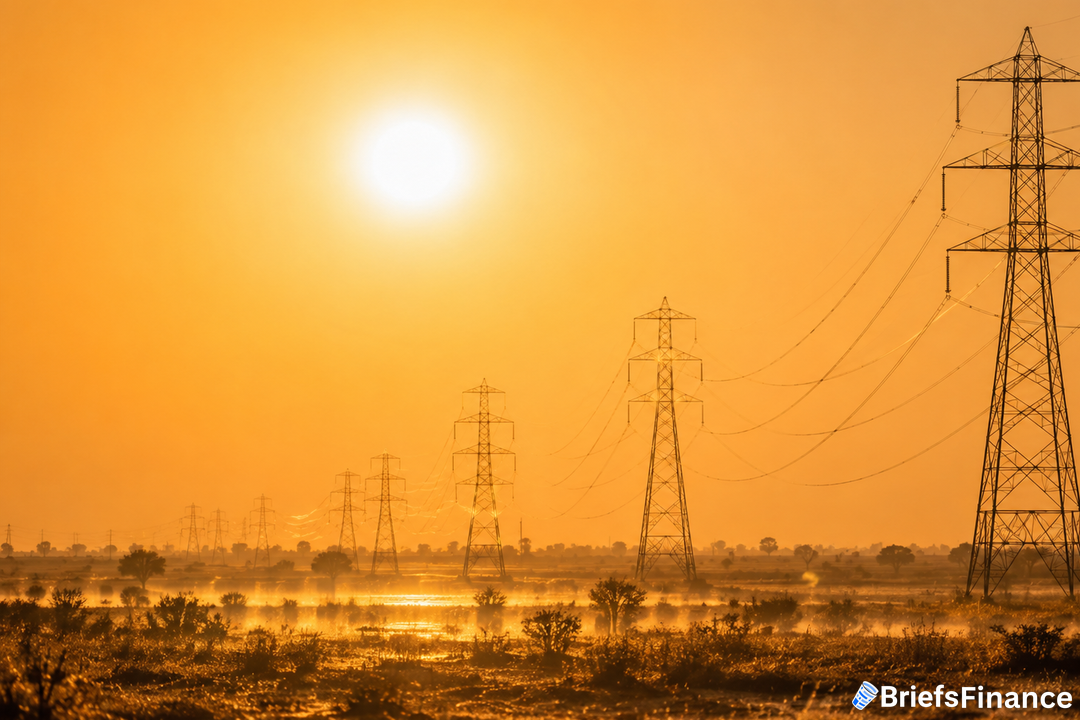
Rising temperatures year after year have become a major factor in the country's energy consumption, boosting revenues for power companies like NTPC and coal supplier Coal India Ltd. This trend has also spurred faster development of power infrastructure, including new generation capacity and transmission lines.
India's weak monsoon season has compounded the heat-driven demand, reducing hydropower output and forcing the government to extend emergency operating rules for thermal plants. This has further increased reliance on coal-fired generation, benefiting NTPC's utilization rates.
The New Delhi-based public-sector enterprise added 196 megawatts of generating capacity in the quarter, but the overall year-over-year increase was lower because it permanently shut down a 440-megawatt coal unit in September. Both electricity sold and revenue grew by roughly 3% apiece.
A jump in energy consumption, especially after dusk when solar panels stop producing, raised utilization rates at India's coal-fired stations by almost three percentage points versus the prior year, based on data from the power ministry.
More than 80% of NTPC's installed capacity - including its joint ventures - comes from coal and natural gas, as stated on its corporate site. The firm is boosting its renewable energy portfolio and intends to incorporate nuclear plants to decrease its dependence on fossil fuels.
Get the market news that matters in a five-minute read with Market Briefs, our free daily newsletter
Why Coal Still Matters - and Why It Won't Forever
The catch is that solar power has a blind spot. It works great during the day, but once the sun sets, the grid needs something else to keep running. Right now, that something else is mostly coal.
Still, NTPC is not ignoring the long-term direction. It is adding renewable energy capacity and has plans to build nuclear plants. The goal is to gradually cut reliance on coal and gas, which together still make up the vast majority of its portfolio. But in the near term, hotter summers keep making the case for more power generation - and more transmission lines to move it around.
What It Means for Your Portfolio
For investors watching global energy trends, this is a reminder that local weather matters as much as global policy. India's power demand does not follow a straight line. It spikes when the temperature does.
NTPC's results show that the company can cash in on those spikes. The demand for electricity after dark creates a structural need for reliable, dispatchable power - the kind coal provides today and renewables plus storage will try to provide tomorrow.
Whether you invest in NTPC directly or look at related plays like power transmission or coal supply, the underlying driver is the same: a summer that keeps getting hotter.
The bottom line: when the heat turns up, the power sector feels it - and the profits follow.
Join Market Briefs, our free daily newsletter, for a quick daily rundown of the markets